
PE and health
Overarm throw: observe, practise, improve
For Year 9 Physical Education pupils, name the performer and observer, choose a self, peer or teacher view, record evidence and compare practice counts.
Read the material
For Year 9 Physical Education pupils, name the performer and observer, choose a self, peer or teacher view, record evidence and compare practice counts.
Pupil document. Use the preview for diagrams and layout.
Page 1
Teaching template
1
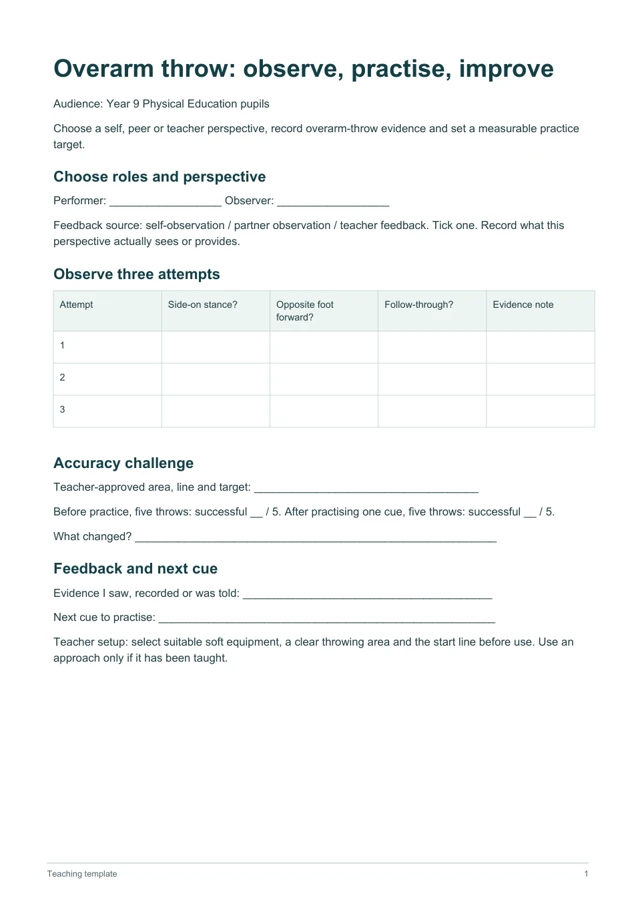
Overarm throw: observe, practise, improve
Audience: Year 9 Physical Education pupils
Choose a self, peer or teacher perspective, record overarm-throw evidence and set a measurable practice
target.
Choose roles and perspective
Performer: __________________ Observer: __________________
Feedback source: self-observation / partner observation / teacher feedback. Tick one. Record what this
perspective actually sees or provides.
Observe three attempts
Attempt
Side-on stance?
Opposite foot
forward?
Follow-through?
Evidence note
1
2
3
Accuracy challenge
Teacher-approved area, line and target: ____________________________________
Before practice, five throws: successful __ / 5. After practising one cue, five throws: successful __ / 5.
What changed? __________________________________________________________
Feedback and next cue
Evidence I saw, recorded or was told: ________________________________________
Next cue to practise: ______________________________________________________
Teacher setup: select suitable soft equipment, a clear throwing area and the start line before use. Use an
approach only if it has been taught.
A teaching sequence
Observe an overarm throw from an identified self, peer or teacher perspective, record visible evidence and set a measurable practice target.
Choose the evidence perspective
Name the performer and observer, then select the feedback perspective.
What can the observer, recording or performer actually report?
Record three attempts
Record three attempts using visible technique cues.
Which visible cue supports your observation note?
Compare the accuracy trials
Count successful throws out of five in a teacher-approved area.
Have the same approved line, target and equipment been used?
Practise a cue and compare five throws
Practise one cue and compare five further attempts.
What evidence supports the one cue selected for practice?
Before you teach
Look for the thinking behind an answer, choose the support your class needs and leave room for an independent response.
What to look for
A useful note is “opposite foot forward on two of three observed throws”; keep the performance count separate. Ask, “What did your chosen perspective actually see or record?”
Give a little support
Use a closer target and soft ball or beanbag; choose one perspective and record one cue at a time.
Take the idea further
Increase distance or reduce target size only when the teacher agrees the area is clear.
Things to keep in mind
Hold for teacher approval of the actual space, equipment, line and target. The sheet does not define a universal technique score or certify safe setup.
Keep the idea. Make it yours.
Bring your topic, learning goal and class context to PLAI™, then review what you create.
Another starting point
Explore a different teaching task from this selection.
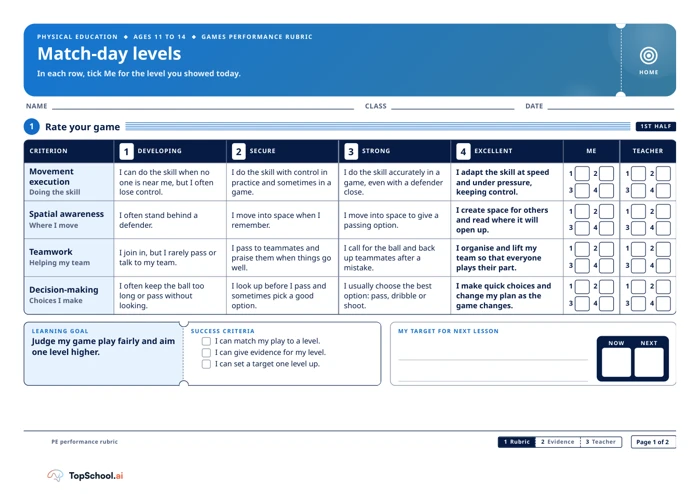
PE performance rubric
Read the four criteria and compare the level descriptors for one row. Clarify how pupils and teachers will use the two rating columns before the activity begins.
Explore resourceIdeas to try with your class
Sample teaching perspectives on what to try, what to adapt and what to watch for.
Meet The Creators
Meet the creators whose teaching interests connect with this template. Find an approach to try with your class.
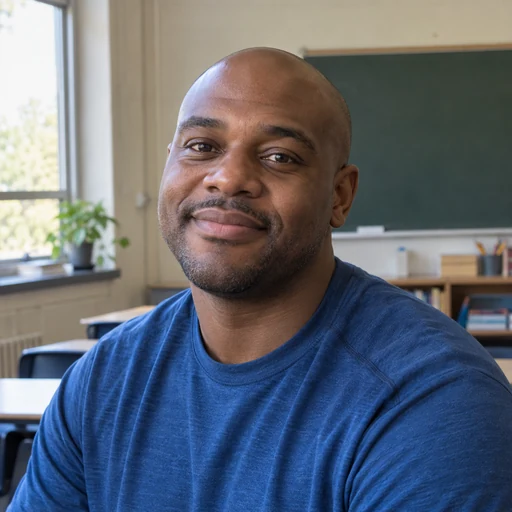
Marcus Owusu
Covered-court planning forms a substantial part of my scheme, rather than being something to improvise when an outdoor lesson becomes difficult.
Meet the creator
Wei Zhang
I teach Physical Education across the secondary phase and start planning with the pupil who may be least ready to join in.
Meet the creator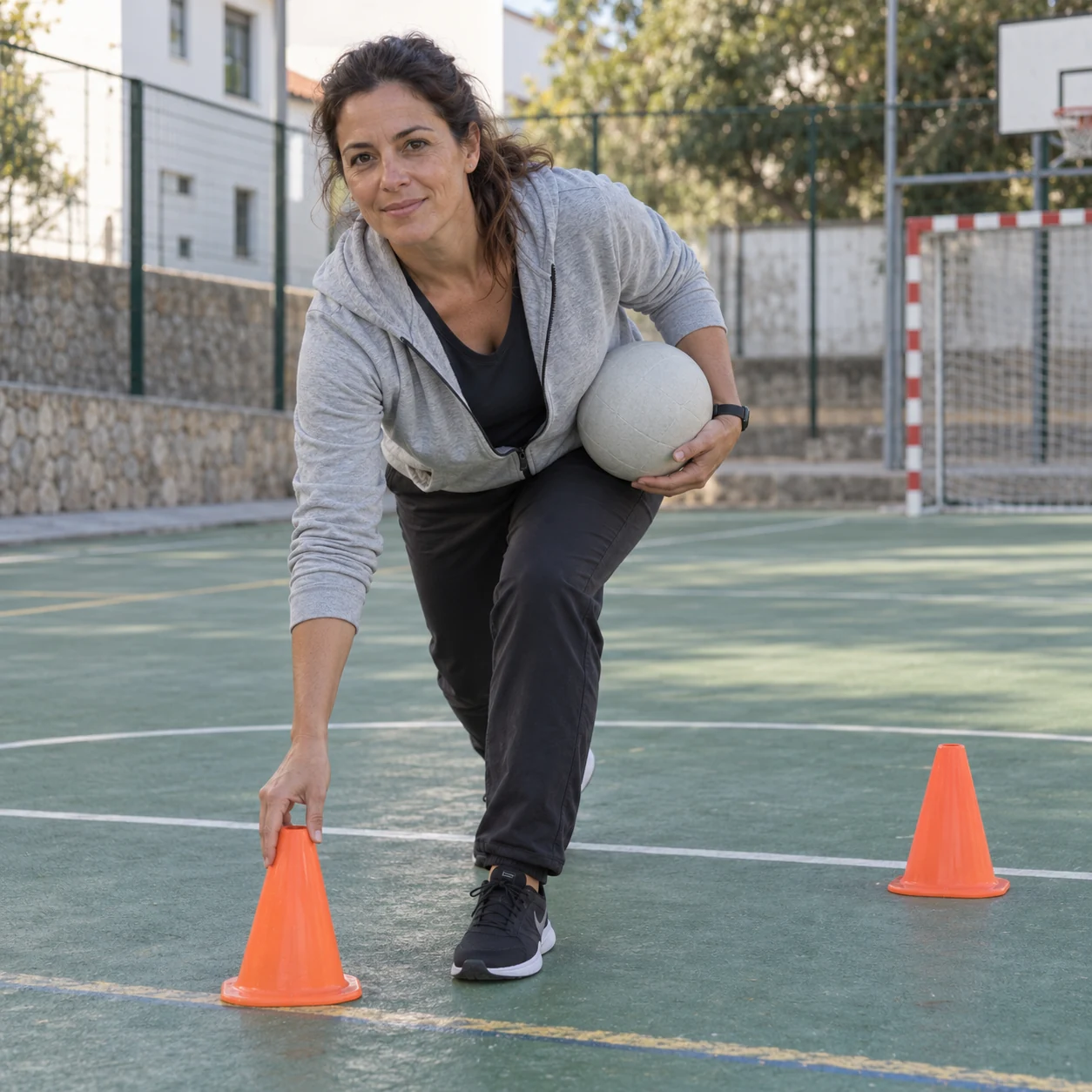
Sofia Almeida
I begin secondary PE planning with less-confident pupils, organising participation around available facilities and time so the task offers a workable first step within our practical constraints.
Meet the creator
Pham Van Phuc
I welcome pupils joining secondary PE during the year through a manageable first task, clear demonstrations and familiar routines, building from the experience they bring to the group.
Meet the creator
Adam Threlkeld
I connect GCSE PE theory with practical sport, choosing examples and exam questions that help students explain a concept in terms of the activity they experience.
Meet the creatorMichelle Ogunbiyi
I plan adaptable PE fitness and skills work alongside practical fixture arrangements, considering facilities, transport and lesson time while keeping the intended skill visible for different starting points.
Meet the creator
Quietly Curious
This Year 9 template asks the performer to choose self, partner or teacher observation, name the feedback source, record what that person can actually see, then set a measurable practice target. That makes the perspective part of the record rather than an assumption.
Page-Turner Planner
The prompts move from observed evidence to a target, which suits practice planning. The three viewpoints can also reveal that a teacher or observer may see something the performer cannot, without treating any one view as the whole performance.
Tea at Breaktime
Model one observable note before asking pupils to write one, such as whether the opposite foot steps forward. Keep the feedback source ticked and let pupils rehearse the target physically before putting it into words.
Tea Break Notes
This is a single-page planning template, not a throwing-safety guide or proof of progress. Use the school-approved activity directions and make the target specific enough to check in a later attempt.