
Maths
Algebra and formula matching task
Match each algebraic expression or rule to its equivalent expression or graph, and explain one match using a mathematical check.
Cambridge IGCSE
Prepare original practice around the topic you are teaching. Ask for explanations, explore misconceptions and refine the support before learners try independently.
Start with an idea, then check the age range, learning goal and subject content against the curriculum or programme your class follows.
Choose a task, inspect the source and decide what pupils should explain for themselves.
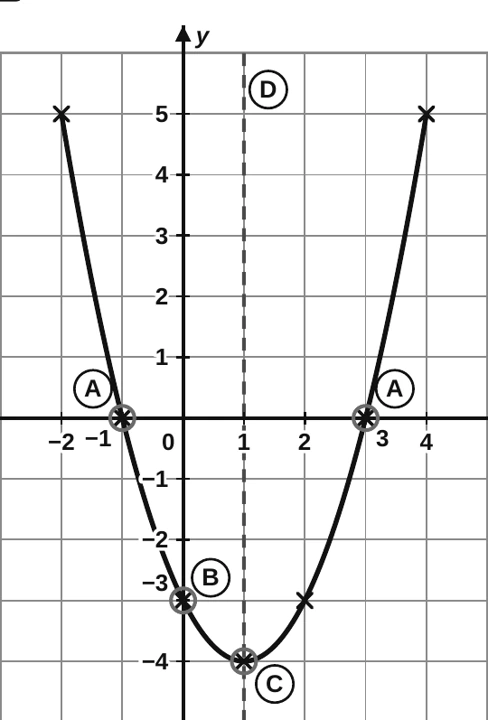
Connect y = x² − 2x − 3 with a table, plotted points, roots and a minimum. Use the next source page for independent practice.
Investigate y = x² + 2x − 8 and justify how its forms reveal graph features.
Try the teaching idea, then explore the full activity.
Practise quadratic algebra and short-text analysis. Choose for your subject, teaching stage and examination year.
Maths
Match each algebraic expression or rule to its equivalent expression or graph, and explain one match using a mathematical check.
Languages and literacy
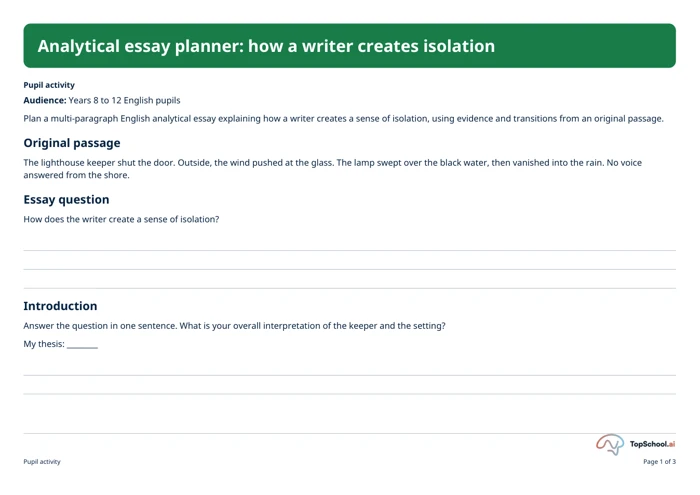
Plan a multi-paragraph English analytical essay explaining how a writer creates a sense of isolation, using evidence and transitions from an original passage.
Maths
Calculate and graph a quadratic function and connect its algebraic forms to key graph features.
3 templates shown
Add the context that matters, keep the learning goal clear and check the new draft before sharing it.
Investigate a quadratic: graph and features
Copy your brief into PLAI™, then review the draft for your class.
Start with one learning goal and shape the support around your class.
Start with PLAI™