
Wellbeing and personal development
My pathways
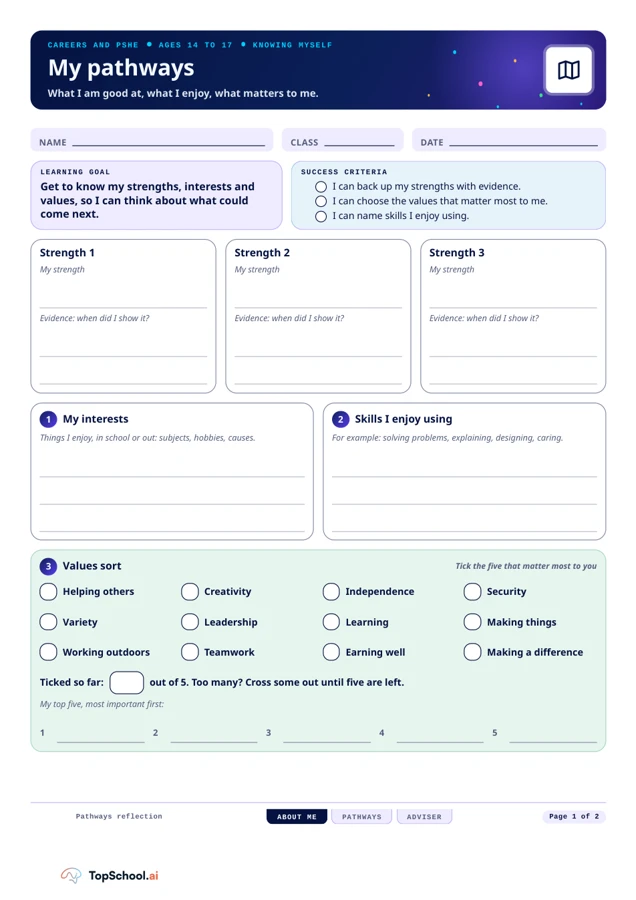
Reflect on strengths, interests and values, then explore several possible pathways and who could help with questions. The sheet reminds pupils that ideas are not final choices and can change over time as they gather more information.
Read the material
Reflect on strengths, interests and values, then explore several possible pathways and who could help with questions. The sheet reminds pupils that ideas are not final choices and can change over time as they gather more information.
Complete resource. Use the preview for diagrams and layout.
Page 1
NAME
CLASS
DATE
LEARNING GOAL
Get to know my strengths, interests and
values, so I can think about what could
come next.
SUCCESS CRITERIA
I can back up my strengths with evidence.
I can choose the values that matter most to me.
I can name skills I enjoy using.
Pathways reflection
ABOUT ME
PATHWAYS
ADVISER
Page 1 of 2
CAREERS AND PSHE
AGES 14 TO 17
KNOWING MYSELF
My pathways
What I am good at, what I enjoy, what matters to me.
Strength 1
My strength
Evidence: when did I show it?
Strength 2
My strength
Evidence: when did I show it?
Strength 3
My strength
Evidence: when did I show it?
1
My interests
Things I enjoy, in school or out: subjects, hobbies, causes.
2
Skills I enjoy using
For example: solving problems, explaining, designing, caring.
3
Values sort
Tick the five that matter most to you
Helping others
Creativity
Independence
Security
Variety
Leadership
Learning
Making things
Working outdoors
Teamwork
Earning well
Making a difference
Ticked so far:
out of 5. Too many? Cross some out until five are left.
My top five, most important first:
1
2
3
4
5
Page 2
Pathways reflection
ABOUT ME
PATHWAYS
ADVISER
Page 2 of 2
CAREERS AND PSHE
AGES 14 TO 17
LOOKING AHEAD
Pathways and next steps
4
Possible pathways
Look back at page 1 first
Study
Apprenticeship or training
Work
Gap year
Own business
Pick three ideas from the menu, or mix them. Nothing here is a final choice, and you can change your mind.
Pathway 1
Type
What it needs: grades, skills, experience
Pathway 2
Type
What it needs: grades, skills, experience
Pathway 3
Type
What it needs: grades, skills, experience
5
Next three steps
With dates
Step 1
By
Step 2
By
Step 3
By
6
Who can help
Adults I trust
Family, a teacher, a careers adviser, someone who does a
job I find interesting.
7
Questions to ask
Of an adviser, a college, an employer
A teaching sequence
Use examples to describe strengths, select important values, compare three possible pathways and plan dated next steps or questions.
Describe strengths and interests
Write up to three strengths with an example for each, then list interests from school or outside school and skills the pupil enjoys using.
What example supports the strength you chose?
Compare values and pathways
Choose five values and rank their current importance. Select three possible pathways or combine ideas, noting any grades, skills or experience each may require.
Which current provider requirement still needs checking for this option?
Prepare the next conversation
Plan three next steps with dates and identify a trusted adult, adviser, college or employer to ask for information. Use the questions area to prepare for a conversation, then revisit the choices later if circumstances or interests change.
Who can answer your question, and when would you like to revisit the choice?
Before you teach
Look for the thinking behind an answer, choose the support your class needs and leave room for an independent response.
What to look for
Check that each strength has an example, each pathway has a question or information need, and next steps have a date. Ask whether the pupil understands that exploration does not commit them to a final choice. Allow priorities to change over time.
Give a little support
Allow the pupil to choose fictional or general examples, dictate responses or leave a prompt blank. Offer a short list of pathways and explain unfamiliar terms such as apprenticeship or gap year without steering the pupil toward one option.
Take the idea further
Invite the pupil to compare a study, training, work or other option by what matters to them and what they want to learn next. They can add a question to ask someone with current first-hand information.
Things to keep in mind
Pathway requirements vary by place, provider and year; check current entry information with the relevant adviser or organisation. The worksheet is a reflection tool, not careers advice or a promise that an option is available. Protect personal responses and share them only as the pupil and school agree.
Keep the idea. Make it yours.
Bring your topic, learning goal and class context to PLAI™, then review what you create.
Ideas to try with your class
Sample teaching perspectives on what to try, what to adapt and what to watch for.
Meet The Creators
Meet a creator whose teaching interests connect with this template.

Board Eraser
This two-page careers reflection for ages 14 to 17 asks pupils to support strengths with examples, choose important values, identify skills they enjoy and compare three possible pathways before setting dated next steps or questions.
Chalk & Chai
The prompts link self-reflection to evidence and then to options, so a pupil can explain why a pathway interests them. The adviser field can support a follow-up conversation.
Gentle Reminder
Allow pupils to leave options open and use questions as a valid next step. Invite examples from school, home or activities without requiring disclosure of private family or financial circumstances.
One More Question
The pathways reflection does not predict a suitable career or supply current entry requirements. Verify qualifications, costs and dated next steps with current advisers and sources before pupils make a decision.