
Music and performing arts
Music practice log: focus, evidence and next target
For Years 7 to 11 Music pupils, record a focused practice goal, what improved, what remains difficult and a next target across individual or ensemble sessions.
Read the material
For Years 7 to 11 Music pupils, record a focused practice goal, what improved, what remains difficult and a next target across individual or ensemble sessions.
Pupil practice record. Use the preview for diagrams and layout.
Page 1
Music practice log: focus, evidence and next target
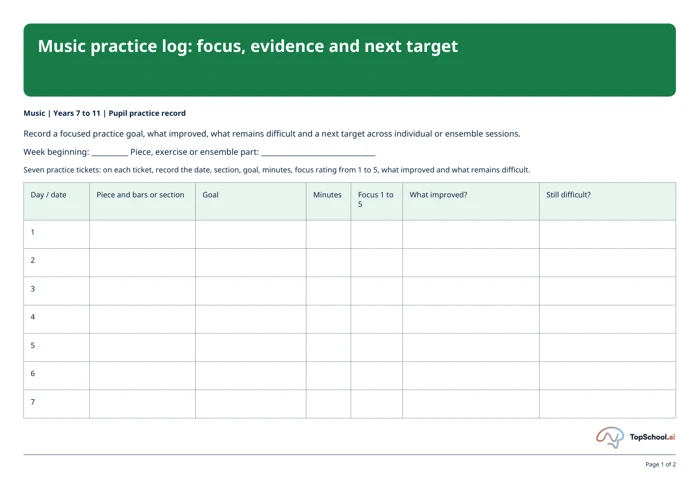
Music | Years 7 to 11 | Pupil practice record
Record a focused practice goal, what improved, what remains difficult and a next target across individual or ensemble sessions.
Week beginning: __________ Piece, exercise or ensemble part: _______________________________
Seven practice tickets: on each ticket, record the date, section, goal, minutes, focus rating from 1 to 5, what improved and what remains difficult.
Day / date
Piece and bars or section
Goal
Minutes
Focus 1 to
5
What improved?
Still difficult?
1
2
3
4
5
6
7
Page 1 of 2
Page 2
Music practice: strategies and reflection
Music | Years 7 to 11 | Pupil practice record
1. Strategy menu
Chunking: practise two to four bars, then join the chunks.
Slow then faster: secure the passage slowly before increasing the
tempo.
Repeat the bar: practise the tricky bar, then add the bars around it.
Record and listen: listen to one short section and note one next
adjustment.
2. Weekly reflection
Which session helped most, and what evidence shows it?
What kept coming back?
My next target, section and chosen strategy:
Page 2 of 2
A teaching sequence
Record a focused practice goal, what improved, what remains difficult and a next target across individual or ensemble sessions.
Record a focused practice
Complete one ticket after each practice or rehearsal session. Choose one strategy for a difficult section: chunk, slow then faster, repeat a bar or record and listen.
Which strategy addresses the difficult bars or section?
Note evidence after practice
Record minutes and one specific improvement or continuing difficulty.
What specifically improved or remained difficult during these minutes?
Set the next rehearsal target
Use the week's evidence to set one target for the next rehearsal.
Which week's observation supports the section and strategy you chose?
Before you teach
Look for the thinking behind an answer, choose the support your class needs and leave room for an independent response.
What to look for
A useful entry names a section and an observable change, such as “bars 5-8: the rhythm in bar 7 stayed even in three slow repeats”. Ask, “Which entry shows what changed?”
Give a little support
Use one ticket only and let a pupil dictate the reflection after rehearsal.
Take the idea further
For an ensemble, compare a personal target with one agreed group rehearsal goal.
Things to keep in mind
Use the current piece and tutor guidance. The log does not prescribe practice minutes or assess effort from a score alone.
Keep the idea. Make it yours.
Bring your topic, learning goal and class context to PLAI™, then review what you create.
Another starting point
Explore a different teaching task from this selection.
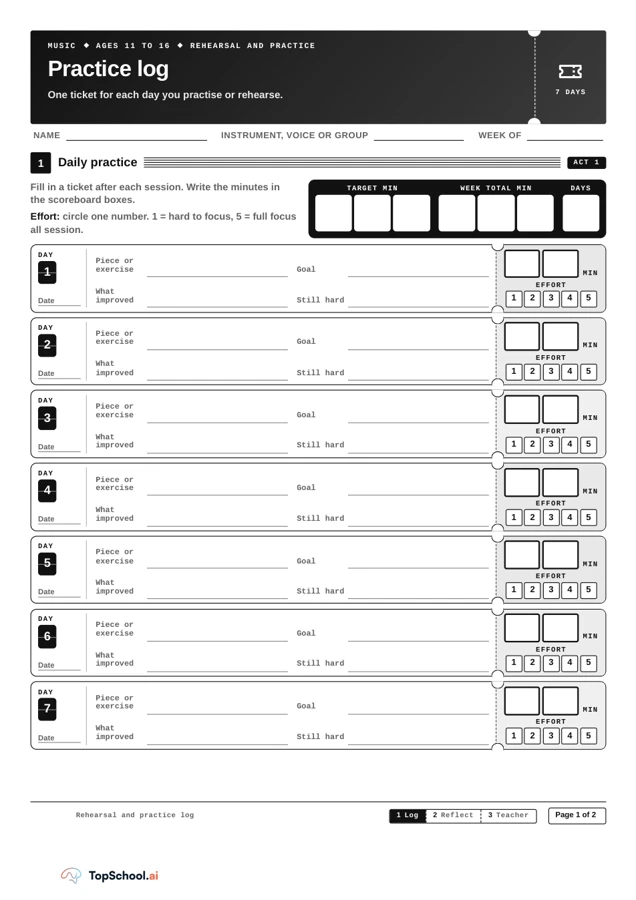
Rehearsal and practice log
Agree a realistic practice target and identify the instrument, voice or group. Explain the effort scale and how pupils will use the minutes and reflections.
Explore resourceIdeas to try with your class
Sample teaching perspectives on what to try, what to adapt and what to watch for.
Meet The Creators
Meet a creator whose teaching interests connect with this template.
Bright Idea Break
For Years 7 to 11, the log records a piece, exercise or ensemble part, then uses seven practice tickets for date, section, goal, minutes, focus rating, improvement, difficulty and next target. It is designed for individual or group practice.
Page-Turner Planner
Its focus is evidence from a selected section: what improved and what remains difficult. That supports a more specific next target than recording practice minutes by themselves.
Extra Page
For an ensemble entry, agree which part the pupil is tracking and allow them to note a bar or section rather than the whole piece. Choose a focus scale description that the pupil understands consistently.
Step by Step
The rating and progress notes are pupil records, not independent measures of playing quality. Pair them with feedback or performance evidence when evaluating a change, and avoid comparing pupils' focus scores.