When should a topic return? Planning spaced practice
When a new lesson depends on an earlier idea, there's a reason to revisit it. A familiar science worksheet can help you plan that return.

On this page4 sections
When you reach food webs, the photosynthesis unit may be several weeks behind you. Yet a pupil explaining why a rabbit depends on grass still needs that earlier learning. Calling grass a producer is a start. Pupils also need to explain how it makes food and why that matters to the rabbit.
Spaced practice makes room for pupils to recall and use an idea after a gap. When you’re looking ahead to a lesson that depends on earlier learning, you already have a reason to bring it back. A familiar worksheet can help you hear what pupils remember and decide what needs attention before you build on it.
Let the later lesson guide the gap
There is good reason to keep earlier learning in view. The Institute of Education Sciences recommends spacing learning over time, including delayed reviews of important content. Deciding when to return still calls for your judgement, though.
In Cepeda and colleagues’ study of learning facts, the best gap for later recall varied with how long learners had to wait before the final test. The study doesn’t give us a timetable for teaching photosynthesis, but it helps explain why one set of intervals won’t suit every purpose.
Before pupils need photosynthesis to explain feeding relationships, you have a chance to hear how they explain the process itself. If something is missing, there is still time to teach it again.
Give a familiar worksheet another purpose
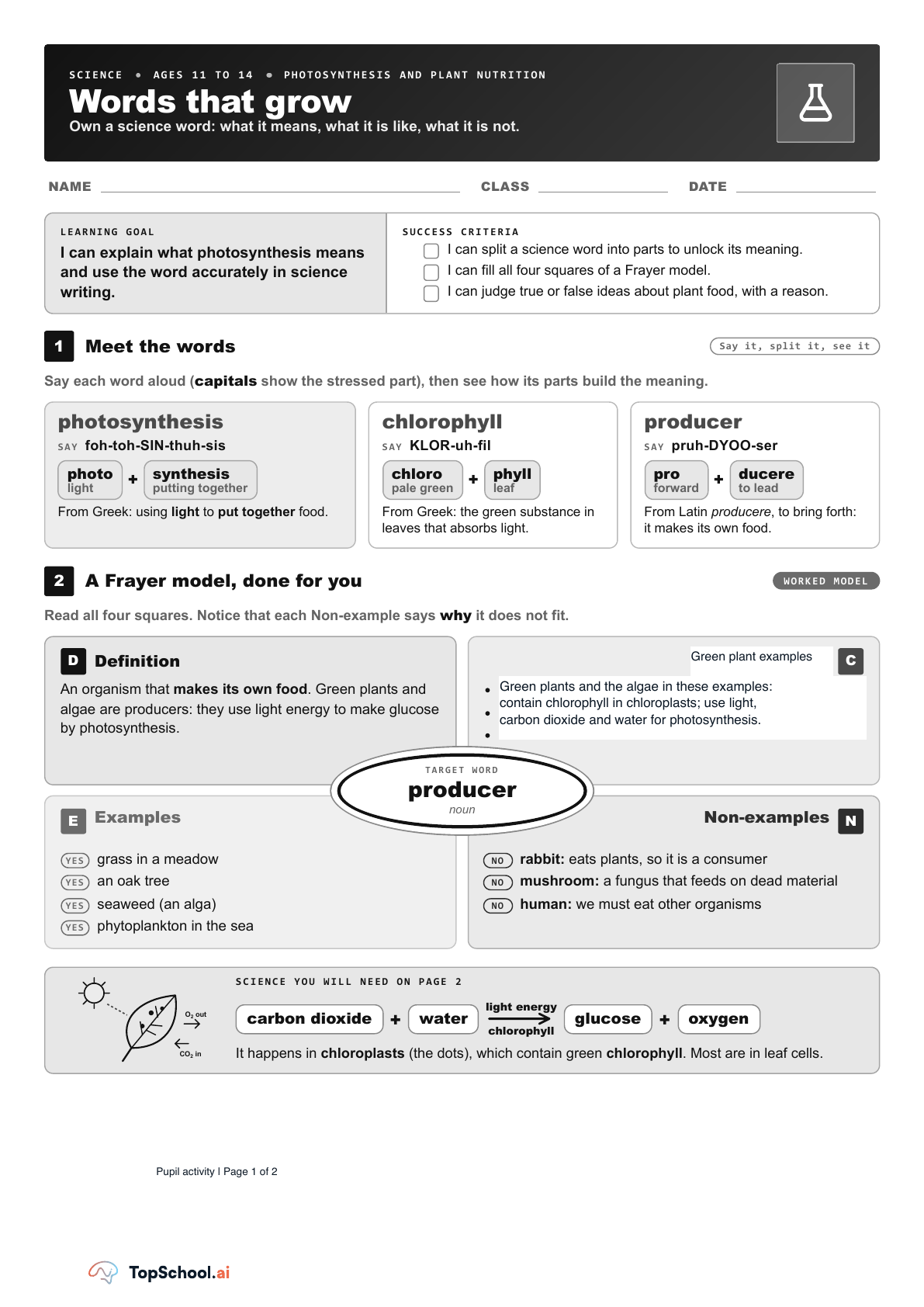
A pupil who can name a producer may still need help explaining why a rabbit doesn’t belong in the same group. You can explore that distinction together using the Library’s Words that grow: Frayer model for photosynthesis. Its completed model for ‘producer’ explains why the examples fit and why the non-examples don’t, giving you a way into the reasoning behind the word.
As you read it together, keep the definition in view. The teacher notes point out that the characteristics describe the plants and algae used on the sheet; they don’t define every producer. That distinction matters if pupils are relying on a feature such as having chloroplasts to decide what belongs.
After a gap, you might ask pupils to explain photosynthesis with the sheet put away. Once they’ve had a go, reopening it at the blank Frayer model on page 2 gives them a chance to check and develop what they’ve written. A missing detail, or an example that doesn’t fit their definition, gives you something to discuss.
The word bank is there to help if needed. Make a note when pupils use it, so you can distinguish what they recalled from what the prompts helped them explain.
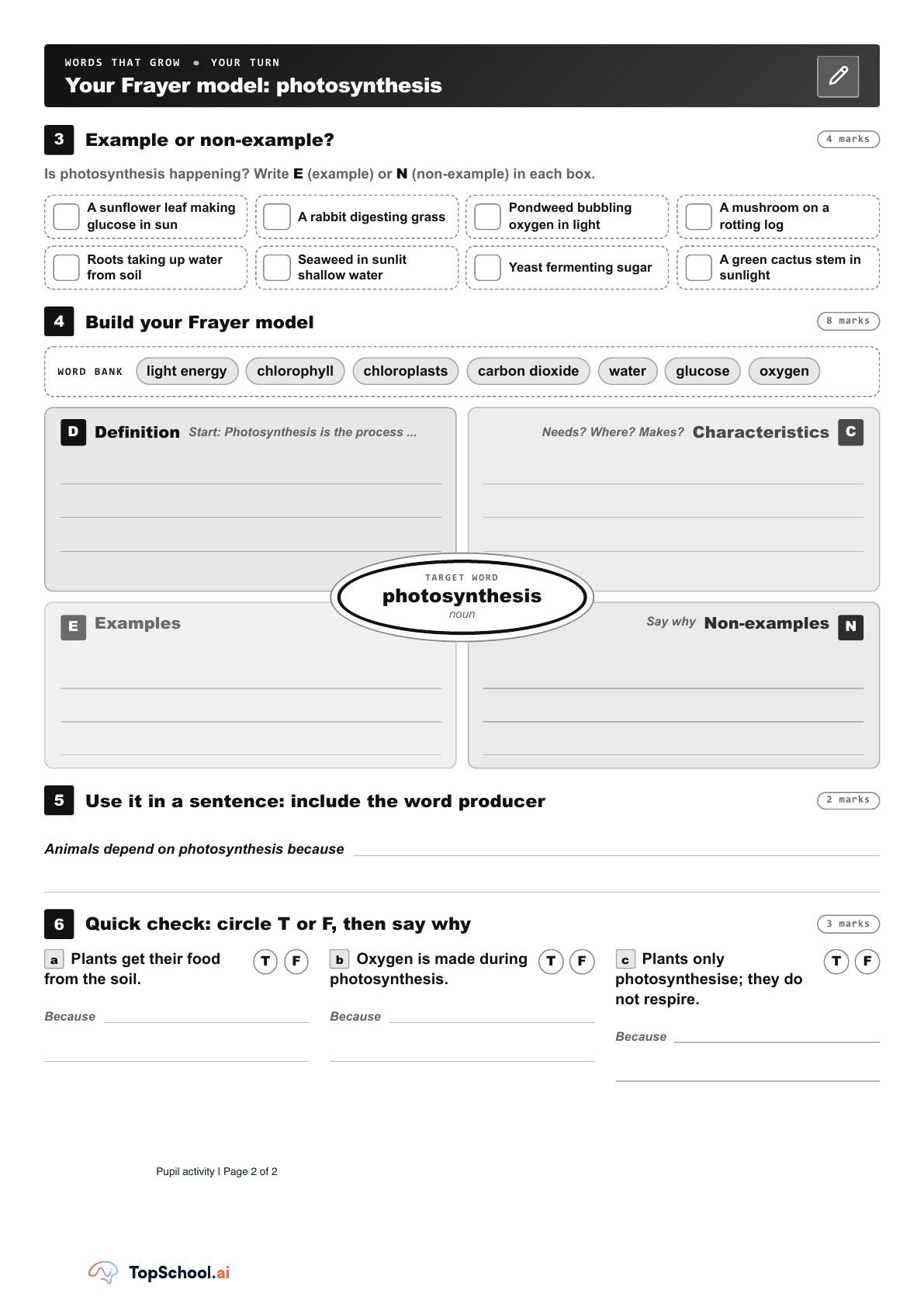
You don’t need to work through the whole sheet each time. Once you’ve taught respiration, a statement such as ‘Plants only photosynthesise; they do not respire’ gives you something worth discussing again. Later, the sentence about animals’ dependence on photosynthesis can lead into the food web you’re studying. The same worksheet can stay useful as the teaching moves on.
A place in the timetable
If you teach Key Stage 3 science in England, you can build these returns around later work on respiration and food webs. The example below starts after pupils have met plant cells and chloroplasts, with six lessons on plant nutrition and respiration before a return during ecology.
These weeks are a planning example, not recommended intervals from the research or a schedule supplied with the worksheet. Your curriculum order, timetable and pupils’ responses will shape where the returns belong.
| Week | First lesson | Second lesson |
|---|---|---|
| 1 | Introduce photosynthesis, its inputs and products, and the meaning of producer. | Discuss the worked model and the example/non-example task together. |
| 2 | Revisit an explanation of photosynthesis, then use the blank Frayer model to check and develop it. | Connect leaf structures with photosynthesis, drawing on earlier plant-cell work. |
| 3 | Teach plant respiration and distinguish it from photosynthesis. | Return to the worksheet’s true/false statements and discuss the reasoning. |
| 5, during ecology | Revisit the sentence about animals’ dependence on photosynthesis and connect it with the food web being studied. | Continue the school’s ecology sequence. |
Listen for what needs another visit
The useful detail is often in the explanation that follows an answer. A pupil may correctly reject the idea that plants get food from soil, yet struggle to say what they make instead. The teacher companion sets out the science behind the answer, so you can check the detail as you talk through how plants make glucose.
One successful answer won’t tell you whether learning will last, or whether your choice of dates made a difference. It can help you decide what to do next. Beside each planned return, leave space for what you hear. If a pupil needs help explaining where the glucose comes from, you’ll have a clear point to pick up together next time.