
Find another way in
Suggest a different opening question that connects this learning goal to something learners already know.
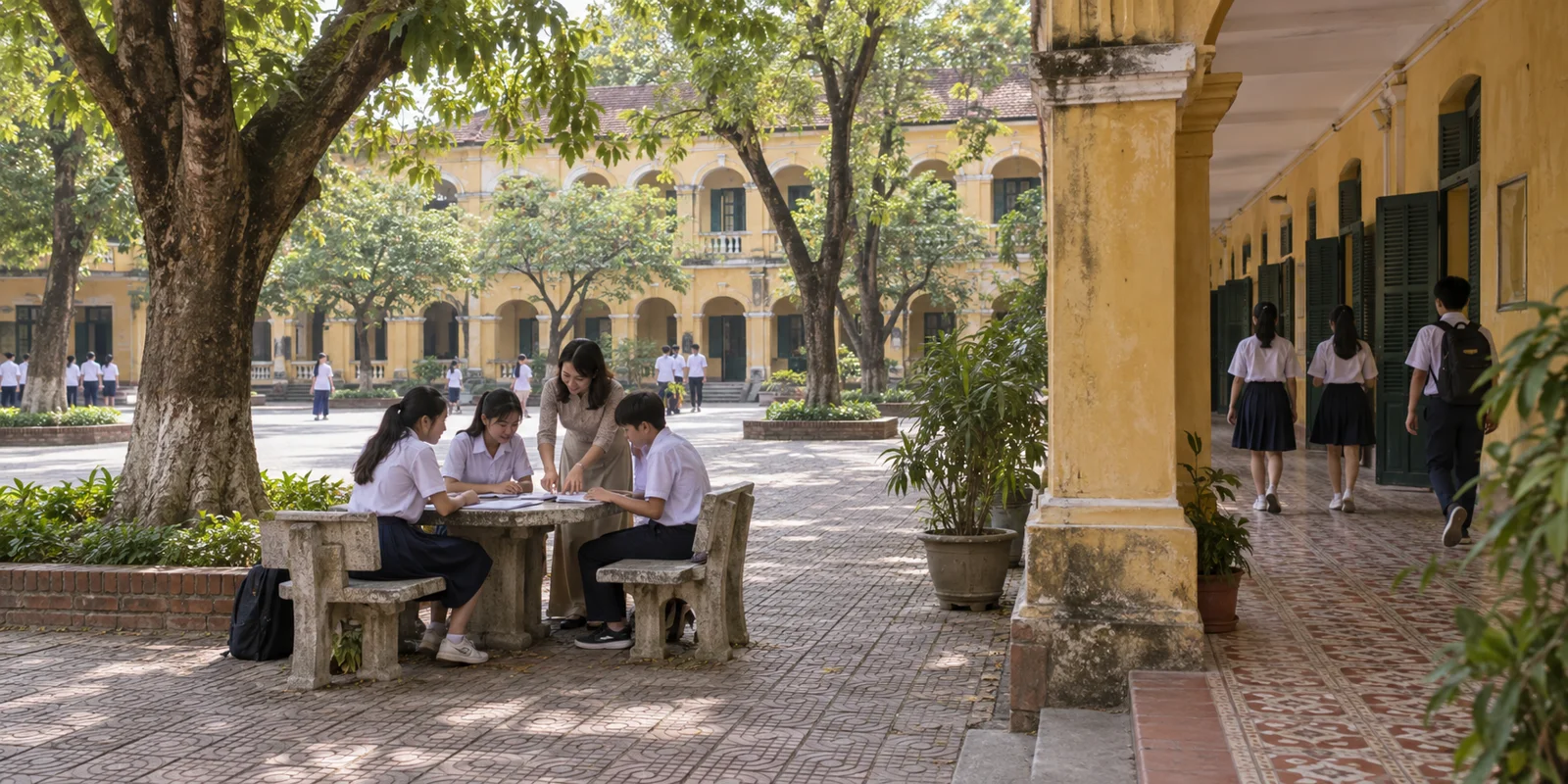
The Olympia SchoolsHanoi, Vietnam
Which plastic-reduction proposal would you choose, and what could change your mind? Build a Middle School task around evidence, cost and everyday use. Bring your class programme and materials to PLAI™ to shape and review a draft learners can question and revise.
AI-generated campus illustration. Not a photograph of this school.
The Olympia Schools connects deeper learning with applying knowledge to practical situations and working across subjects. Use that approach to compare two ways to reduce single-use plastic in one shared space. Ask learners to defend a recommendation, then reconsider it when the evidence or constraints change.
What can you tell me about The Olympia Schools in Hanoi and its approach to deeper learning? Use public sources, distinguish the bilingual, Vietnam-US and IB Diploma pathways, and flag anything you cannot confirm. Ask which grade and programme I teach before suggesting a task.
School context
School information is drawn from publicly available sources. The suggested classroom task is TopSchool editorial content.
Source research date: .
Please check the school’s official website (opens in a new tab) for current details.
Choose one shared space and two proposals to reduce single-use plastic. Compare the waste each could prevent, the cost and what daily use would involve. After learners recommend an option, introduce a changed constraint and ask whether their reasoning still holds.
Help me plan a Middle School inquiry comparing two plastic-reduction proposals for one shared space. Ask for my grade, programme, objective, language of instruction, proposals and evidence. Have learners identify the problem, compare likely waste reduction, cost and daily use, then justify a recommendation. Use a changed constraint I supply to ask whether they would revise it. Use my materials; leave evidence gaps visible. Do not invent real Olympia figures or policies.
Use the proposal sheet to record the issue, people affected, evidence, actions, resources and a review date. For this page’s task, prepare the material around comparing ways to reduce single-use plastic in a shared school space.
Help me prepare an original task about comparing ways to reduce single-use plastic in a shared school space for my confirmed class. I will supply the source content. Use Action proposal planner as a model for the teaching structure. Ask for my year group, goal and prior learning. Check the new subject content and age suitability, offer optional support and leave an independent explanation. Keep source facts distinct from this new task and do not infer school criteria.
Review the new comparing ways to reduce single-use plastic in a shared school space task for my confirmed class. Check the subject content, reading load and response space. Add optional support while keeping an independent explanation. Check who would need to agree and what evidence would show whether the action helped.
Use the source as a teaching model, then review the new task for your confirmed class.
For comparing ways to reduce single-use plastic in a shared school space, decide what pupils must explain independently. Check who would need to agree and what evidence would show whether the action helped.
Keep the conversation going
Tell PLAI™ what you want to change. Try one of these follow-ups with your draft, then check the result for your class.
Suggest a different opening question that connects this learning goal to something learners already know.
Add an optional vocabulary box and a sentence starter. Keep the main reasoning task and final independent question.
Add a follow-up question that asks learners to explain their reasoning in a new situation.
TopSchool independently prepared this page using publicly available information about The Olympia Schools. TopSchool is not affiliated with the school, and the school has not produced, approved or endorsed this page.
The teaching ideas and PLAI™ examples are illustrative. They do not represent the school’s lesson plans, policies or use of PLAI™. School information may change; please check the school’s official website (opens in a new tab) for current details.
Start with this comparison or a question from your current project. Give PLAI™ the objective, evidence and constraints, then review a draft that leaves the decision with your learners.
Start with PLAI™