
Find another way in
Suggest a different opening question that connects this learning goal to something learners already know.
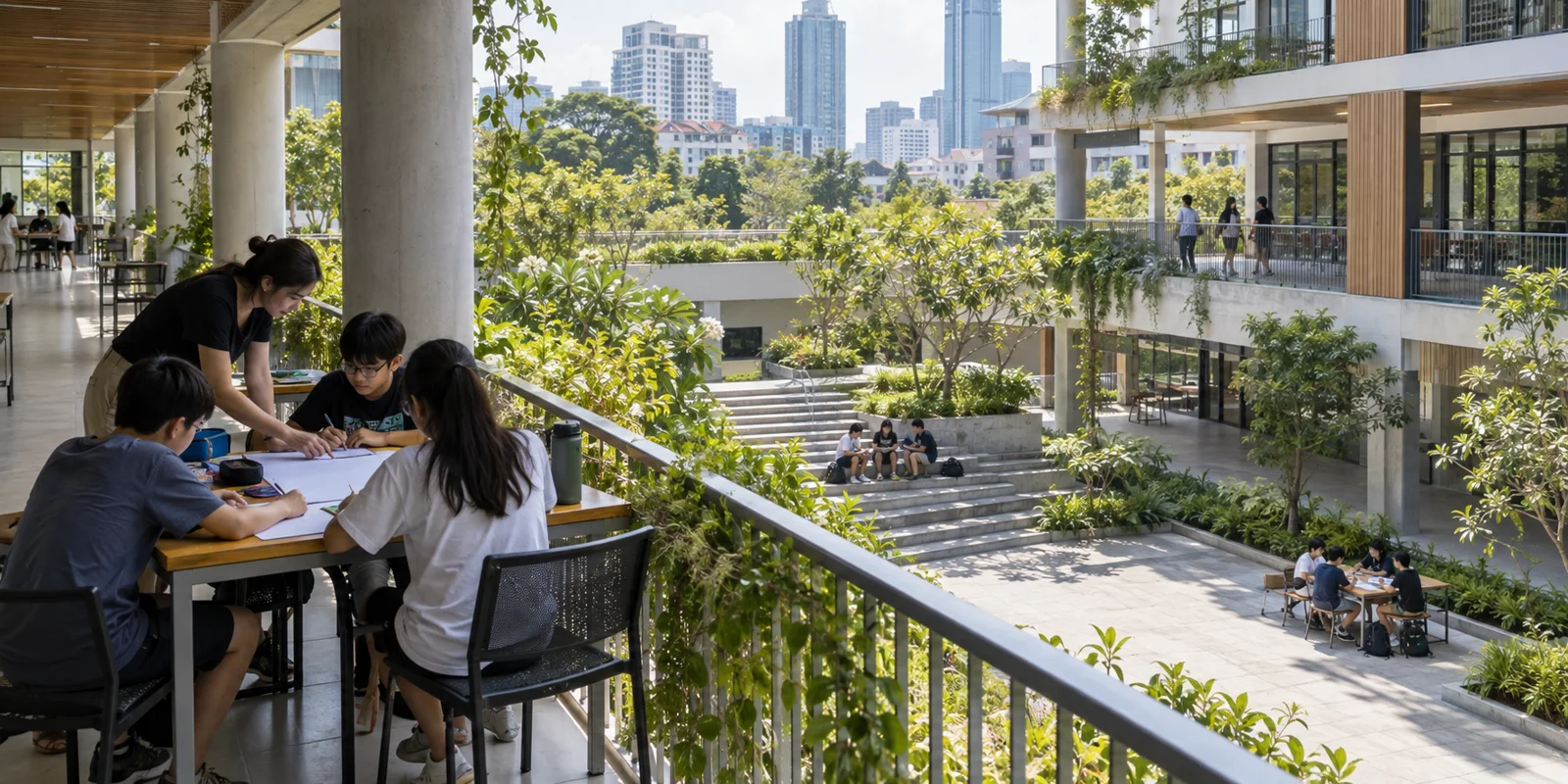
APU American International SchoolHo Chi Minh City, Vietnam
Your next task: explaining a simple energy-saving design. Bring your class and programme context to PLAI™, then shape the draft around what you want learners to understand.
AI-generated campus illustration. Not a photograph of this school.
APU frames learning around academic purpose and understanding. Start with this energy-saving task by asking learners to explain how the design works, then ask where that understanding applies.
What do you know about APU American International School and its curriculum?
School context
Help learners connect scientific reasoning to a practical purpose. Build towards that goal with a question, an activity and a chance to explain their thinking.
Help me plan an activity for lower secondary learners about explaining a simple energy-saving design. First ask for my year group, programme, objective and permitted materials. Include an opening question, a shared activity and an independent check. Help learners connect scientific reasoning to a practical purpose. Keep any practical work teacher-supervised and use only materials and procedures I approve. Do not ask pupils to taste substances, handle unsafe materials or conduct unsupervised fieldwork. Do not invent school assessment criteria or lesson sequences.
Use the proposal sheet to record the issue, people affected, evidence, actions, resources and a review date. For this page’s task, prepare the material around explaining a simple energy-saving design.
Help me prepare an original task about explaining a simple energy-saving design for my confirmed class. I will supply the source content. Use Action proposal planner as a model for the teaching structure. Ask for my year group, goal and prior learning. Check the new subject content and age suitability, offer optional support and leave an independent explanation. Keep source facts distinct from this new task and do not infer school criteria.
Review the new explaining a simple energy-saving design task for my confirmed class. Check the subject content, reading load and response space. Add optional support while keeping an independent explanation. Check who would need to agree and what evidence would show whether the action helped.
Use the source as a teaching model, then review the new task for your confirmed class.
For explaining a simple energy-saving design, decide what pupils must explain independently. Check who would need to agree and what evidence would show whether the action helped.
Keep the conversation going
Tell PLAI™ what you want to change. Try one of these follow-ups with your draft, then check the result for your class.
Suggest a different opening question that connects this learning goal to something learners already know.
Add an optional vocabulary box and a sentence starter. Keep the main reasoning task and final independent question.
Add a follow-up question that asks learners to explain their reasoning in a new situation.
Start with explaining a simple energy-saving design, or bring a topic of your own. Keep your learning objective and professional judgement at the centre.
Start with PLAI™