Science
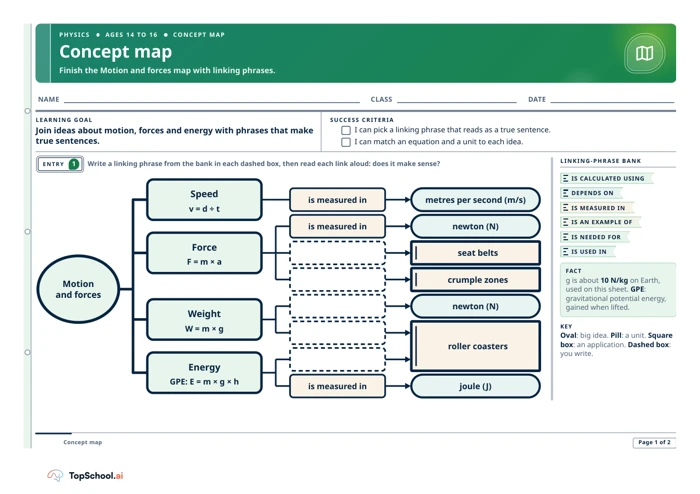
Motion and forces concept map
Explain relationships among motion, forces and energy using linking phrases, equations and units, then solve four associated calculations.

Physics teacher
I ask Physics pupils to estimate first and organise a situation with diagrams before choosing equations, then defend the answer through a method and a physical explanation.
Explore the collectionI teach Physics from Year 9 through A Level. I ask pupils to estimate first: if they have a rough sense of the size of an answer, they have a way to notice when a calculation has gone badly wrong. Diagrams also help us organise the situation before equations are introduced.
A diagram can show which quantities are connected and what the question is asking. I want pupils to choose a relationship and explain why it fits, rather than begin by searching for an equation that contains familiar symbols. That makes the calculation part of a chain of reasoning instead of a set of detached steps.
I look for resources that give pupils room to predict, represent and then calculate. A follow-up question can ask whether the result seems reasonable and what assumption the model makes. I value work where pupils can defend an answer through both a mathematical method and a physical explanation.
Estimate before calculating.
Draw a diagram before choosing equations.
Check whether an answer is physically reasonable.
Explore these templates and decide what fits your own setting.
Science
Explain relationships among motion, forces and energy using linking phrases, equations and units, then solve four associated calculations.
Science
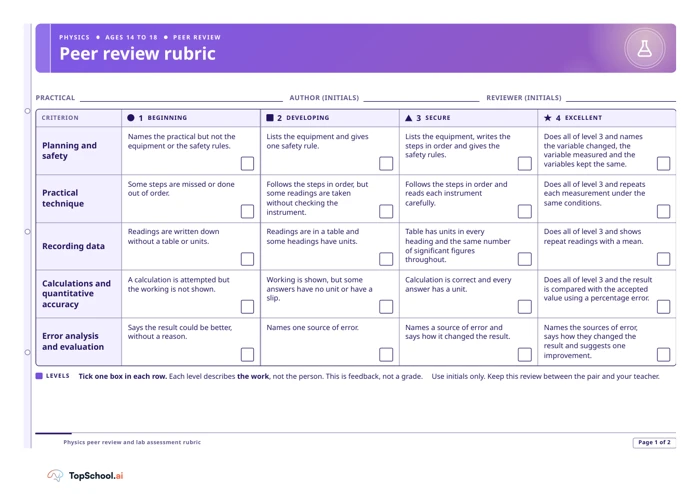
Use the rubric to identify evidence in a practical report, give a specific improvement suggestion and reflect on a response to peer feedback.
Science
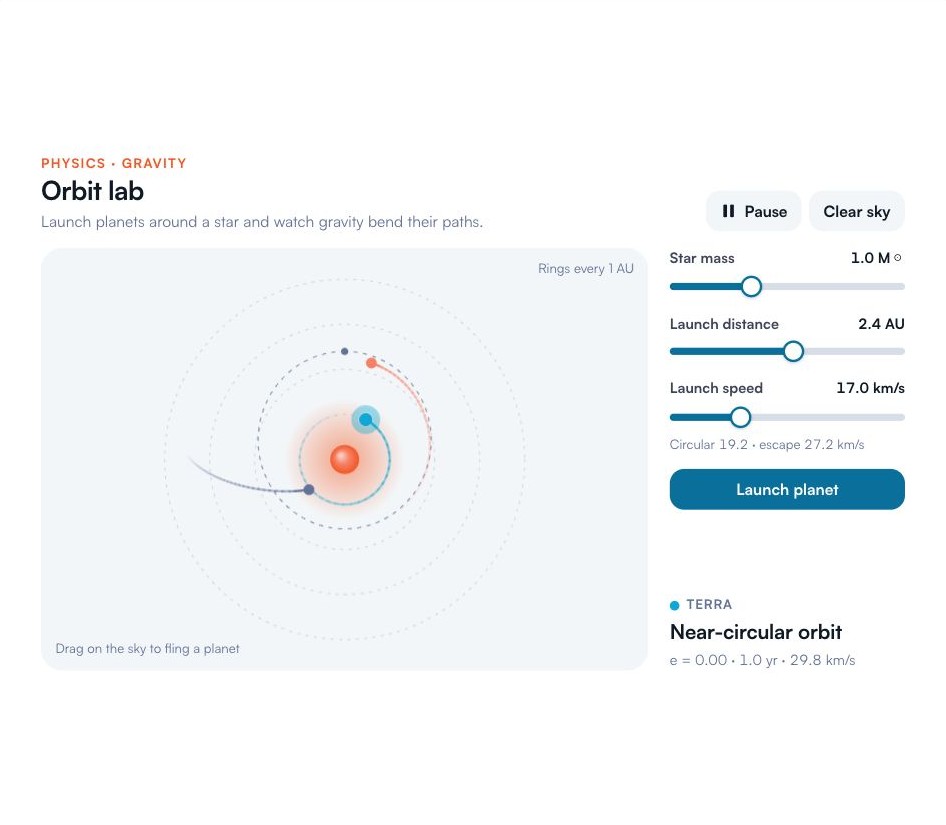
Investigate how changing one starting condition affects a simulated planetary path, and use the readout to describe the resulting orbit.
Science
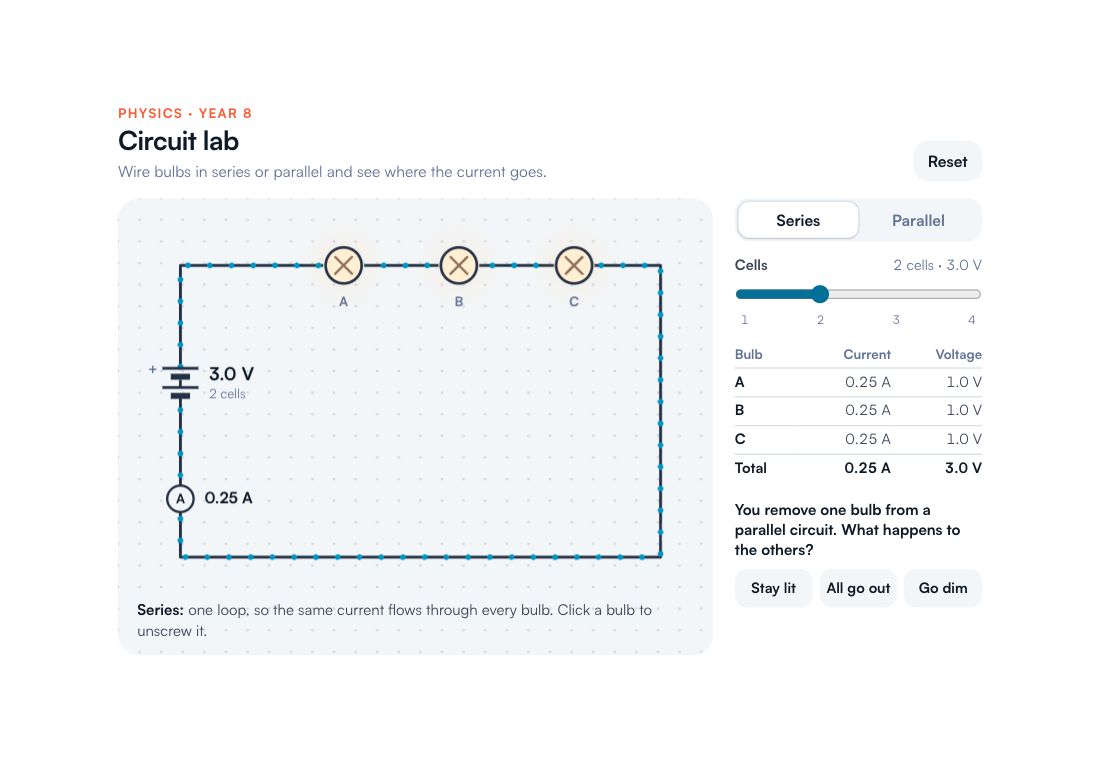
Trace series and parallel paths, predict what a break will change and use the model readouts to defend the explanation.