Maths
Fractions three ways: show, compare and share
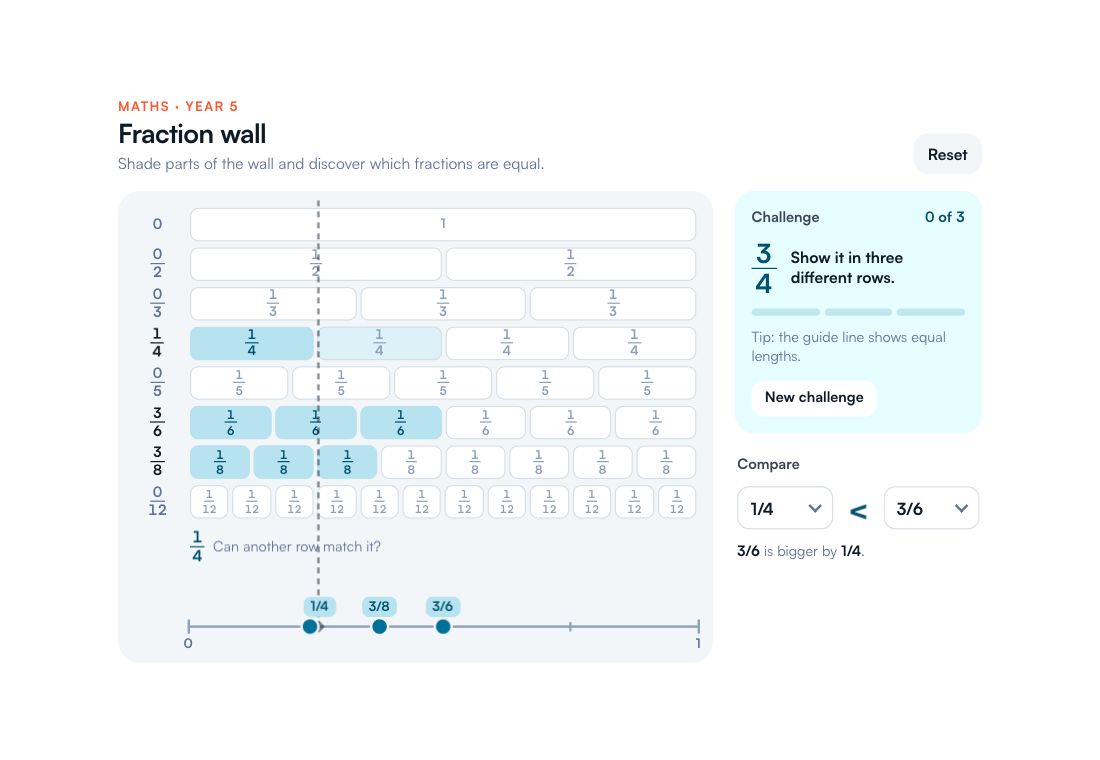
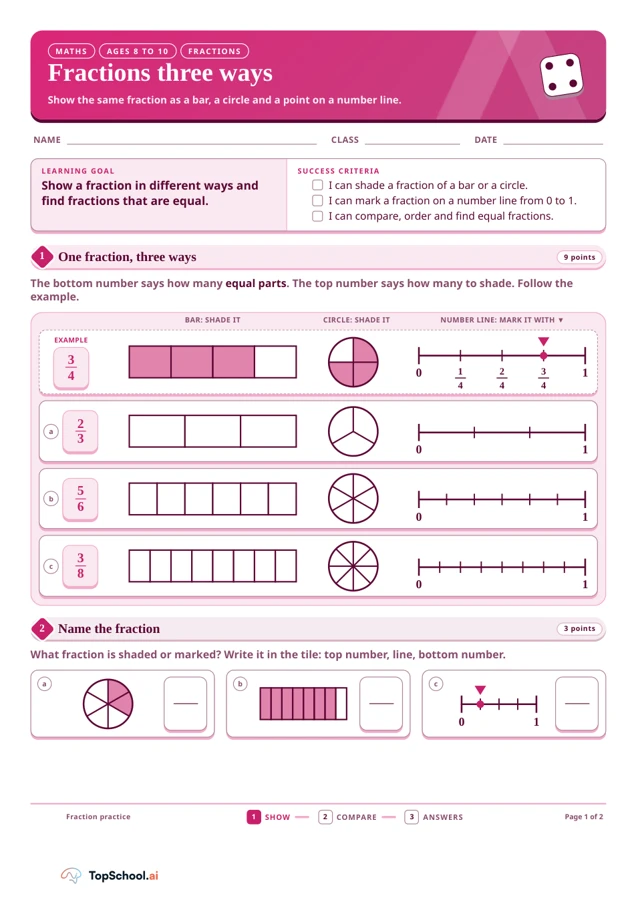
Represent fractions visually, recognise equivalent fractions, compare values and find a fraction of an amount.

Year 3 teacher and Mathematics lead
I want all pupils to work with a meaningful mathematical idea and have a chance to explain, test or revise their approach.
Explore the collectionI teach Year 3 and lead Mathematics across the school. This is a point where mathematical work changes, and I want children to feel that they can make the next step without losing confidence. Clear examples and time to practise can make a new kind of problem less daunting.
I pay attention to how pupils explain their thinking as well as whether they reach an answer. A child may understand an idea but need another way to record it. I look for resources that let teachers see those different approaches and decide what needs more modelling or discussion.
I also value challenge problems for pupils who are ready to explore a question further. The extension should invite reasoning rather than simply offer more of the same. I want all pupils to work with a meaningful mathematical idea and have a chance to explain, test or revise their approach.
Build confidence through the transition to junior Mathematics.
Use explanations to notice what pupils understand.
Offer reasoning-based challenge for pupils ready to extend an idea.
Explore these templates and decide what fits your own setting.
Maths
Represent fractions visually, recognise equivalent fractions, compare values and find a fraction of an amount.
Maths
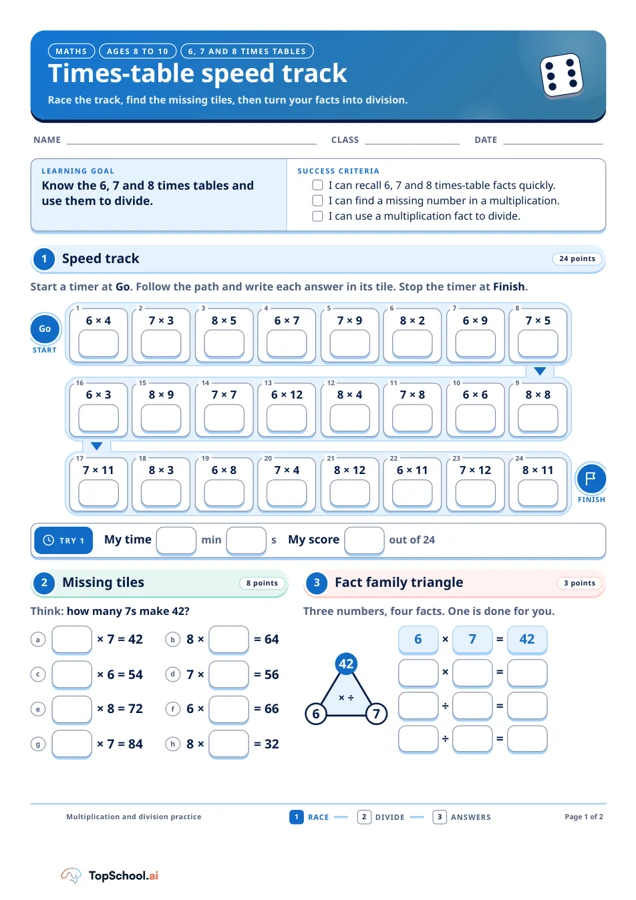
Recall selected 6, 7 and 8 multiplication facts, find a missing factor, and use a known multiplication fact to calculate a related division fact.
Maths
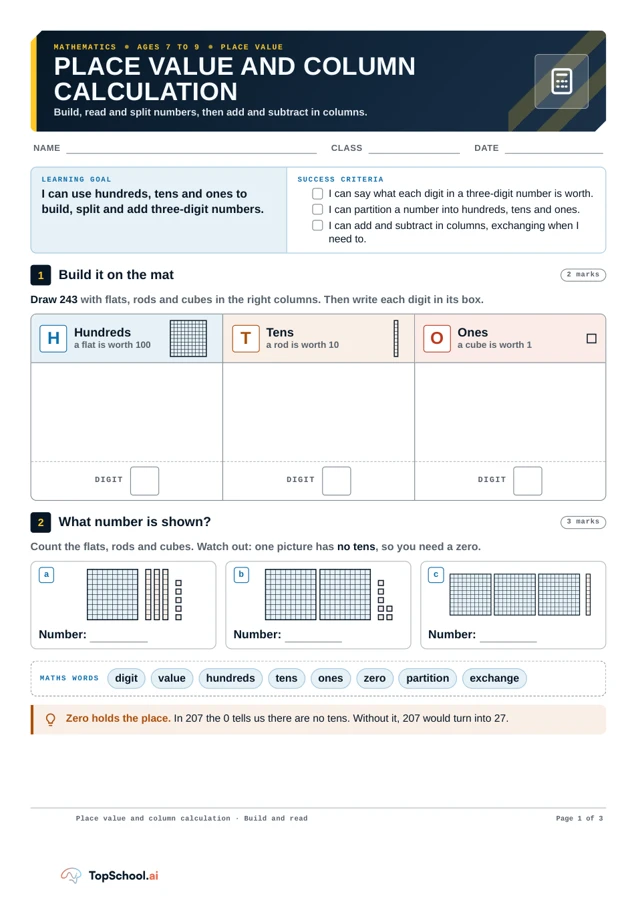
Represent three-digit numbers in hundreds, tens and ones, partition them and calculate addition or subtraction in columns, exchanging when required.
Maths
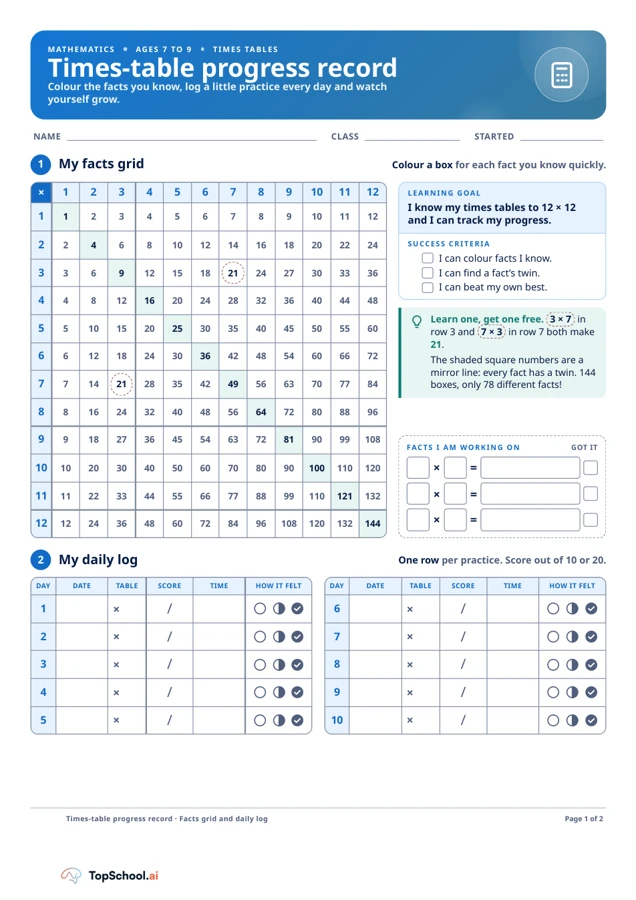
Practise multiplication facts, use a known fact to derive another and reflect on personal practice using a score, time or strategy that feels useful.
Maths
Keep the whole the same while comparing shaded lengths, finding equivalent fractions and explaining why the amounts match.