Languages and literacy
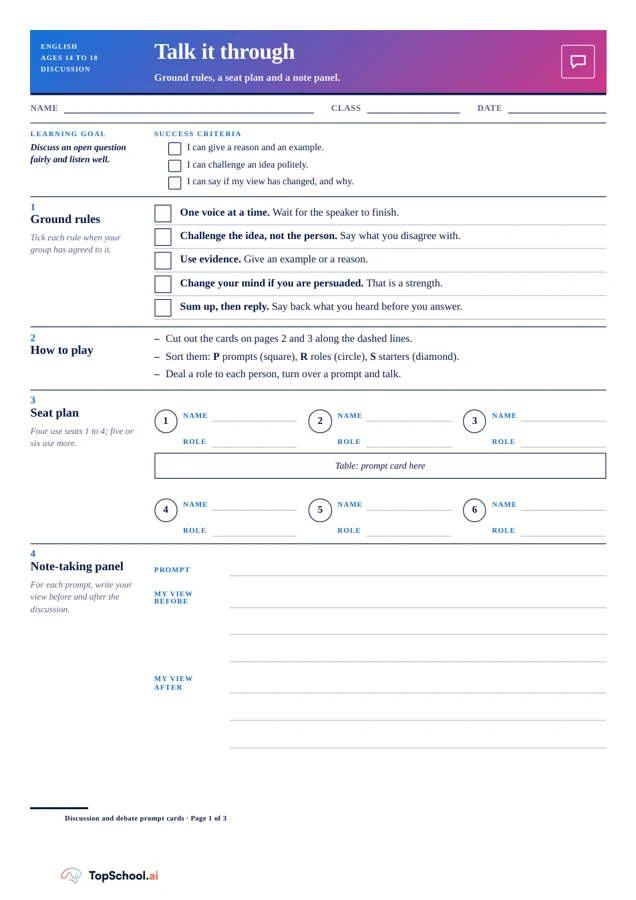
Talk it through: discussion and debate cards
Contribute to a discussion by giving reasons and examples, challenging ideas respectfully and explaining whether or why a view changed.

Head of Sixth Form and English Literature teacher
I ask sixth-form English Literature pupils to support interpretations with details, consider another reader’s view and develop thoughtful responses as they take more responsibility for their reading.
Explore the collectionI teach English Literature in Years 12 and 13 and lead the sixth form. At this stage I want pupils to take more responsibility for reading and interpretation. Teaching still matters, but it should help them become independent readers rather than extend the same pattern of instruction used earlier.
Discussion can open a text in different ways. I want pupils to support an interpretation, return to details and consider why another reader might see something differently. The teacher can help make the reading demands clear while leaving space for pupils to develop a thoughtful response of their own.
Families also need accessible information about the choices and qualifications involved in sixth form. I look for resources that explain a pathway without blurring the distinction between AS and A Level. Clear guidance helps a conversation begin, while the student and family still make decisions in light of their own plans.
Support independent reading and interpretation.
Ask pupils to return to textual detail and consider alternatives.
Explain AS and A Level clearly in family-facing information.
Explore these templates and decide what fits your own setting.
Languages and literacy
Contribute to a discussion by giving reasons and examples, challenging ideas respectfully and explaining whether or why a view changed.
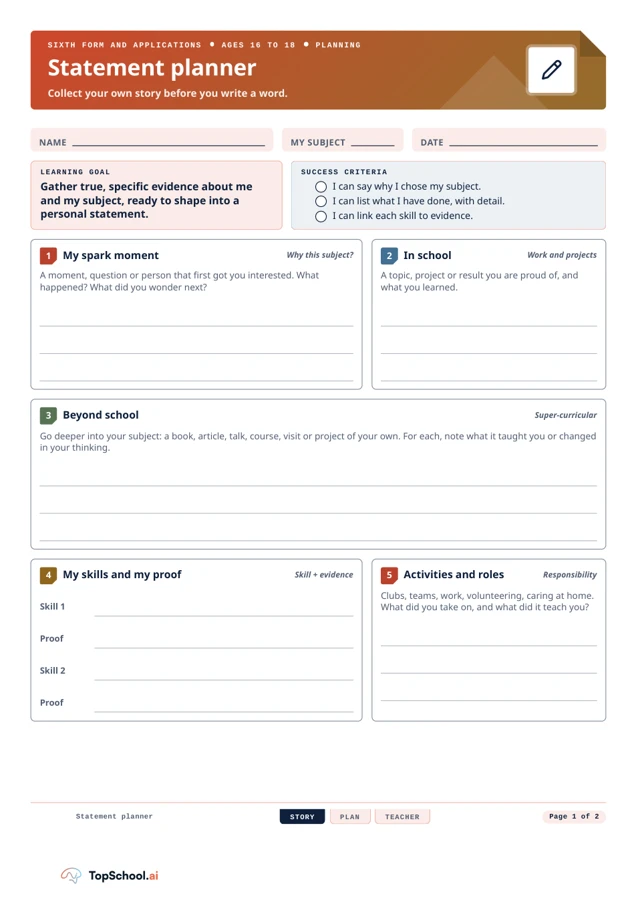
Study and learning skills
Select truthful, specific examples, explain what they show about subject interest or skills, and organise them into a personal-statement plan.
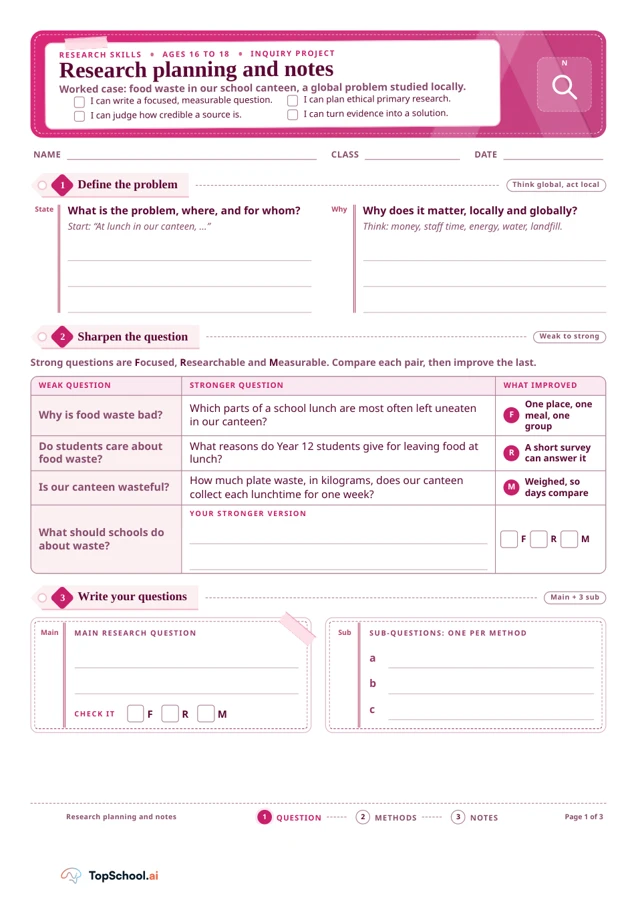
Study and learning skills
Write a focused, researchable and measurable question; plan primary methods with consent and anonymity in mind; judge sources; take notes in pupils’ own words; and propose an evidence-linked action.
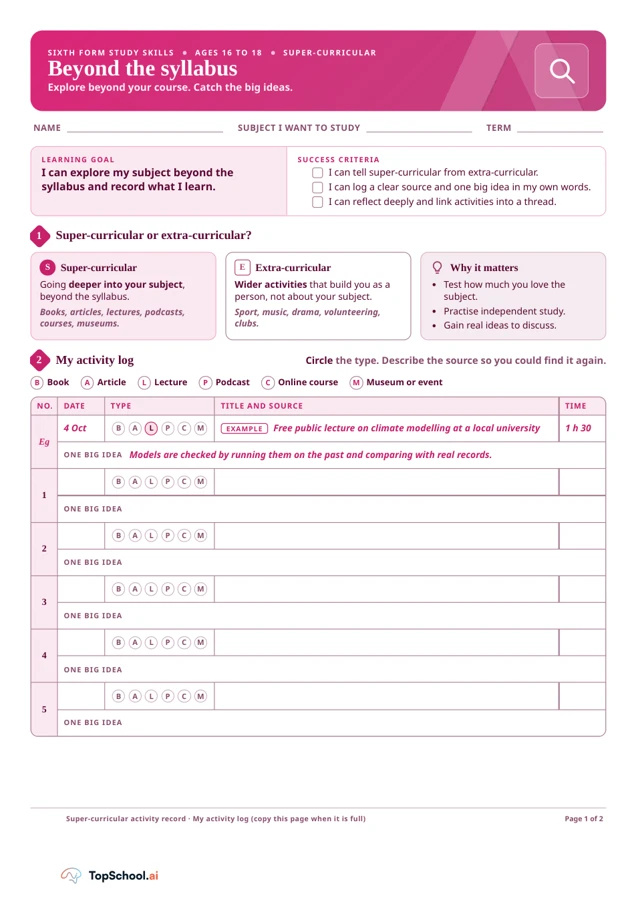
Study and learning skills
Distinguish subject-deepening activities from wider extra-curricular experiences, record useful sources and ideas, and explain how an activity connects with a developing interest.
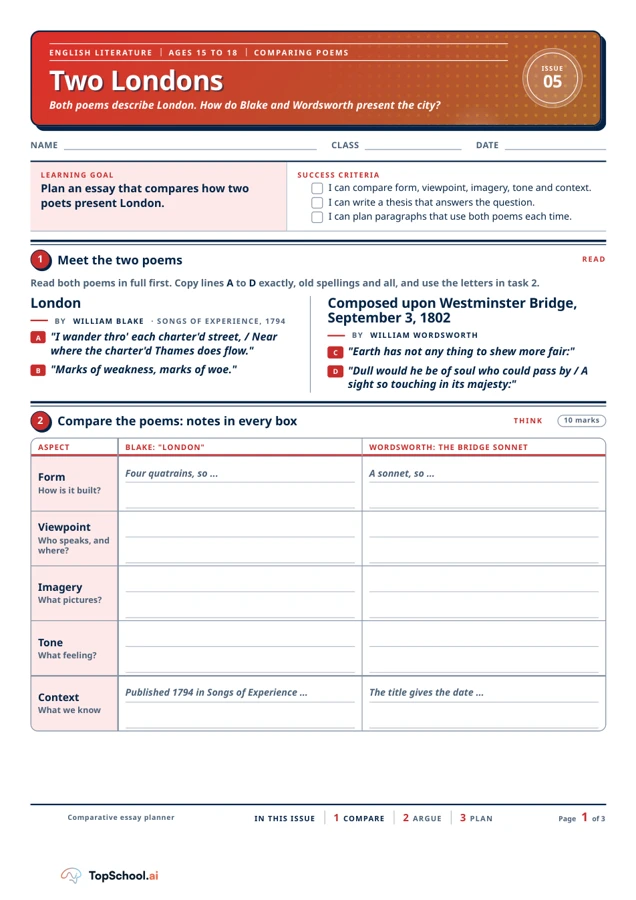
Languages and literacy
Plan a comparison of two poems, linking quotations and interpretation to the question in each paragraph.