History and social studies
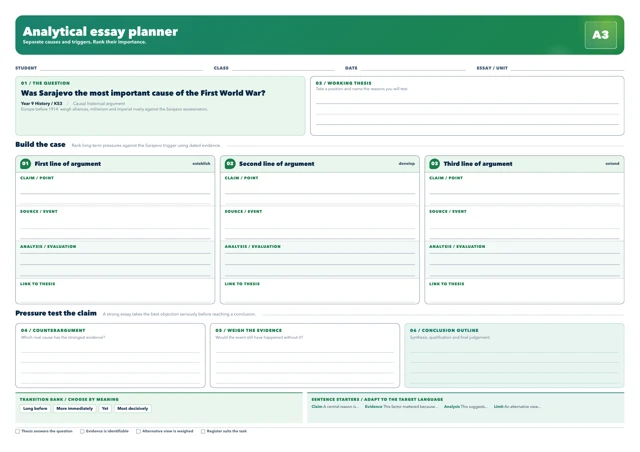
Analytical essay planner: causes of the First World War
Develop a historical argument that answers the question, supports claims with identifiable evidence and weighs an alternative cause before reaching a judgement.

Teacher of History; Key Stage 3 History Coordinator
I want scaffolds that help pupils access a source at different reading levels while keeping the question and historical method intact.
Explore the collectionI teach History from Key Stage 3 to GCSE and coordinate the younger years’ curriculum. Our Year 9 local study examines post-war population change in the city, giving pupils a historical question rooted in place and evidence.
Document analysis is central to that work, but reading demands vary. I want scaffolds that help pupils access a source at different reading levels while keeping the question and historical method intact. The source should remain something to interrogate, not just a passage to extract a fact from.
After mock papers, feedback also has to be returned across many classes. I look for ways to make it timely and useful, so pupils can see the next step in their answer rather than receive a general judgement. Curriculum planning and assessment meet when the feedback points back to the reasoning History asks them to do.
Use local sources to investigate post-war population change as a historical question.
Vary reading support while keeping document analysis rigorous.
Make mock feedback point to a specific next step in historical reasoning.
Explore these templates and decide what fits your own setting.
History and social studies
Develop a historical argument that answers the question, supports claims with identifiable evidence and weighs an alternative cause before reaching a judgement.
History and social studies
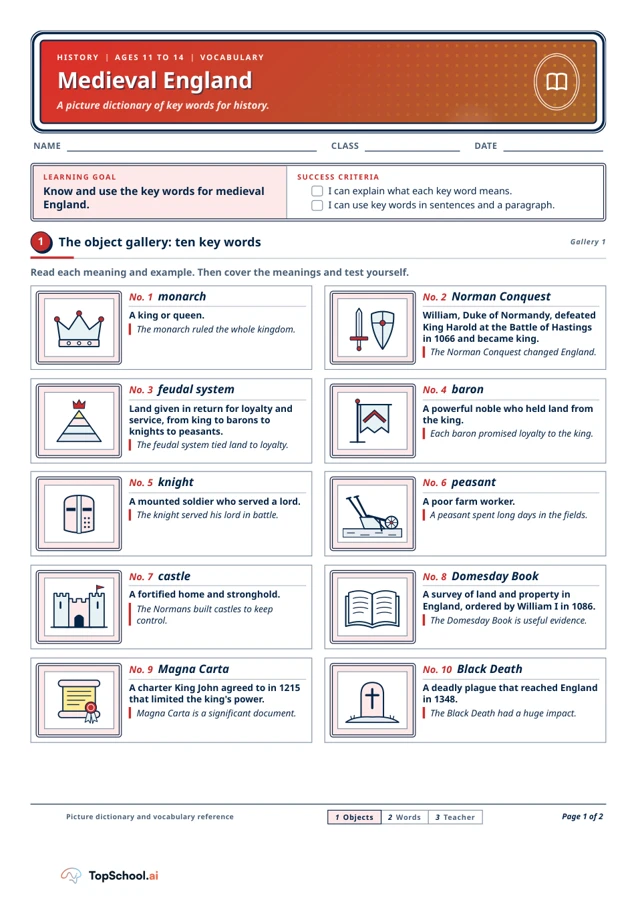
Explain selected medieval England vocabulary, match historical terms with their meanings and use at least three terms in a short evidence-focused paragraph.
History and social studies
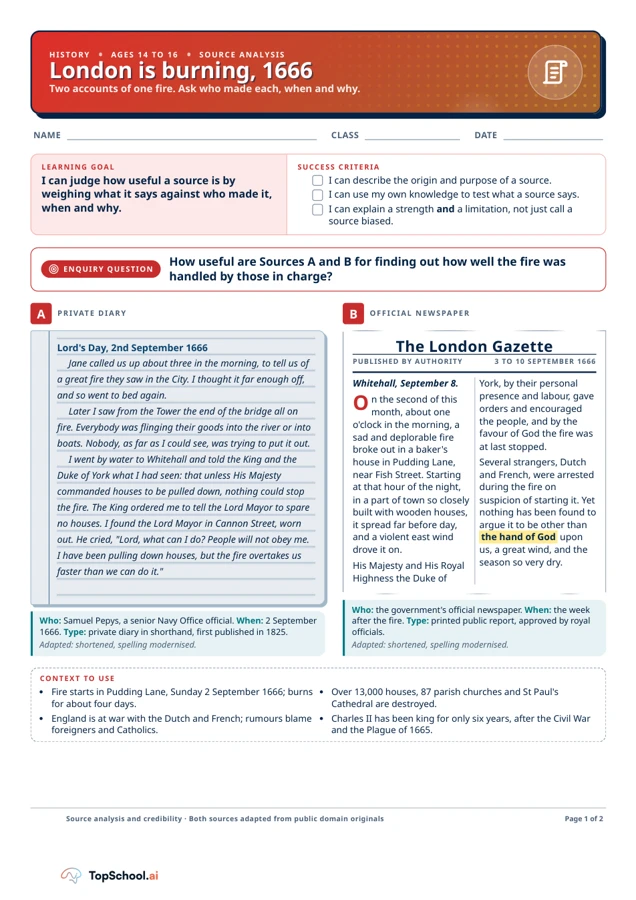
Use source origin, purpose, content and historical context to make a supported judgement about how useful two accounts are for an enquiry.
History and social studies
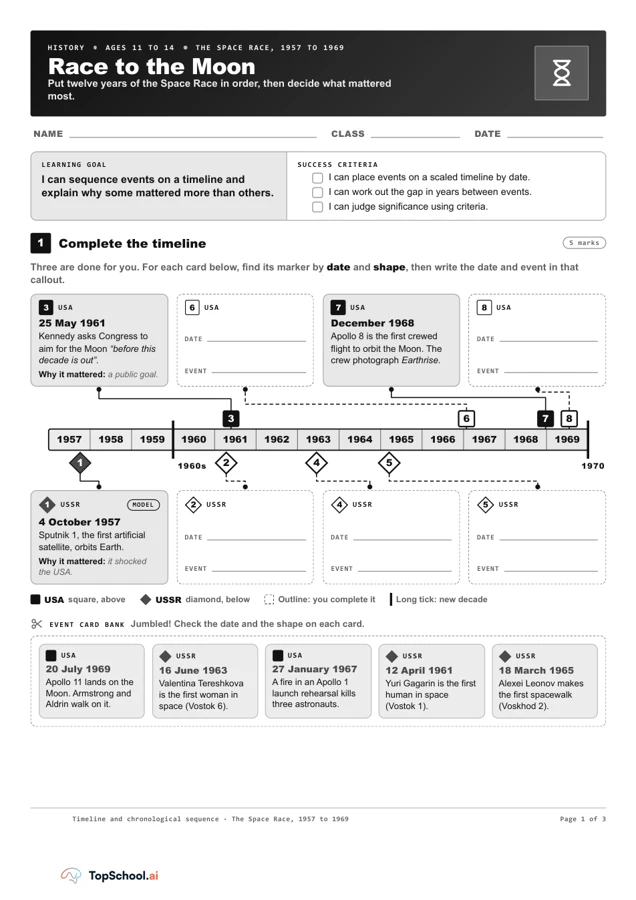
Sequence selected events from 1957 to 1969, calculate intervals and use stated criteria to support a judgement about historical significance.