Wellbeing and personal development
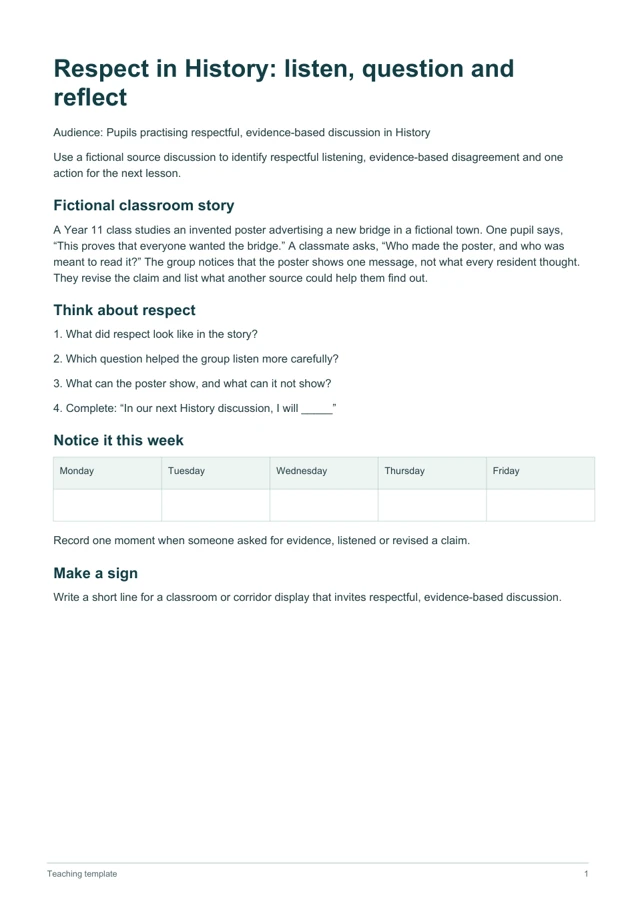
Respect in History: listen, question and reflect
Use a fictional source discussion to identify respectful listening, evidence-based disagreement and one action for the next lesson.

Headteacher; Designated Safeguarding Lead (accountable officer)
I keep Year 11 History teaching in my week so leadership stays connected to pupils’ explanations, alongside clear reporting that distinguishes classroom evidence from cohort summaries.
Explore the collectionI lead the school and keep one Year 11 History intervention group in my week. Teaching that group keeps leadership close to the questions pupils are still working through, alongside the summaries and data used to discuss a leaving cohort. The two views matter: what a report shows and what a pupil can explain in a lesson are not the same kind of evidence.
My leadership work also involves explaining the school clearly to governors and families. New reporting frameworks can encourage language that sounds precise but is hard to understand. I look for wording that says what is known, what is not, and what a reader should take from the information without requiring an internal glossary.
Safeguarding and attendance information calls for particular care. A useful summary should be accurate and readable, with the right boundary around personal details. That classroom perspective informs how I talk about the school’s progress, while a formal summary still has to stay within what its evidence can show.
Separate what assessment data shows from what a pupil explains in the History group.
Define reporting terms for governors and families rather than relying on internal shorthand.
Keep identifying details out of general safeguarding and attendance summaries.
Explore these templates and decide what fits your own setting.
Wellbeing and personal development
Use a fictional source discussion to identify respectful listening, evidence-based disagreement and one action for the next lesson.
Worksheet
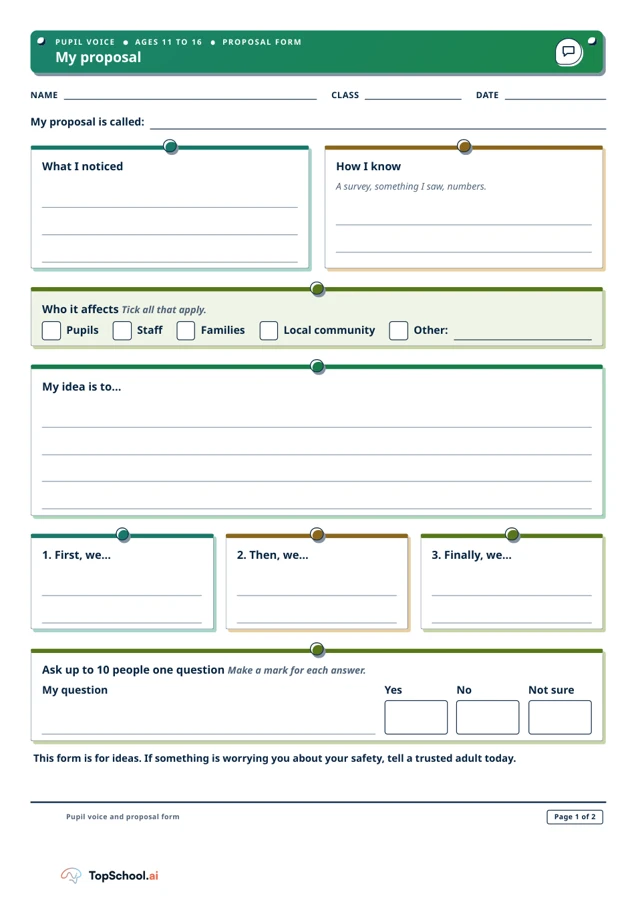
Describe a school or community issue, propose a sequence of actions, consider benefits and risks, and state what evidence could show whether the idea worked.