Science
The water cycle in English, Spanish and your language
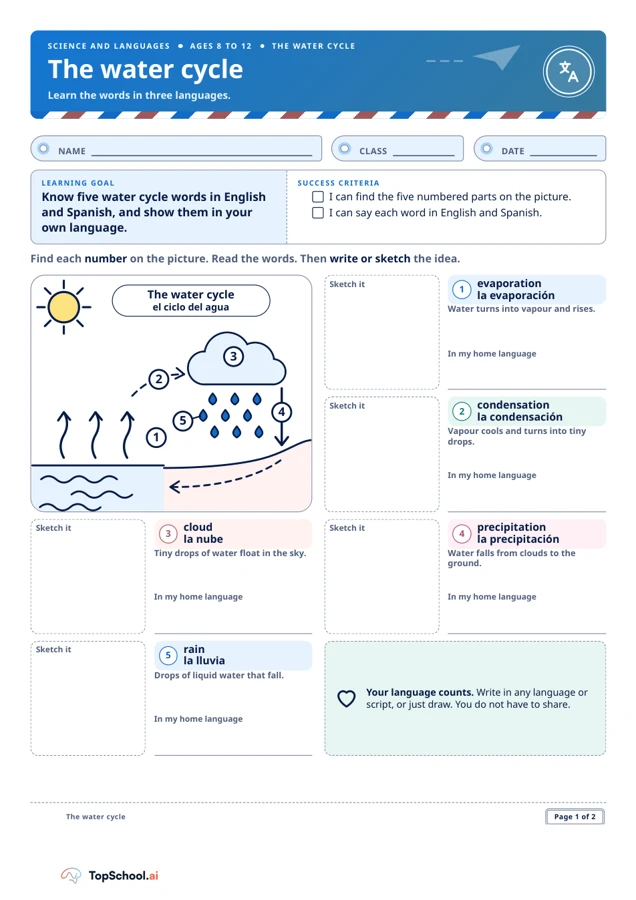
Connect water-cycle concepts with English and Spanish terms, then express or draw an understanding in an optional additional language.

Secondary EAL specialist teacher
A word list can help, but it is more useful when pupils see how the language works in a text, a question or a discussion they are already trying to follow.
Explore the collectionI support English as an Additional Language across lower and upper secondary. A pupil may sound confident in everyday conversation and still find the language of a subject or examination difficult to access. I want teaching to pay attention to that difference instead of assuming that spoken fluency means every academic demand is clear.
Academic language needs to be made visible. I look for the vocabulary, sentence structures and ways of explaining that pupils need in a particular subject. A word list can help, but it is more useful when pupils see how the language works in a text, a question or a discussion they are already trying to follow.
I value resources that let teachers identify a language demand and give pupils a practical way to work with it. A prompt or model should support the subject learning rather than become a separate test of English. I want to work with colleagues so pupils can participate in the lesson and build the language they need to show their understanding.
Notice academic-language demands beyond everyday conversation.
Teach vocabulary and sentence patterns in the subject context.
Use language support to open access to the task.
Explore these templates and decide what fits your own setting.
Science
Connect water-cycle concepts with English and Spanish terms, then express or draw an understanding in an optional additional language.
Languages and literacy · Science
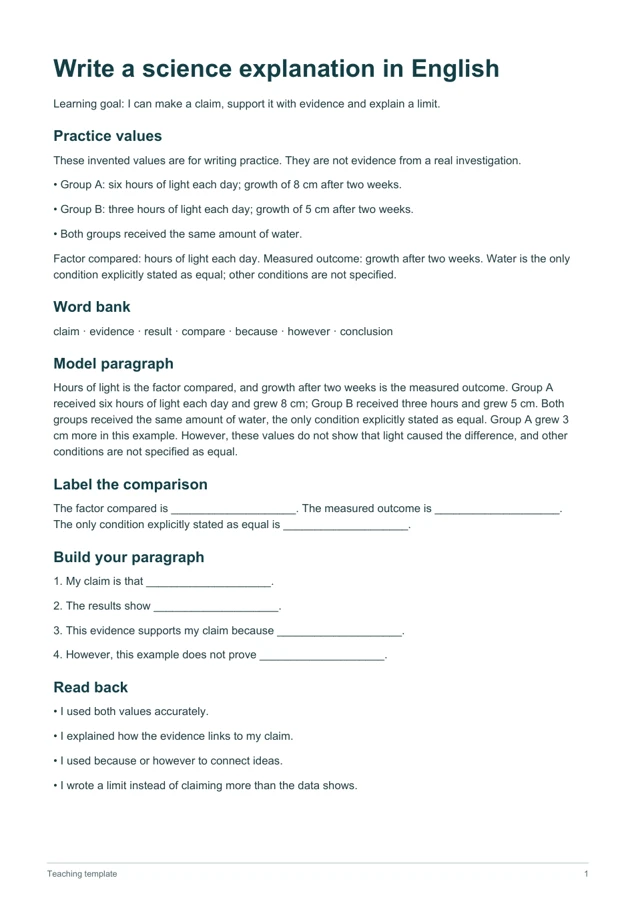
Write a connected English paragraph that makes a claim, quotes a result and explains what the evidence does and does not show.
Languages and literacy
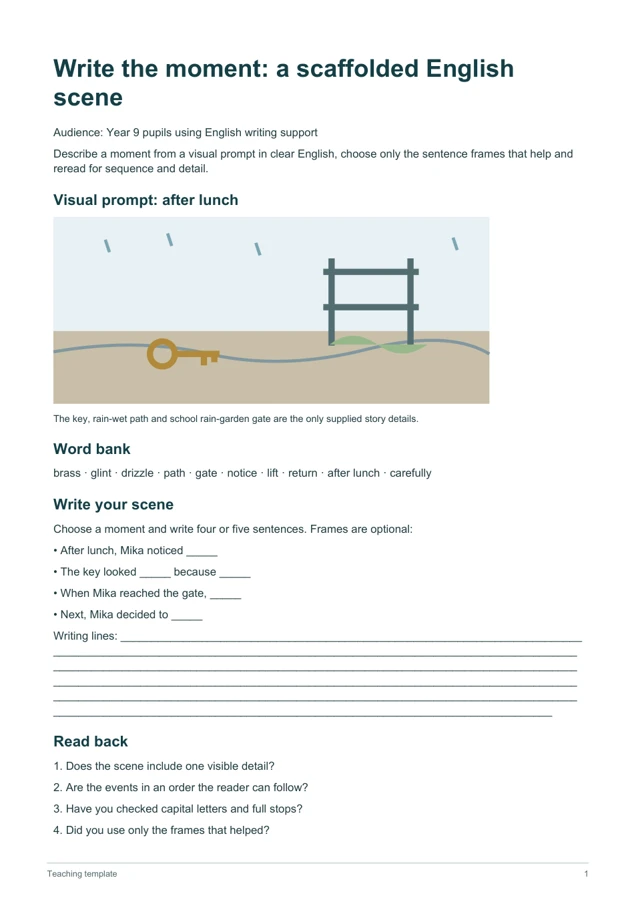
Describe a moment from a visual prompt in clear English, choose only the sentence frames that help and reread for sequence and detail.
Science
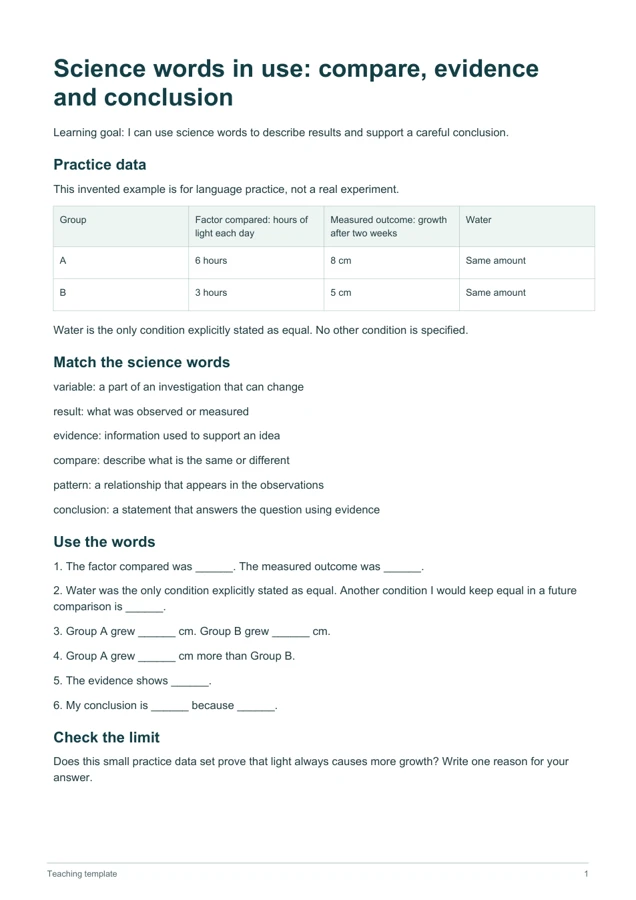
Explain six common science words and use evidence and because to connect a result with a cautious conclusion.
Science
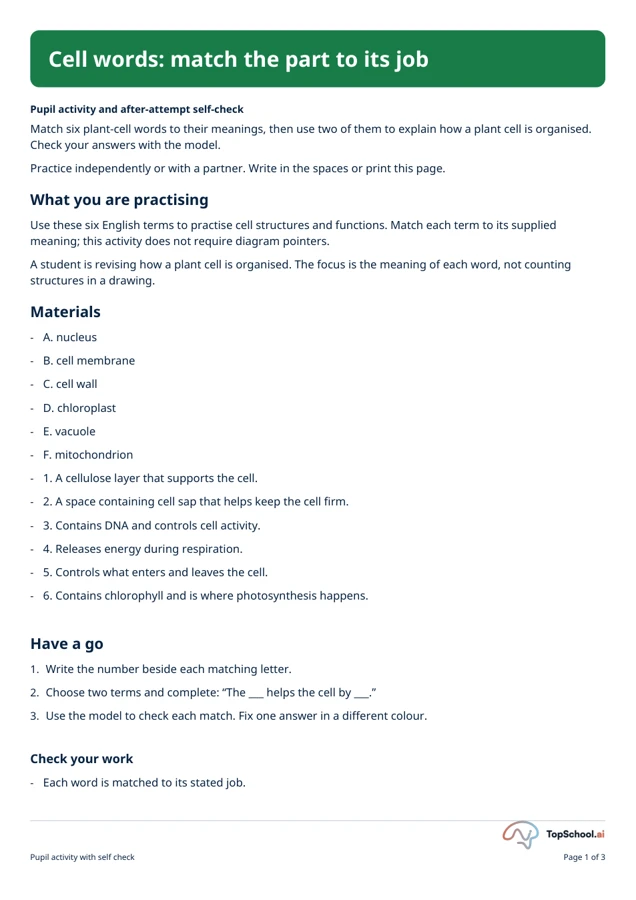
Connect each plant-cell term to its job and use accurate vocabulary in a short explanation.