Languages and literacy
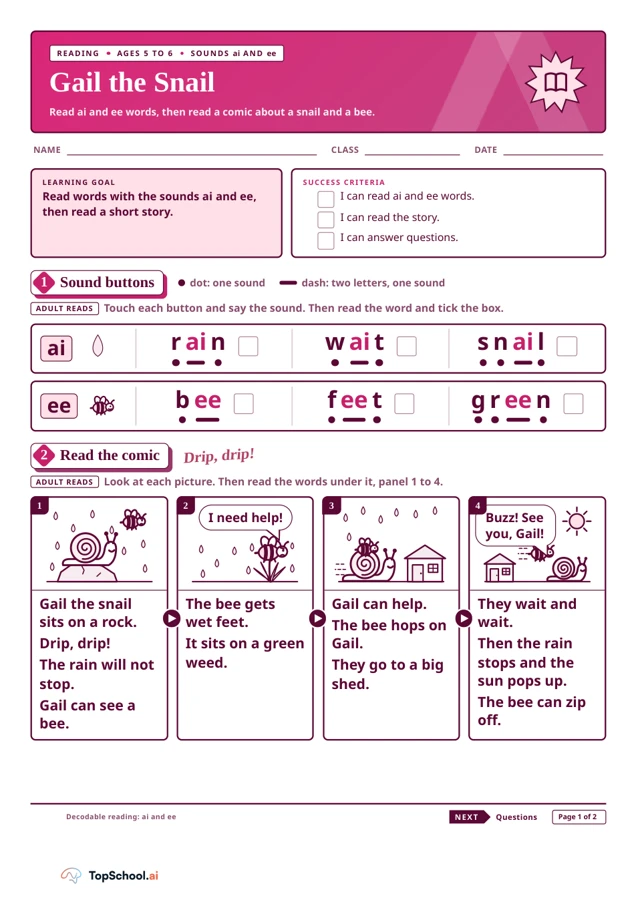
Gail the Snail: ai and ee reading
Read words containing ai and ee, follow a short illustrated story and answer questions by referring back to the text.

Year 2 teacher, Key Stage 1 and early reading lead
I look at how a pupil applies a sound or pattern and decide whether to revisit it, model another word or move on.
Explore the collectionI teach Year 2 and lead Key Stage 1, English and early reading. Phonics needs a clear sequence and regular review so teachers can see what pupils have learned and where another example may help. I want reading to be taught deliberately rather than left to chance.
Children need practice that is consistent but still responsive. I look at how a pupil applies a sound or pattern and decide whether to revisit it, model another word or move on. Reading buddies and shared books can also give pupils time to use their skills with a purpose.
I value resources that help teachers keep the teaching sequence clear and explain a next step. A checklist can support review, but it should not replace a teacher’s observation of the pupil reading. I want early reading to be a shared priority, with practice that builds confidence and keeps books inviting.
Teach phonics through a consistent sequence.
Review reading to decide what to revisit or extend.
Combine skill practice with reading for meaning and pleasure.
Explore these templates and decide what fits your own setting.
Languages and literacy
Read words containing ai and ee, follow a short illustrated story and answer questions by referring back to the text.
Languages and literacy
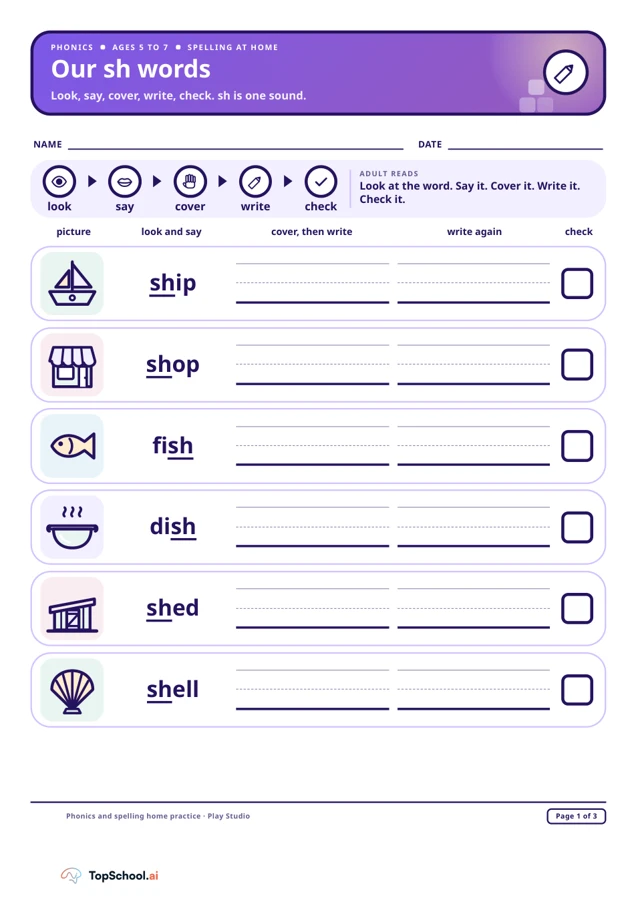
Read and spell the printed sh words by looking closely at the spelling, recalling it after covering, writing it and checking the result.
Languages and literacy
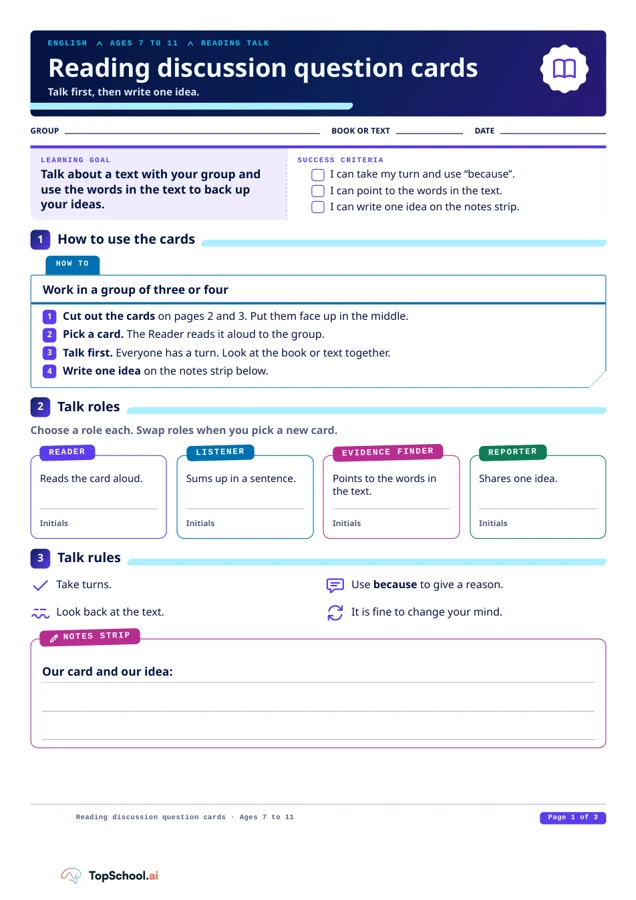
Take turns discussing a text, use evidence to support an idea and record one response from the group’s conversation with a quotation or passage detail.
Languages and literacy
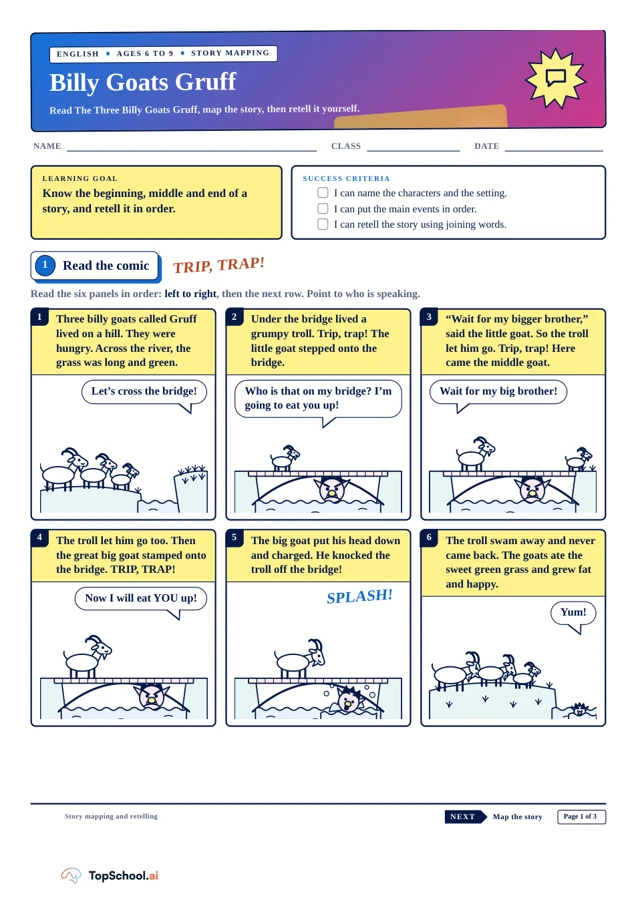
Identify characters and setting, sequence key events and retell a story in your own words using time-joining words.