Start with one useful teaching resource
Choose one teaching resource for a clear purpose. Use a reading example to check the task, possible answers and support before deciding how to use it.

On this page3 sections
A resource is easier to choose when you know what you want pupils to practise. Start with one purpose for your next lesson, then find a task that serves it. Read the material, work through a possible answer and decide what support to prepare. That gives you something specific to use, adapt or put aside.
Choose the task you want pupils to practise
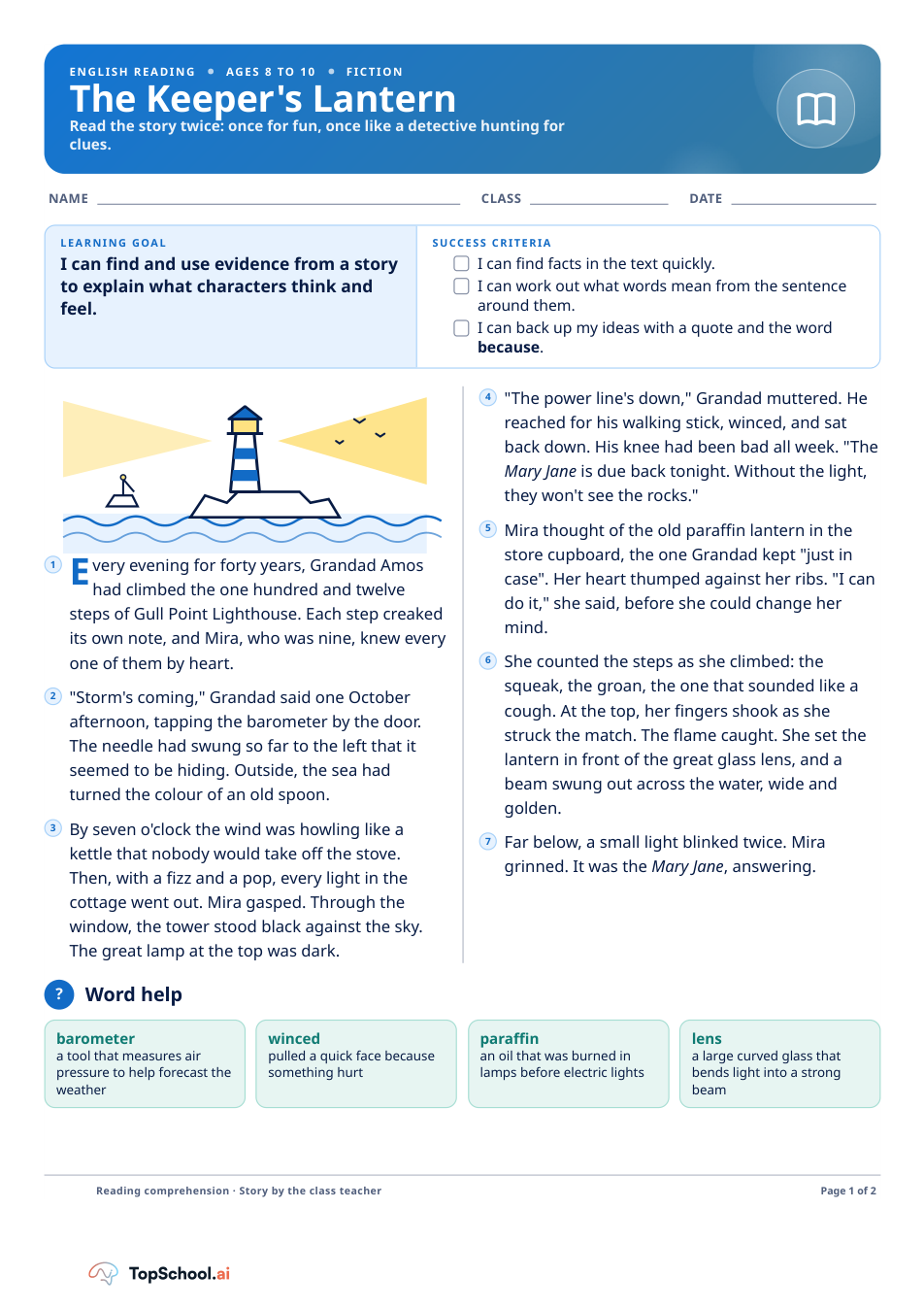
Perhaps you want pupils to explain how a character feels and support their interpretation with evidence. The Keeper’s Lantern offers a starting point: a short fictional story followed by questions about the text.
Read both pages before selecting a question. Look at the vocabulary, the instructions and the response pupils are asked to give. The story’s lighthouse setting may need explanation, even for pupils who can read the words confidently. Choose the task around what your class is ready to practise.
View the worksheet 2 pages
The Keeper’s Lantern
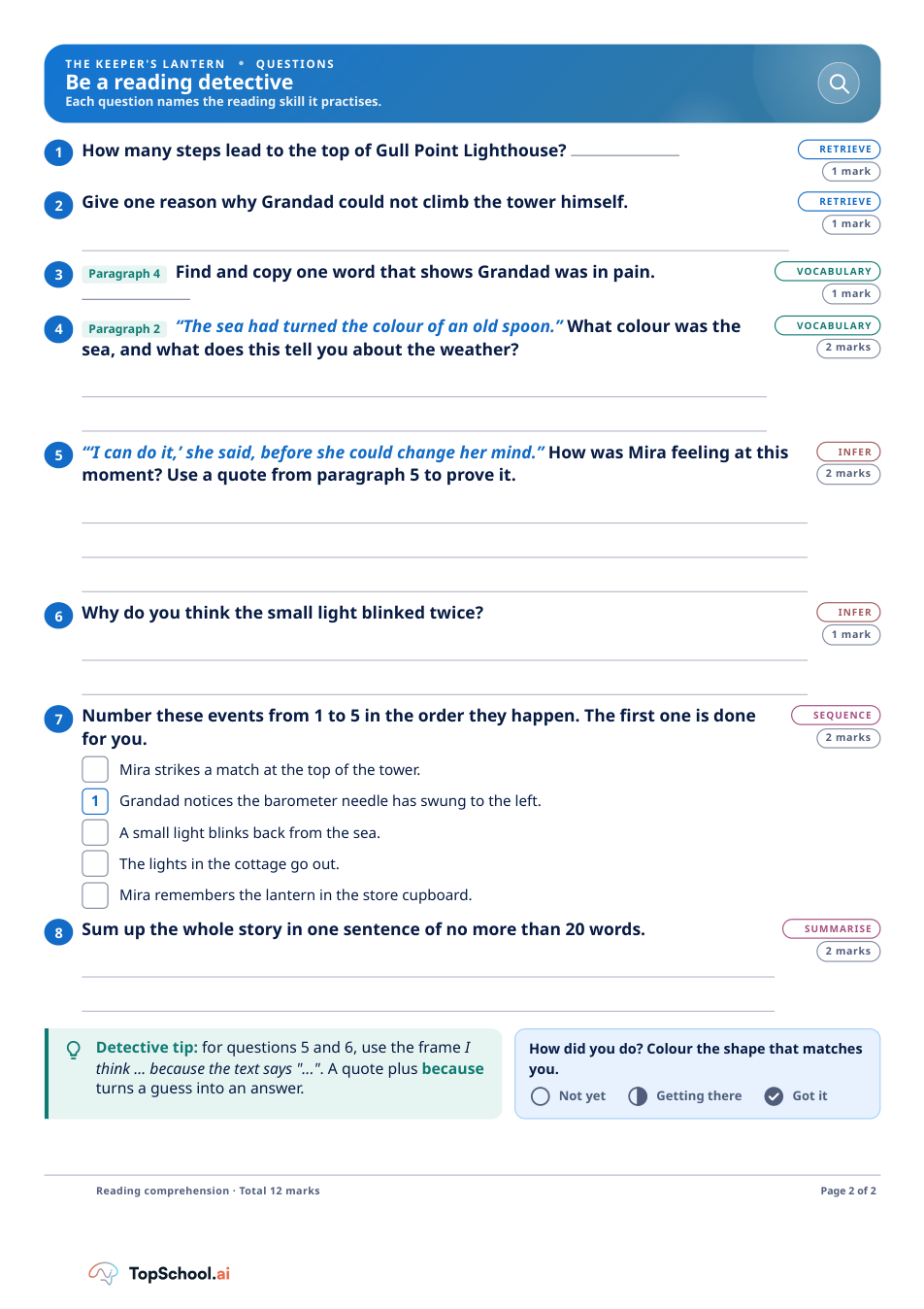
Read both pages here. Question 5 is on page 2.
Check what a good answer could show
Question 5 asks pupils to infer how Mira feels and use evidence from paragraph 5. Before using it, consider which interpretations the passage could support.
For example, “Her heart thumped against her ribs” could suggest that she is nervous. A pupil would also need to explain how that physical reaction supports their reading of the moment. Another interpretation may be reasonable if they can connect it convincingly to the text.
This gives you something to listen for: the link between the pupil’s idea and the evidence they have chosen. Copying a relevant sentence alone leaves you with a further question about their understanding.
Prepare your own possible answer, but keep it for checking and discussion. If pupils see the complete explanation first, their later response may show that they can follow your example. You will need another opportunity to see how they make the connection themselves.
Decide what support your class needs
Think about where pupils might get stuck. Would an unfamiliar word interrupt their reading? Can they find the paragraph? Would discussing an idea aloud help them explain it in writing?
The resource includes vocabulary help and a suggested sentence frame. You could ask pupils to locate a clue together, then leave them to explain why it matters. Keep the support close to the difficulty you have identified.
The EEF’s guidance on reading comprehension emphasises suitable text choice, modelling and supported practice. Use your knowledge of the class to decide what they need here. The worksheet’s age label cannot make that decision for you.
Keep the story’s setting in mind too. It is fiction about a child climbing a lighthouse and lighting a lantern during a storm, rather than an activity for pupils to imitate.