
Find another way in
Suggest a different opening question that connects this learning goal to something learners already know.
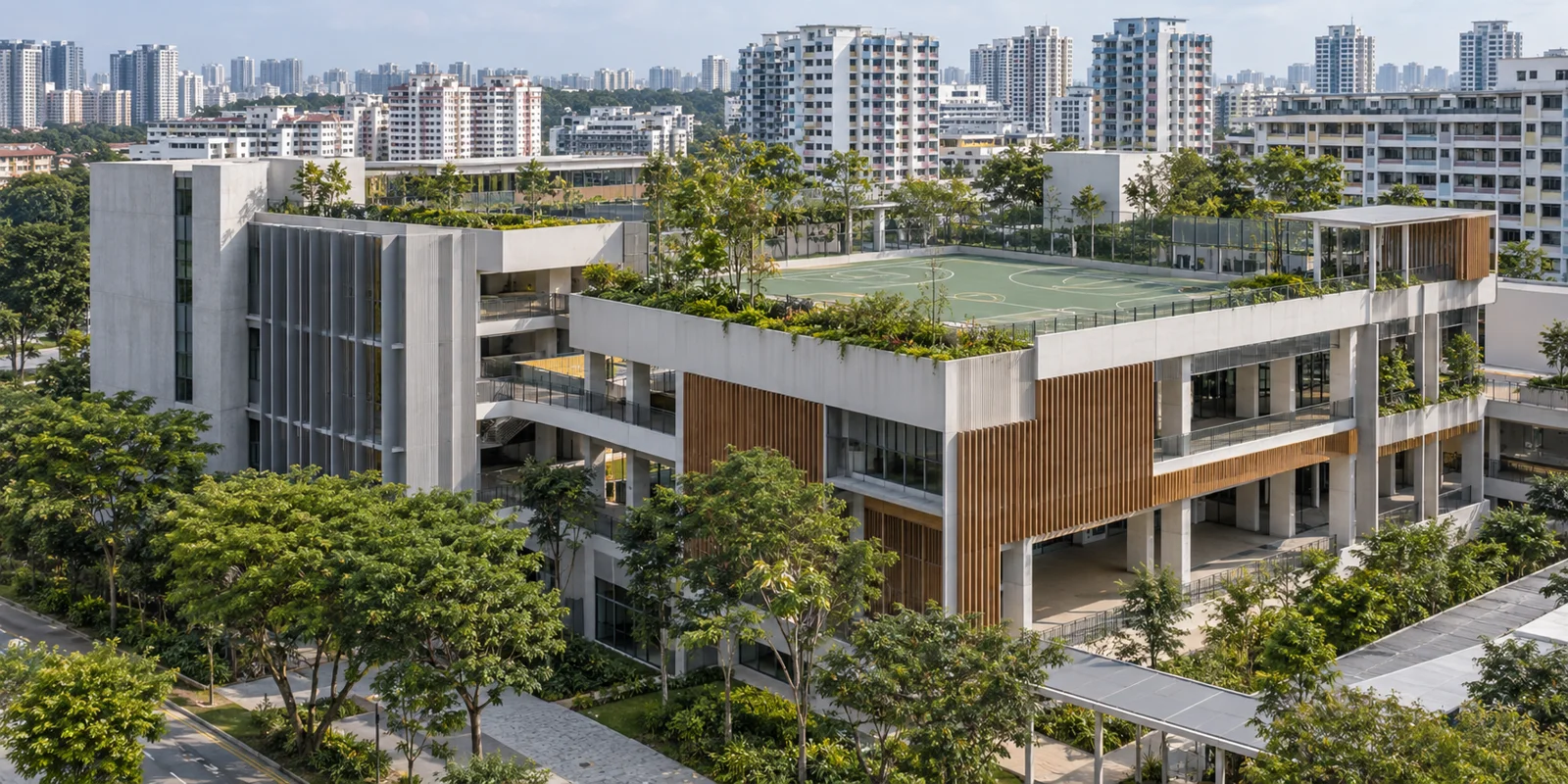
EtonHouse International School BroadrickSingapore, Singapore
Your next task: investigating how different materials change in water. Bring your campus, class and programme context to PLAI™, then shape the draft around what you want learners to understand.
AI-generated campus illustration. Not a photograph of this school.
EtonHouse Broadrick applies inquiry-based learning at primary level. Use that approach to investigate how different materials change in water, asking pupils to observe, compare changes and form a question to take the inquiry further.
What do you know about EtonHouse International School Broadrick and its curriculum?
School context
Help learners observe, compare and explain a question for further inquiry. Build towards that goal with a question, an activity and a chance to explain their thinking.
Help me plan an activity for primary learners about investigating how different materials change in water. First ask for my year group, programme, objective and permitted materials. Include an opening question, a shared activity and an independent check. Help learners observe, compare and explain a question for further inquiry. Keep any practical work teacher-supervised and use only materials and procedures I approve. Do not ask pupils to taste substances, handle unsafe materials or conduct unsupervised fieldwork. Do not invent school assessment criteria or lesson sequences.
Inspect the supervised Year 5 investigation report: question, prediction, variables, repeated results, graph and conclusion. The supplied example concerns dissolving sugar. For this page’s task, prepare the material around investigating how different materials change in water.
Help me prepare an original task about investigating how different materials change in water for my confirmed class. I will supply the source content. Use Sugar dissolving investigation report as a model for the teaching structure. Ask for my year group, goal and prior learning. Check the new subject content and age suitability, offer optional support and leave an independent explanation. Keep source facts distinct from this new task and do not infer school criteria.
Review the new investigating how different materials change in water task for my confirmed class. Check the subject content, reading load and response space. Add optional support while keeping an independent explanation. Prepare a separate teacher-approved investigation for the current topic. Keep the method, equipment, safety and expected reading level suitable for the confirmed year group.
Use the source as a teaching model, then review the new task for your confirmed class.
For investigating how different materials change in water, decide what pupils must explain independently. Prepare a separate teacher-approved investigation for the current topic. Keep the method, equipment, safety and expected reading level suitable for the confirmed year group.
Keep the conversation going
Tell PLAI™ what you want to change. Try one of these follow-ups with your draft, then check the result for your class.
Suggest a different opening question that connects this learning goal to something learners already know.
Add an optional vocabulary box and a sentence starter. Keep the main reasoning task and final independent question.
Add a follow-up question that asks learners to explain their reasoning in a new situation.
Start with investigating how different materials change in water, or bring a topic of your own. Keep your learning objective and professional judgement at the centre.
Start with PLAI™