
Languages and literacy
Oral language and conversation cards
Practise a simple Spanish pair routine with eight question cards about names, age, where someone lives, family, pets, interests, colour and birthdays. Pupils ask, answer, swap roles and try joining answers into a longer sentence. The cards include English glosses and response frames.
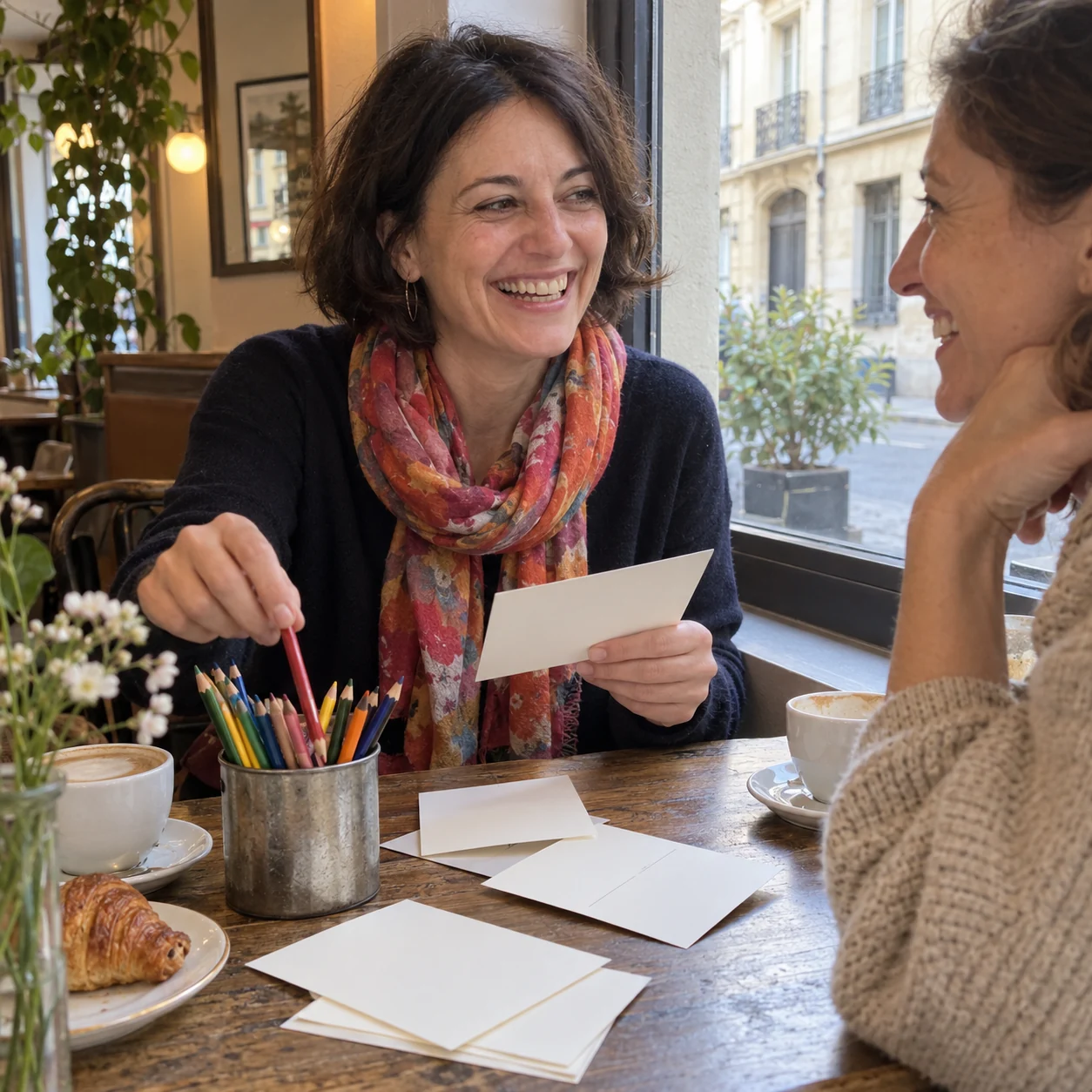
Use a picture cue to practise a Spanish question. A fictional answer is fine when a personal detail is private.
Read the complete materialRead the material
Practise a simple Spanish pair routine with eight question cards about names, age, where someone lives, family, pets, interests, colour and birthdays. Pupils ask, answer, swap roles and try joining answers into a longer sentence. The cards include English glosses and response frames.
Complete resource. Use the preview for diagrams and layout.
Page 1
LEARNING GOAL
Ask and answer eight personal questions in
Spanish with a partner.
SUCCESS CRITERIA
I can ask a question and answer in a full sentence.
I can join two answers into one sentence.
Ask, answer, swap
Cut out the eight question cards on pages 2 and 3. Then follow the three steps with a partner.
Read a question card to your
partner.
Your partner answers in a full
sentence.
Change roles. Now you answer.
Make it longer
Join two answers into one sentence. Write up to four, then say them to your partner.
Starter
Me llamo ... y tengo ... años.
1
2
3
4
Pair feedback
I used a full sentence
I looked at my partner
I helped my partner
My card tracker
Tick each card when you have asked it and answered it.
Card 1
Card 2
Card 3
Card 4
Card 5
Card 6
Card 7
Card 8
Oral language and conversation cards
Page 1 of 3
MODERN LANGUAGES
AGES 11 TO 14
SPANISH PAIR-WORK
Pair routine
Ask, answer, swap, then make it longer.
NAME
CLASS
DATE
1
3 steps
ASK
ANSWER
SWAP
2
3
tick three
4
8 cards
Page 2
Cut out the four cards. Ask your partner the question, then write your own answer in Spanish. Your partner writes
theirs on the ¿Y tú? line.
Oral language and conversation cards
Page 2 of 3
MODERN LANGUAGES
AGES 11 TO 14
SPANISH PAIR-WORK
Question cards 1 to 4
NAME
CLASS
1
¿Cómo te llamas?
What are you called?
Me llamo
.
¿Y tú? (And you?)
My answer
2
¿Cuántos años tienes?
How old are you?
Tengo
 años.
doce
trece
catorce
quince
¿Y tú? (And you?)
My answer
3
¿Dónde vives?
Where do you live?
Vivo en
.
¿Y tú? (And you?)
My answer
4
¿Tienes hermanos?
Do you have brothers or sisters?
Tengo un hermano.
Tengo una hermana.
Tengo dos hermanos.
No tengo hermanos.
¿Y tú? (And you?)
My answer
Page 3
Cut out the four cards. Ask your partner the question, then write your own answer in Spanish. Your partner writes
theirs on the ¿Y tú? line.
Oral language and conversation cards
Page 3 of 3
MODERN LANGUAGES
AGES 11 TO 14
SPANISH PAIR-WORK
Question cards 5 to 8
NAME
CLASS
5
¿Tienes mascota?
Do you have a pet?
Tengo un perro.
Tengo un gato.
No tengo mascota.
¿Y tú? (And you?)
My answer
6
¿Qué te gusta hacer?
What do you like doing?
Me gusta
.
leer
nadar
bailar
dibujar
¿Y tú? (And you?)
My answer
7
¿Cuál es tu color favorito?
What is your favourite colour?
rojo
azul
verde
amarillo
Mi color favorito es el
.
¿Y tú? (And you?)
My answer
8
¿Cuándo es tu cumpleaños?
When is your birthday?
Mi cumpleaños es el
de
.
enero
febrero
marzo
abril
mayo
junio
julio
agosto
septiembre
octubre
noviembre
diciembre
¿Y tú? (And you?)
My answer
A teaching sequence
Ask and answer familiar questions in Spanish using a full sentence, then combine two answers into one longer spoken or written sentence.
Model ask, answer and swap
Demonstrate the three-step routine with one question card: ask your partner, answer in a full sentence, then swap roles.
Can both partners practise a question and a complete response?
Use a picture cue to practise a Spanish question. A fictional answer is fine when a personal detail is private.
Read the complete materialOffer fictional answers for cards one to four
Use cards 1 to 4 and rehearse the printed patterns for name, age, home and siblings. Invite pupils to point to the answer choices where provided.
Can this name, age, home or family answer be invented or skipped?
Practise the remaining question patterns
Continue with cards 5 to 8 for pets, activities, favourite colour and birthday. Pupils can choose or create an answer without sharing private details.
Which printed choice helps a fictional answer without private disclosure?
Join responses and reflect
Join two responses with the printed starter, then use the tracker and pair-feedback prompts to reflect on speaking and listening.
What shows helpful listening without requiring eye contact?
Before you teach
Look for the thinking behind an answer, choose the support your class needs and leave room for an independent response.
What to look for
Listen for a question form and a complete answer that matches its prompt. Ask, “Which words make this a full sentence?” If a pupil gives a single-word response, model the relevant frame and invite them to expand it. Do not assess or require disclosure of real personal information.
Give a little support
Begin with the name and favourite-colour cards, using the printed English glosses and response frames. Let pupils rehearse with a partner or teacher before writing. Offer a fictional persona, a neutral alternative prompt or the option to pass.
Take the idea further
Invite pupils to extend a response with a conjunction or a reason, then ask a follow-up question using vocabulary they already know. They can compare which sentence patterns change across cards without ranking classmates' personal answers.
Things to keep in mind
Several cards ask for identifying or personal information, including age, home, family and birthday. Make answering optional and allow fictional alternatives. Some vocabulary or response choices may need teacher review for the class's target dialect and taught forms; no answer key is included.
Keep the idea. Make it yours.
Bring your topic, learning goal and class context to PLAI™, then review what you create.
Ideas to try with your class
Sample teaching perspectives on what to try, what to adapt and what to watch for.
Meet The Creators
Meet the creators whose teaching interests connect with this template. Find an approach to try with your class.
Camille Berger
I prefer comprehensible input to long stretches of grammar drill: pupils need to hear and read language they can make sense of before they are asked to produce it with confidence.
Meet the creator
Lucía Moreno
I use Spanish for most classroom communication from the start, supporting beginners to understand and express a real idea while grammar and vocabulary serve the message.
Meet the creator
Pencil Case Pal
The eight Spanish questions ask about name, age, where a pupil lives, siblings, pets, activities, favourite colour and birthday. A tracker records which have been asked and answered, and the page invites pupils to combine responses into longer sentences.
Open Book Pause
For ages 11 to 14, the partner routine practises full-sentence questions and answers before joining two ideas with “y”. The card set gives varied grammar and vocabulary for repeated speaking turns.
Quietly Curious
Model a question and answer, then swap roles as instructed; the sentence starter supports pupils who need a way to begin. Because several prompts involve identity, home and family, an invented answer or neutral alternative would make participation more comfortable.
Planning List
The page requires personal answers and does not itself offer a pass or fictional option. Before using the cards, provide an alternative for location, family and birthday questions and assess Spanish language rather than private facts.