Languages and literacy
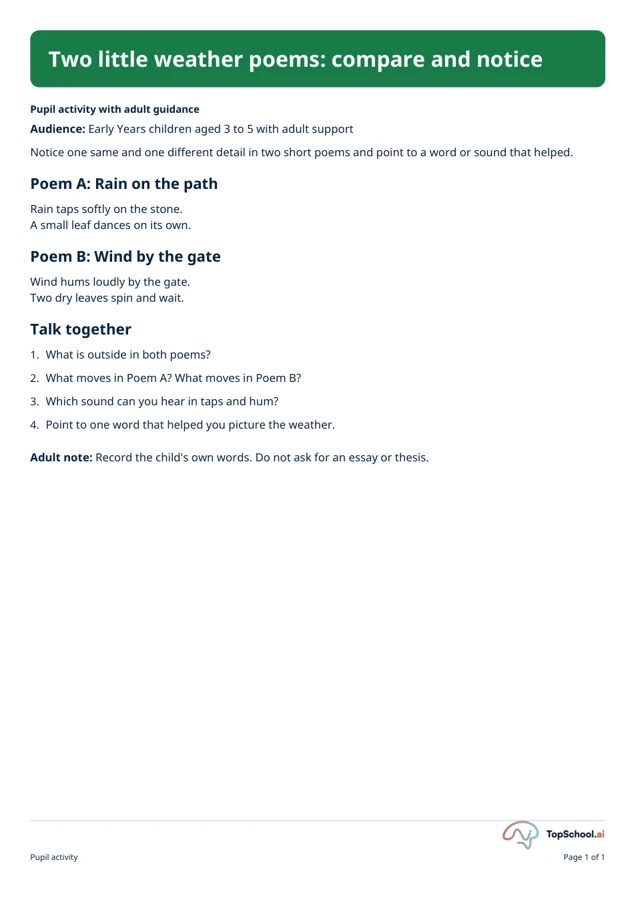
Two little weather poems: compare and notice
Notice one same and one different detail in two short poems and point to a word or sound that helped.

Early years English lead
I plan playful English sessions with songs, rhyme and movement alongside class teachers, connecting the language sequence to the group’s current activity and the wider learning day.
Explore the collectionI plan and teach an English strand across early years groups, always alongside the class teacher. English is one part of the children’s wider learning, not a reason to push aside the language and context they bring to the day. I want activities to feel playful and purposeful, while the class teacher remains central to the group.
Songs, rhyme and movement can give children a memorable way to hear and try new language. I look for a clear sequence that can become a short session, with room for the teacher to connect it to the class’s current activity. If a request starts to make English the point rather than a useful language strand, I want to notice that and refocus.
Family communication needs the same care as classroom planning. I prefer to check English wording with the class teacher so that it is accurate and fits the family’s context. Resources are most useful when they offer a practical idea, clarify roles and help us support children without separating language from the rest of their learning.
Plan and teach English alongside the class teacher.
Use song, rhyme and movement as short language activities.
Keep English within the wider learning context and check family wording.
Explore these templates and decide what fits your own setting.
Languages and literacy
Notice one same and one different detail in two short poems and point to a word or sound that helped.
Languages and literacy
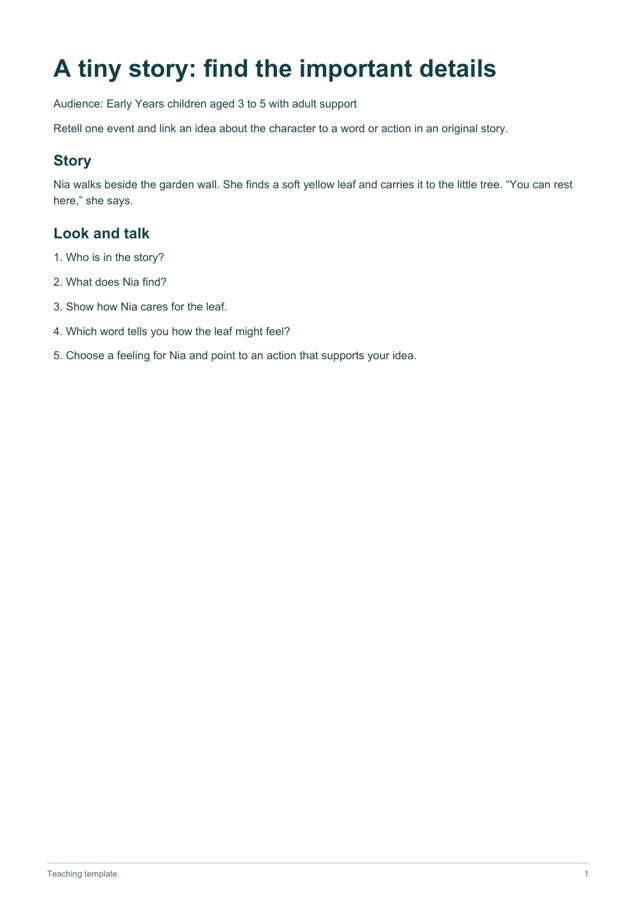
Retell one event and link an idea about the character to a word or action in an original story.
Languages and literacy
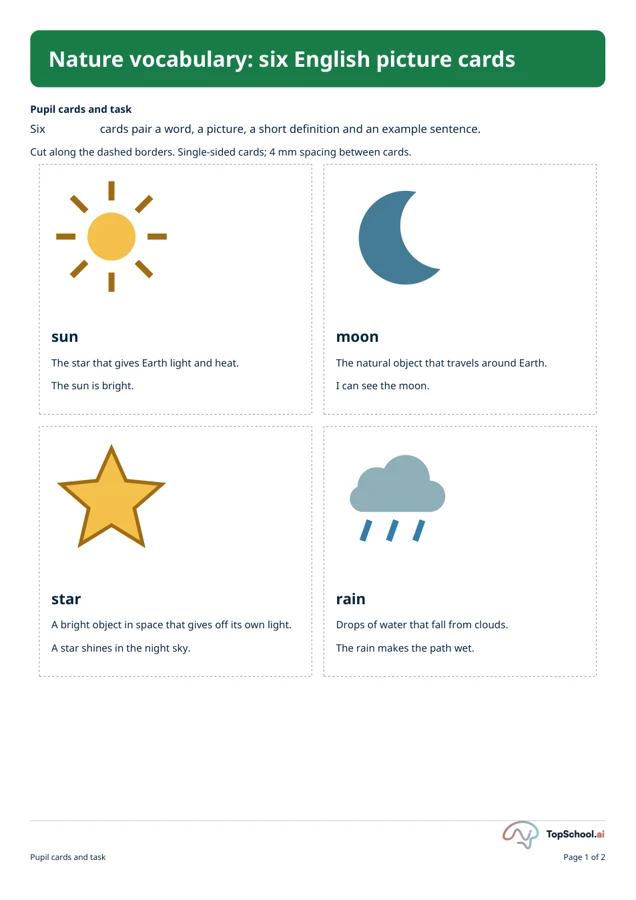
Recognise and explain selected nature words by connecting each word with its picture, definition and example sentence.