Languages and literacy
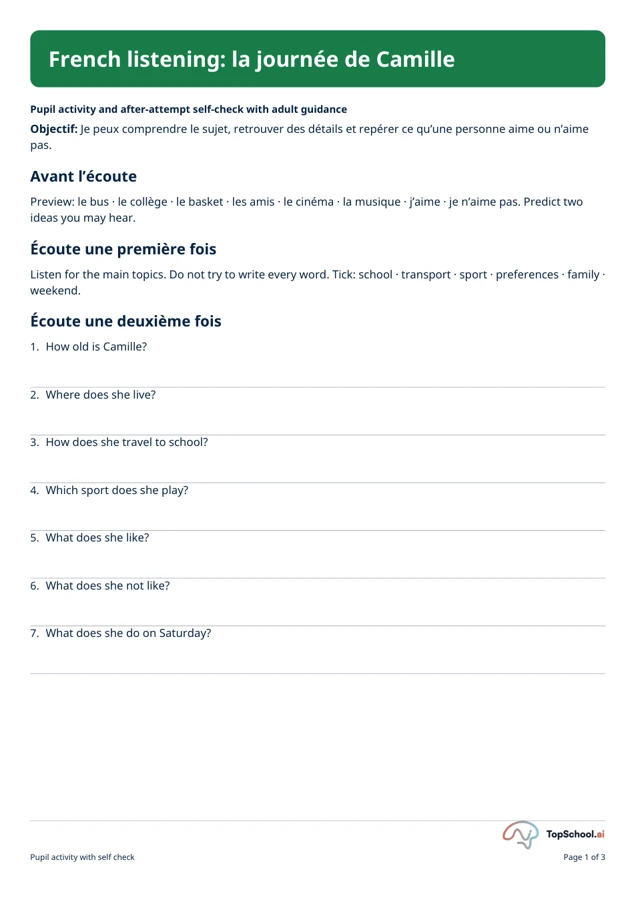
French listening: la journée de Camille
Identify the topic and retrieve key details, including a speaker’s likes and dislikes, from a short French account of a teenager’s weekday and weekend.

French teacher
I teach French through meaningful communication, asking pupils to compare vocabulary, tone and grammar in context and choose language suited to a friend or a formal audience.
Explore the collectionI teach French from Year 7 to IGCSE and use spoken French from the start of a lesson. Grammar matters because it helps pupils express what they mean, but it is a tool rather than the final purpose. I want them to be able to use language for a real message.
Pupils can learn a form accurately and still hesitate to speak. I look for activities that let them hear how French is used in a particular context, then compare possible ways to say something. Register matters: the language a teenager might use with a friend can differ from the language used in a formal exercise.
I value resources that make meaning and audience visible. A short text can prompt questions about vocabulary, tone and structure, while a speaking task gives pupils a reason to try the language themselves. I want grammar to support comprehension and expression, not become a checklist detached from communication.
Use spoken French as part of the lesson routine.
Compare language choices for different audiences and registers.
Teach grammar in service of comprehension and expression.
Explore these templates and decide what fits your own setting.
Languages and literacy
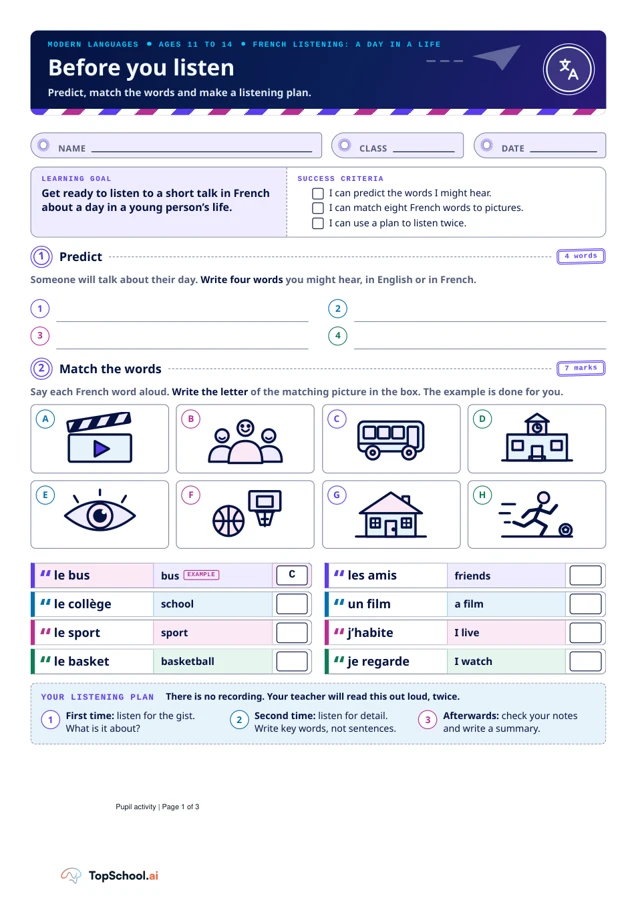
Identify the topic and retrieve key details, including a speaker’s likes and dislikes, from a short French account of a teenager’s weekday and weekend.
Languages and literacy
Pupils should identify the passage’s topics, record key details about Camille and produce three English sentences supported by their notes. They should distinguish what they predicted from what they actually heard and identify vocabulary that helped them listen.
Languages and literacy
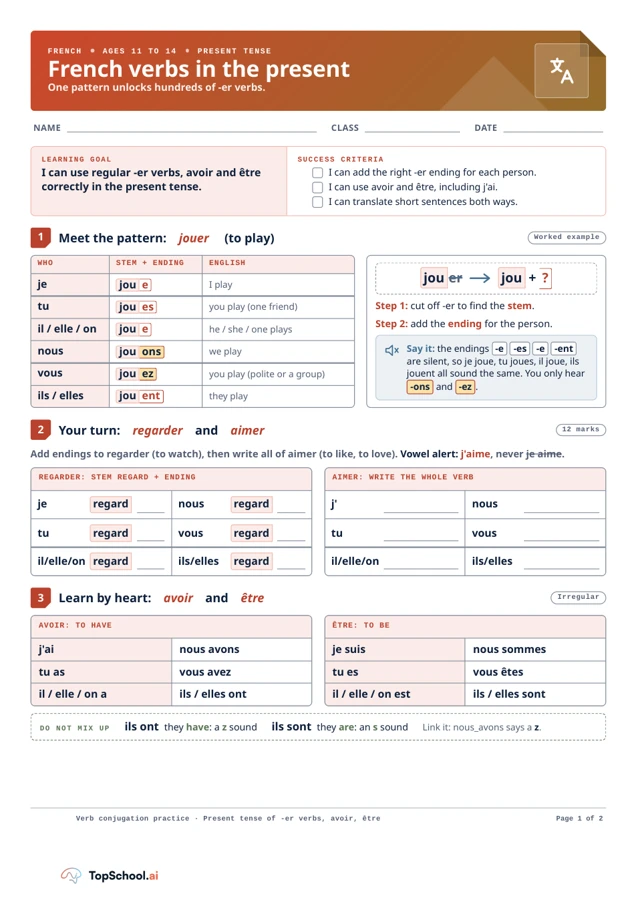
Choose and write the correct present-tense form of a regular -er verb, avoir or être, then translate short sentences using the intended subject and meaning.
Languages and literacy
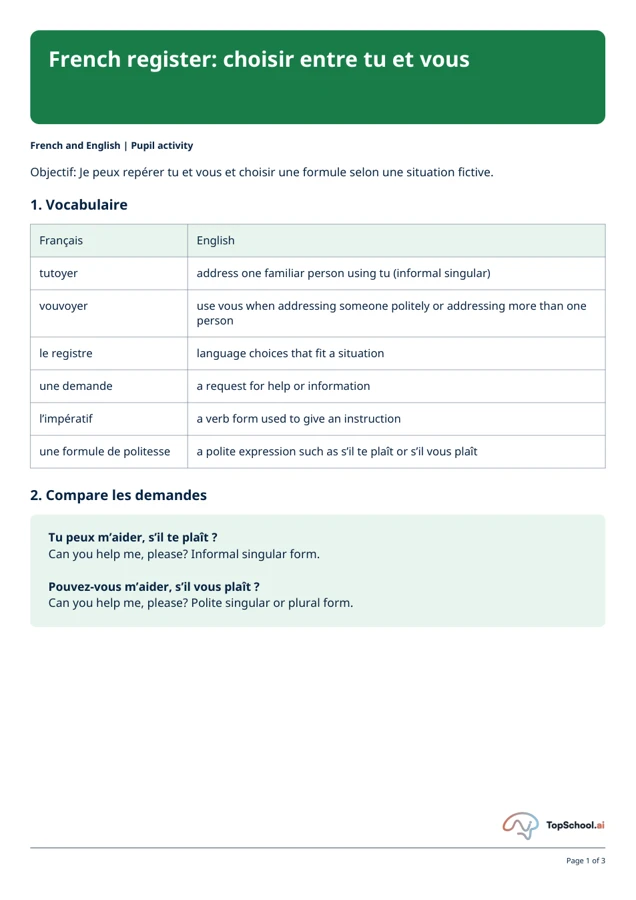
Identify tu and vous verb forms and choose a taught request form for a fictional situation, distinguishing polite singular vous from plural vous where relevant.
Languages and literacy
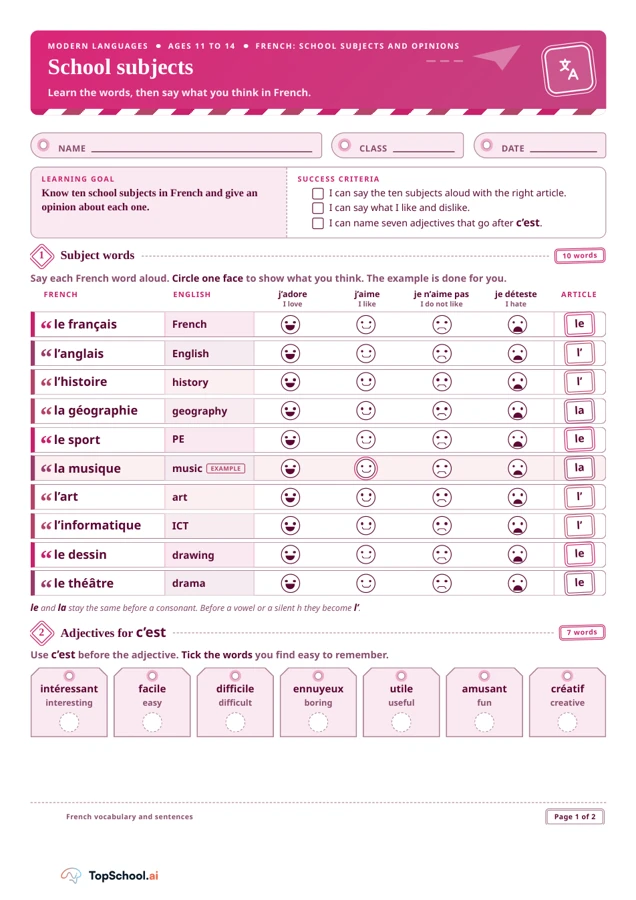
Build a short French opinion about school subjects, choosing vocabulary and grammar that make the meaning clear.