Teaching and classroom support
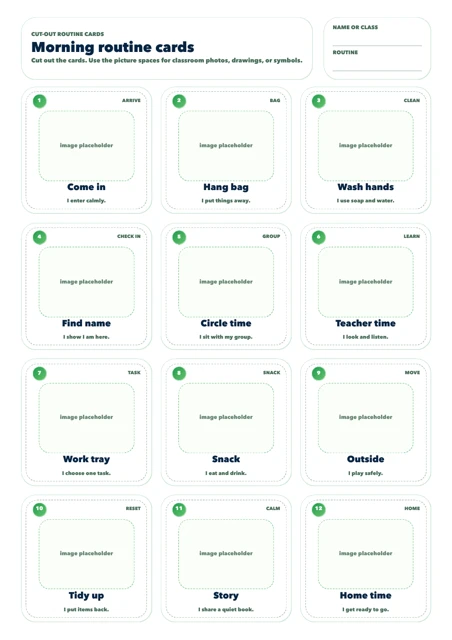
Morning routine cards
Arrange routine steps in a chosen order and use the Now, Next and Finished areas to make the current and upcoming step visible.

Early years assistant educator
Settling in is personal, so a useful idea has to start with what the family has told us about the child’s comfort and routine.
Explore the collectionI support children who are new to an early years setting. Settling in is personal, so a useful idea has to start with what the family has told us about the child’s comfort and routine. I want practical suggestions to help adults pay attention and respond consistently, rather than a generic sequence that overrides information a family has shared.
The first days are a time to observe, listen and follow the agreed approach. A teacher can note what happened and share it with the people responsible for the child’s record. That keeps the conversation factual and leaves decisions with the adults who have the full context. It also makes it easier to adjust a plan when the child or family needs something different.
When choosing resources for this work, I look for short, usable prompts that help a team prepare, communicate and reflect. A checklist can support consistency, but it cannot tell us what any particular child needs. I prefer to treat each suggestion as a starting point to review with the family and teaching team, then record only what has actually taken place.
Check settling-in suggestions against what the family has shared.
Record what happened without generalising to other children.
Use checklists to support, not replace, adult judgement.
Explore these templates and decide what fits your own setting.
Teaching and classroom support
Arrange routine steps in a chosen order and use the Now, Next and Finished areas to make the current and upcoming step visible.
Early years
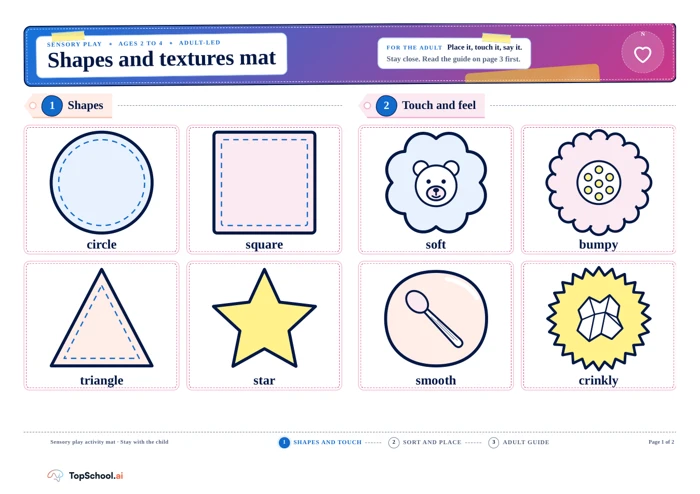
Notice or name a shape, compare big and small, and use a word such as on, in or next to while placing or pointing.