Languages and literacy
Non-fiction text features organiser
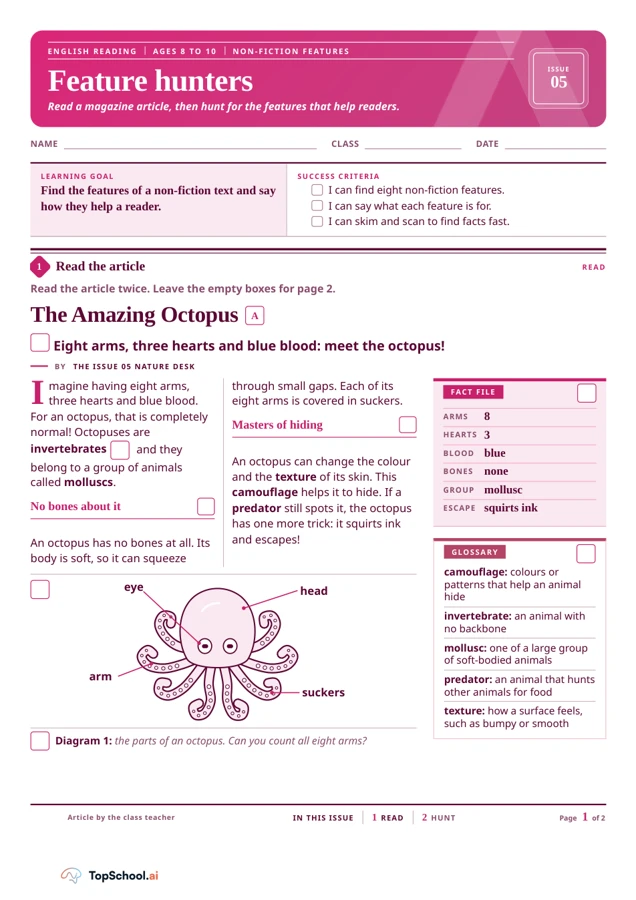
Identify common non-fiction text features, explain their purpose for a reader, and retrieve stated facts efficiently by skimming and scanning.

Year 4 teacher and English lead
Reading for pleasure matters to me, and I would rather help a child finish a book they selected than fill every reading moment with a worksheet.
Explore the collectionI teach Year 4 and lead English and early reading. I want children to find time for books they choose and enjoy. Reading for pleasure matters to me, and I would rather help a child finish a book they selected than fill every reading moment with a worksheet.
Pupils still need practice with skills such as multiplication facts and reading strategies. I look for a rhythm that keeps those skills active while leaving space for sustained reading. Short retrieval questions can help, but they should support a wider relationship with books rather than crowd it out.
I also run the school library with volunteers. A useful resource can help pupils find a book, talk about what they have read or return to a skill in a manageable way. I value choices that keep reading inviting and help children see themselves as readers, not simply as people completing an assignment.
Protect time for reading by choice.
Use retrieval practice in short, purposeful moments.
Help pupils talk about and return to the books they choose.
Explore these templates and decide what fits your own setting.
Languages and literacy
Identify common non-fiction text features, explain their purpose for a reader, and retrieve stated facts efficiently by skimming and scanning.
Languages and literacy
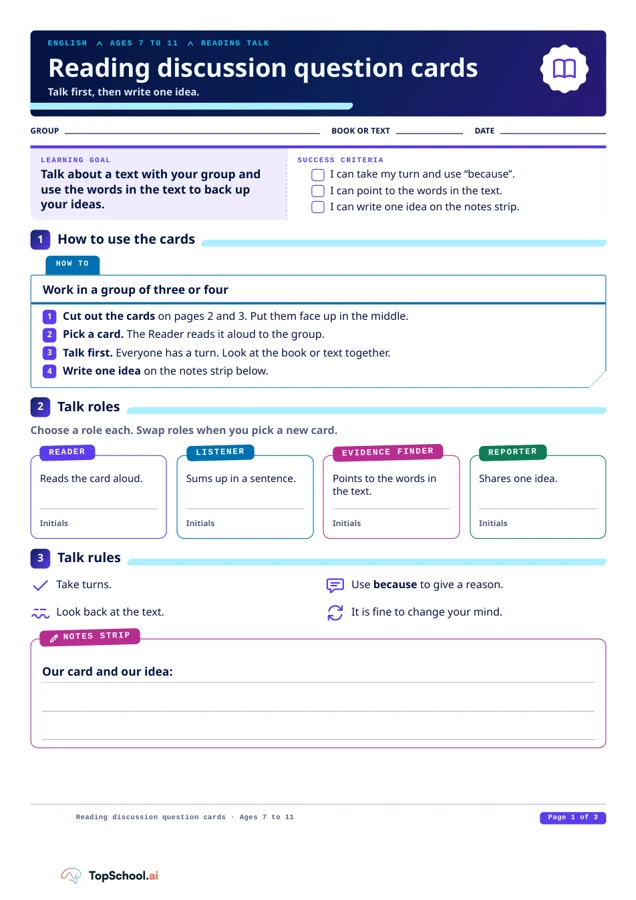
Take turns discussing a text, use evidence to support an idea and record one response from the group’s conversation with a quotation or passage detail.
Languages and literacy
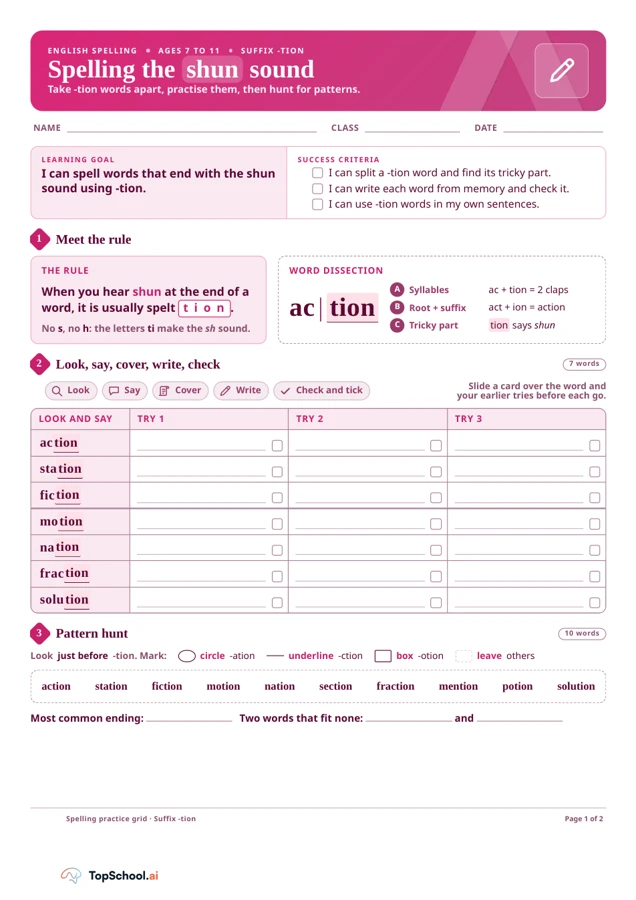
Recognise the -tion ending, break a word into parts, spell target words from memory and use them in a sentence.