Religious and values education
Explore a dilemma: ethical reasoning frame
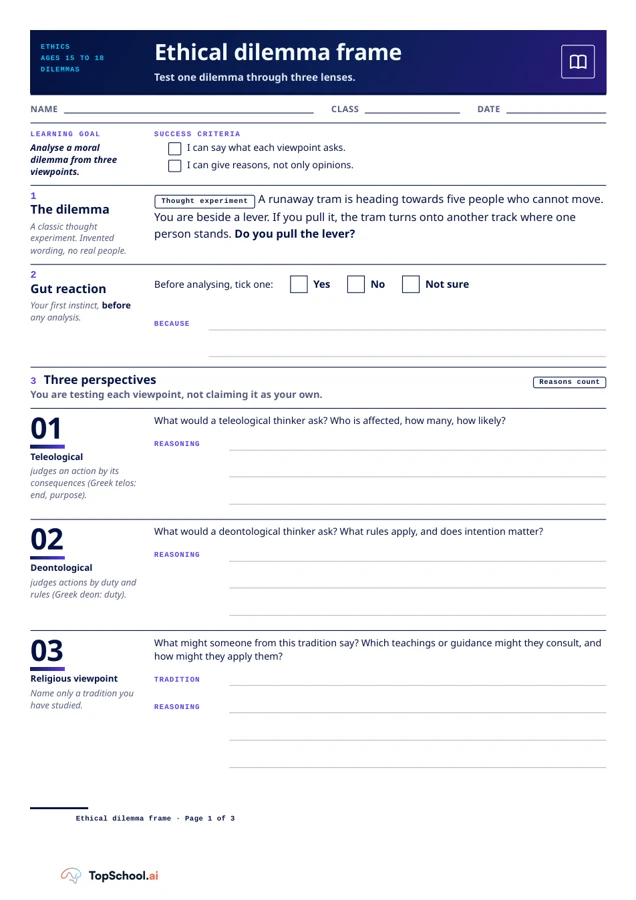
Compare ethical reasoning through consequences, duties and a studied religious tradition, then justify a position with reasons.

Head of Religious Studies
I compare religious and non-religious worldviews with similar care, supporting accurate concepts and exam responses while giving a plural classroom respectful language for discussing differences.
Explore the collectionReligious Studies in my setting brings pupils with different beliefs and pupils with no religious affiliation into the same classroom. I lead the subject and want comparative material to represent each worldview fairly, rather than treating one tradition as the unspoken norm.
That balance has to sit alongside the GCSE specification. Students need to learn the concepts and build exam responses, while discussion remains respectful of a plural group. I look carefully at whether a comparison gives the positions similar care and whether its wording lets pupils understand a view without being asked to endorse it.
I want resources that support precision in both areas: accurate subject content and thoughtful classroom language. Exam technique matters, but it should not erase the complexity of belief or non-belief. A clear task can ask pupils to compare arguments and explain differences without flattening them.
Check that comparative materials give each worldview similar care and space.
Match response prompts to the GCSE specification without scripting pupils’ beliefs.
Frame questions around understanding and evidence, not endorsement.
Explore these templates and decide what fits your own setting.
Religious and values education
Compare ethical reasoning through consequences, duties and a studied religious tradition, then justify a position with reasons.
Religious and values education
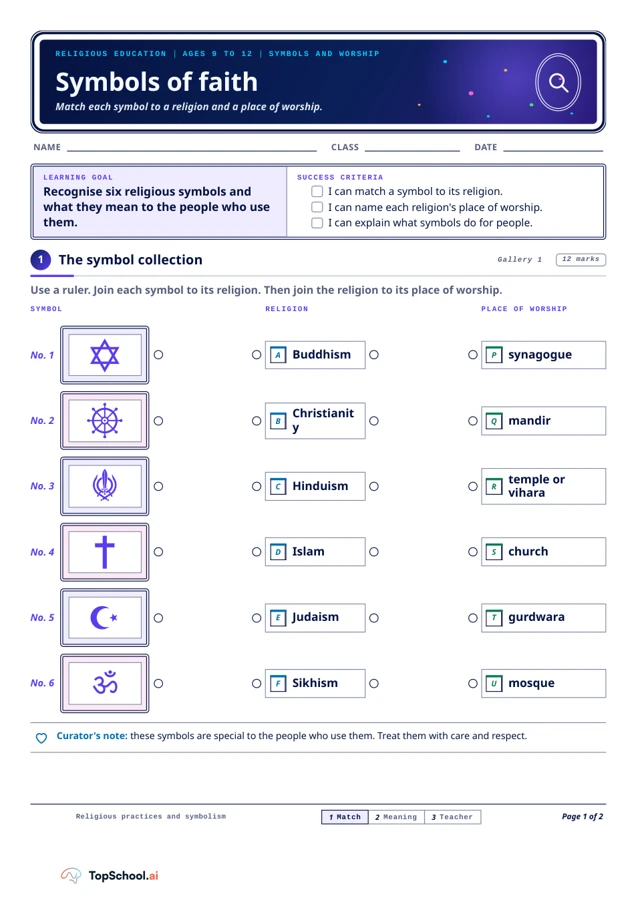
Identify six symbols and connect them with the traditions, places of worship and meanings presented on the sheet; explain one possible role of symbols using a reason.