Early years
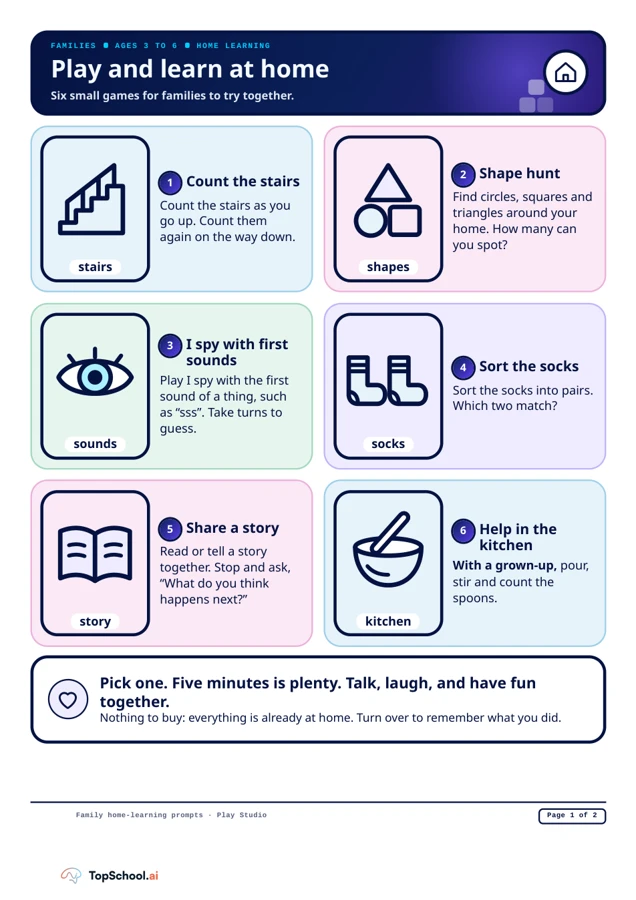
Play and learn at home: six family games
Build shared talk, noticing, early counting and turn-taking through a short everyday activity.
Early years room and transition lead
I observe before intervening in play, giving children time to develop an idea, then use the details to prepare a meaningful transition summary for their next teacher.
Explore the collectionI lead an early years room and support children as they prepare for the move to school. A transition summary should help a new teacher understand what the child has been exploring and which approaches have supported their participation. It needs to be concise, but not so generic that the child disappears from the account.
I observe before intervening in play, giving children time to develop an idea and show how they are thinking. That observation can inform a next question or an invitation to continue. When writing about the experience, I want to distinguish what I saw from what I think it may mean.
I look for resources that help me turn a longer observation into a clear, useful summary. A template can organise information, but the details must come from the actual experience and the judgement of the teacher who knows the child. I value transition planning that gives the next teacher a meaningful starting point without claiming more than the record supports.
Observe before stepping into children’s play.
Write transition summaries around specific, relevant experience.
Use templates to organise information without flattening it.
Explore these templates and decide what fits your own setting.
Early years
Build shared talk, noticing, early counting and turn-taking through a short everyday activity.
Teaching and classroom support
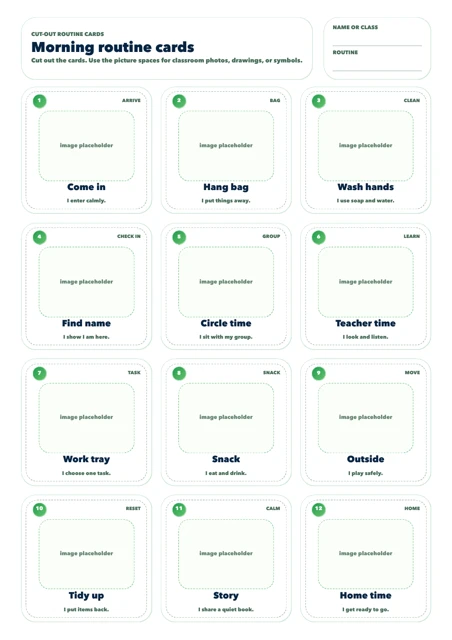
Arrange routine steps in a chosen order and use the Now, Next and Finished areas to make the current and upcoming step visible.