Teaching and classroom support
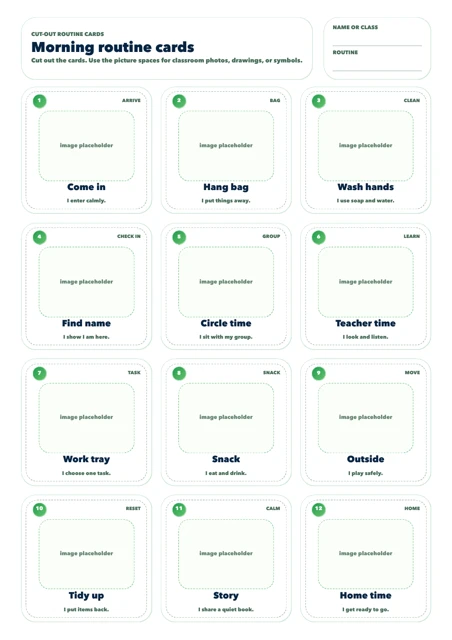
Morning routine cards
Arrange routine steps in a chosen order and use the Now, Next and Finished areas to make the current and upcoming step visible.

Early years assistant educator
I support several early years groups during the afternoon, so I need routines that help me stay attentive as I move between rooms.
Explore the collectionI support several early years groups during the afternoon, so I need routines that help me stay attentive as I move between rooms. A useful shared checklist would make important tasks easier to remember, but it should not suggest that I have seen more than I have. Notes need to reflect the time and context of each observation.
Each group has its own rhythm and needs. I want to carry helpful information across a session without treating the rooms as interchangeable or assuming that one adult can know everything happening in each place. Clear, focused records can help the teaching team coordinate and identify what needs a follow-up from the adult responsible for that group.
When I use a resource, I look for something simple enough to work in a busy setting and specific enough to support the next action. A checklist should help adults notice, communicate and reflect; it cannot solve a staffing or planning question on its own. I value tools that make the work visible while leaving room to raise concerns and ask for support.
Use shared routines to organise information across rooms.
Record the setting and limits of each observation.
Escalate questions that need the responsible teacher’s context.
Explore these templates and decide what fits your own setting.
Teaching and classroom support
Arrange routine steps in a chosen order and use the Now, Next and Finished areas to make the current and upcoming step visible.
Early years
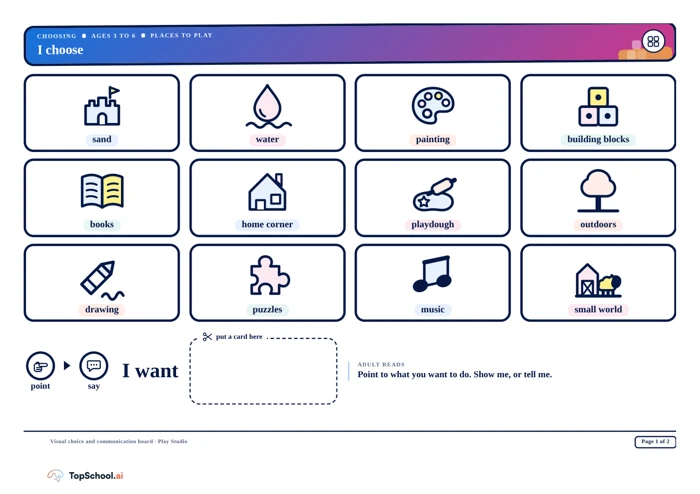
Provide a visual prompt for a child to make a choice, express a basic message or indicate a preference using the communication method that works for them.