
Early years
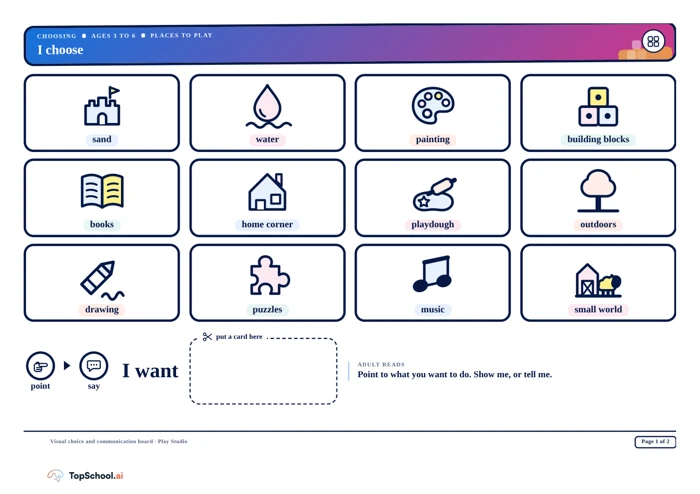
I choose: play and communication board
Provide a visual prompt for a child to make a choice, express a basic message or indicate a preference using the communication method that works for them.

Early years class teacher
I look for ways to describe what happened, identify what remains uncertain and think about what further observation might help.
Explore the collectionI teach an early years group and want to make the most of short notes written during the day. Before deciding what an observation might mean, I try to record the action as clearly as I can. That distinction gives me a more honest starting point for reflection and keeps a quick record from becoming a conclusion too soon.
Planning conversations benefit from examples that teachers can examine together. I look for ways to describe what happened, identify what remains uncertain and think about what further observation might help. This makes a note useful to the team while respecting the fact that different adults may bring different context to the discussion.
I value tools that help me turn rough notes into a readable record before the day ends. A template can remind me to include the description first, but it should not fill in meaning on my behalf. I want documentation to support practical planning and shared professional learning, with the child’s experience kept in view.
Record observable detail before explaining it.
Use shared examples to support professional discussion.
Keep uncertainty visible and consider what to observe next.
Explore these templates and decide what fits your own setting.
Early years
Provide a visual prompt for a child to make a choice, express a basic message or indicate a preference using the communication method that works for them.