Design and technology
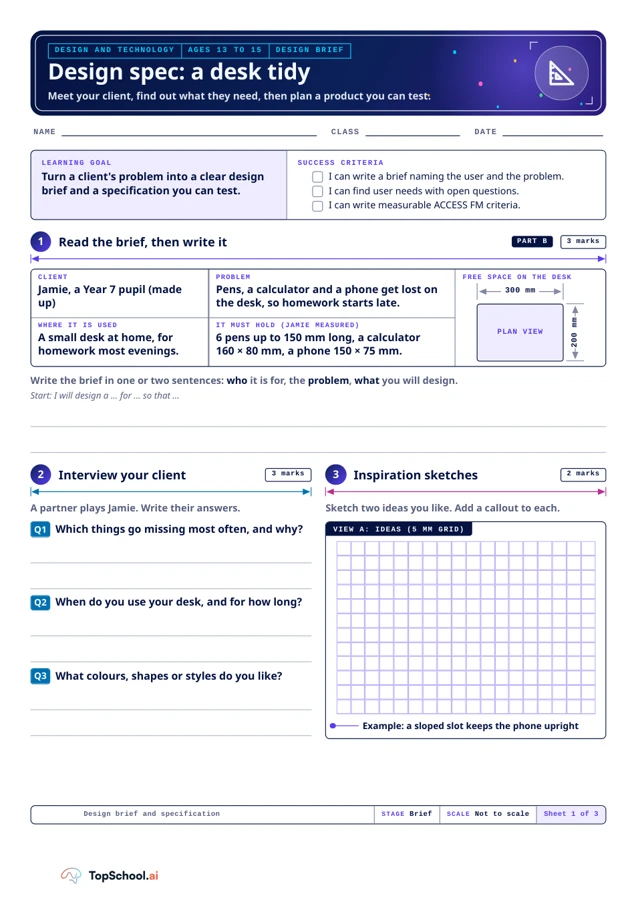
Design specification: a desk tidy
Write a design brief and measurable ACCESS FM specification that respond to a user’s stated needs and can be tested.

Teacher of Design and Technology; House Leader, Irk
I use clear scoring rubrics for design-and-build challenges, making criteria visible in advance so student judges can compare entries fairly while allowing different ideas and solutions.
Explore the collectionDesign and Technology gives students decisions to make as well as objects to produce. I teach the subject and lead Irk house, where an annual design-and-build challenge brings entries together for student judging.
For that event, a scoring rubric needs to be simple enough for student judges to use consistently across a busy room. It should help them compare work fairly without reducing every design to the same solution. The criteria need to be visible before judging begins, so participants and judges understand what is being considered.
I carry that interest in clear criteria into practical teaching. A well-framed standard gives students something concrete to work towards while leaving space for different ideas and outcomes. In a house challenge, the structure has to work for young judges as well as the people who made the entries.
Write judging criteria in language student judges can apply consistently.
Make the standard visible before students begin a design challenge.
Allow different design solutions to meet the same clearly stated criteria.
Explore these templates and decide what fits your own setting.
Design and technology
Write a design brief and measurable ACCESS FM specification that respond to a user’s stated needs and can be tested.
Design and technology
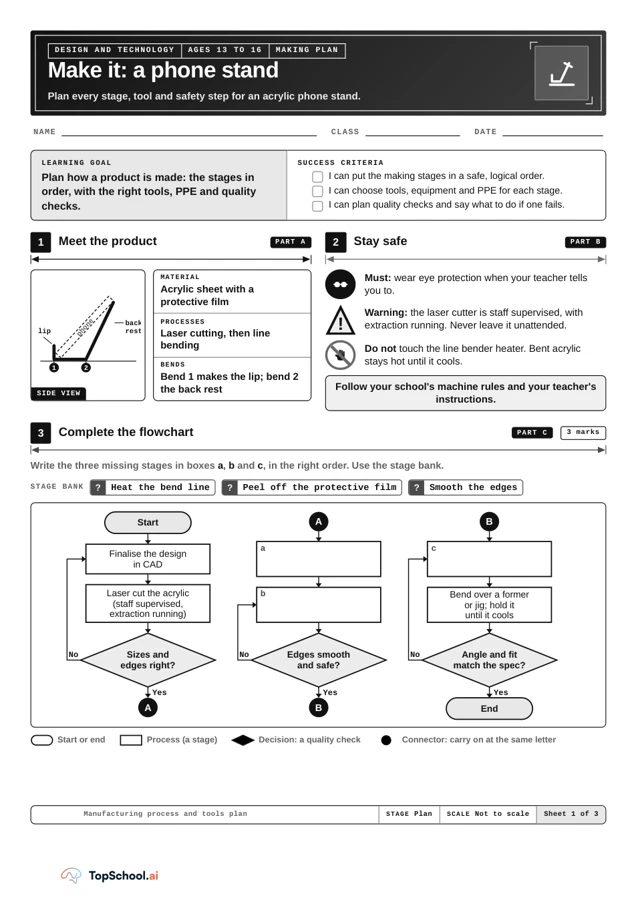
Plan a logical manufacturing sequence with tools, protective equipment, checks and a response to likely problems.
Design and technology
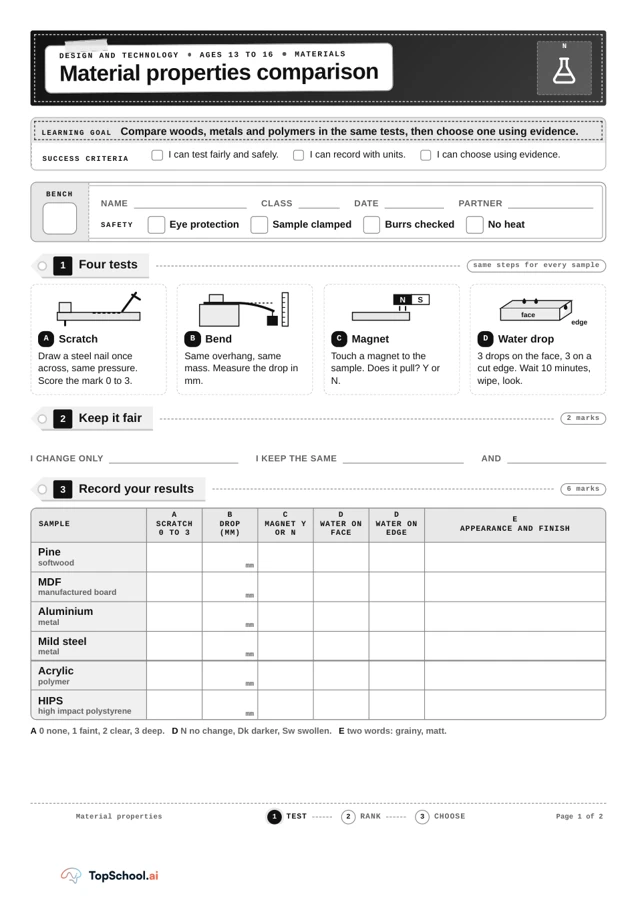
Compare material properties using consistent tests and justify a product choice with recorded evidence.
Design and technology
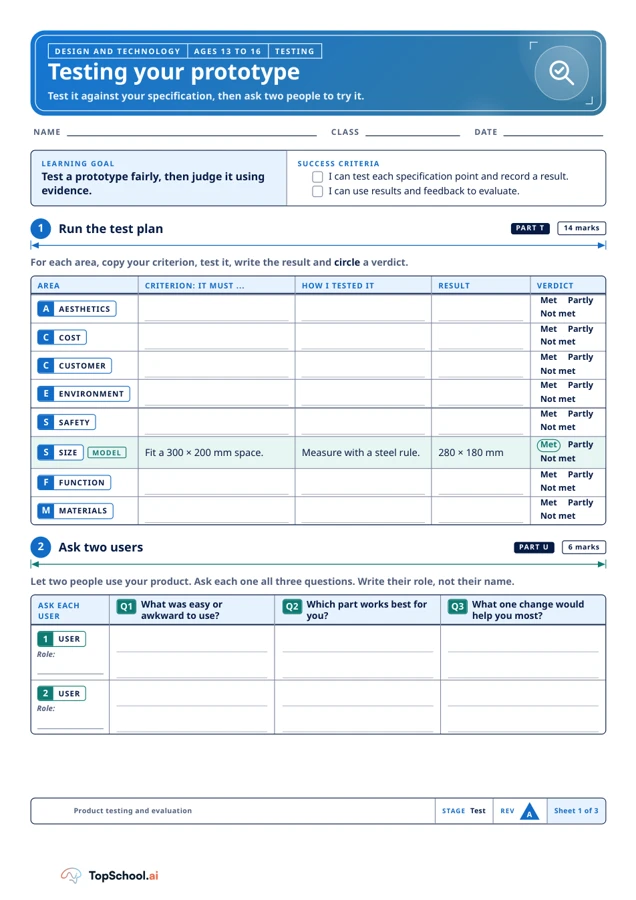
Test a prototype against specified criteria, record results and use evidence from tests and user feedback to justify an evaluation.
Design and technology
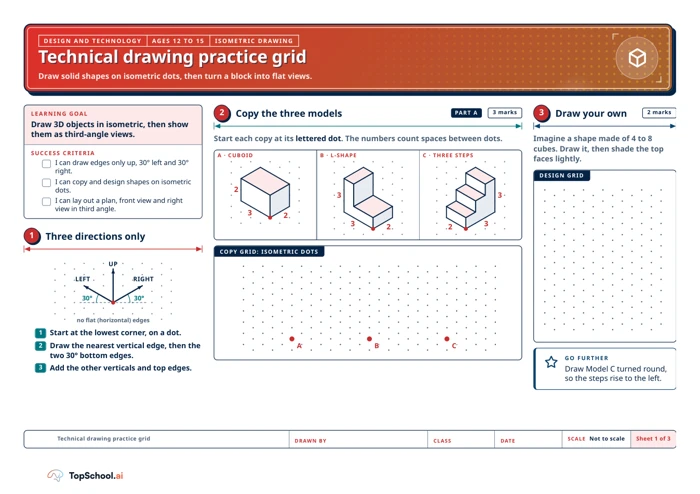
Use vertical and 30-degree isometric directions to draw solid forms, organise orthographic views in third-angle layout and explain what the views show.