
Early years
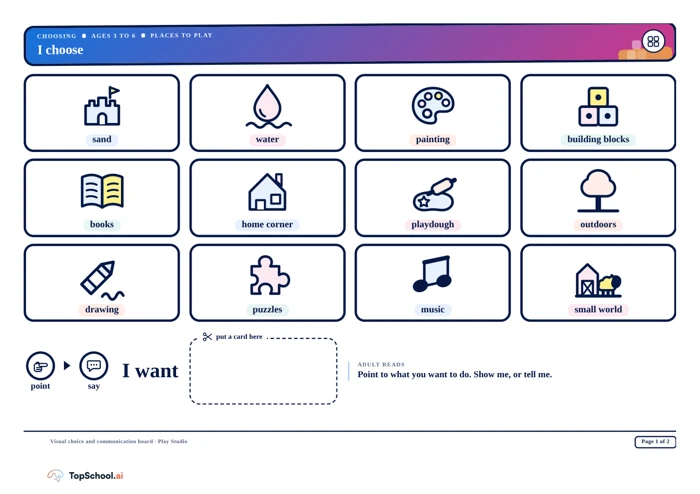
I choose: play and communication board
Provide a visual prompt for a child to make a choice, express a basic message or indicate a preference using the communication method that works for them.

Early years class teacher
Families need clear information about the process and a chance to ask questions, while children benefit from adults who keep the focus on their needs.
Explore the collectionI teach an early years group and pay close attention to what children are doing throughout the day. I make short observations so I can return to the details when I plan, rather than relying on a general impression. Those records should describe what happened, not compare one child with another or promise a milestone on a fixed timetable.
I also support the transition from early years into primary school. Families need clear information about the process and a chance to ask questions, while children benefit from adults who keep the focus on their needs. I want written materials to be accurate and straightforward, with the limits of what we know made clear.
In planning, I look for ideas that can be used in the next session without adding unnecessary choices. A resource is most helpful when it gives me a practical starting point and leaves the judgement with the teacher who knows the group. I can then adapt it, observe the response and decide what information is useful to carry into the next conversation or stage of planning.
Keep observations descriptive and avoid comparisons.
Make transition information factual and easy for families to discuss.
Choose a practical next step, then review what happened.
Explore these templates and decide what fits your own setting.
Early years
Provide a visual prompt for a child to make a choice, express a basic message or indicate a preference using the communication method that works for them.