
Teaching and classroom support
Morning routine cards
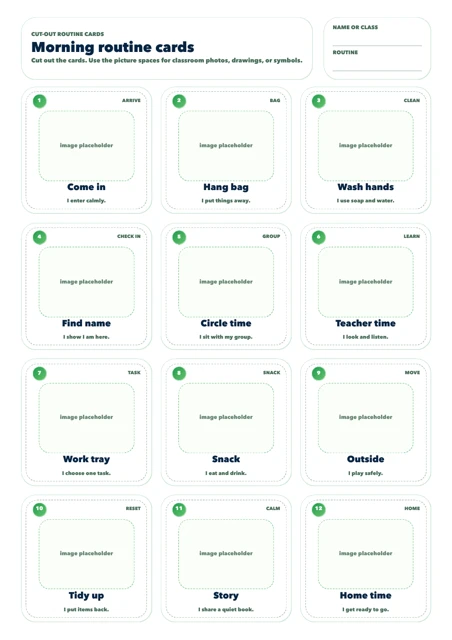
Arrange routine steps in a chosen order and use the Now, Next and Finished areas to make the current and upcoming step visible.

Early years class teacher
I help children name what they want and what has changed during pretend play, staying close enough to support the conversation and help them return to playing together.
Explore the collectionI teach an early years group where learning to play together is part of the day’s work. When a disagreement interrupts play, I want to notice the pattern before deciding what kind of support might help. A short, clear way to name what is happening is more useful to me than a long explanation that assumes every conflict has the same cause.
Pretend play can bring children’s ideas together and make differences visible. I try to give them language for what they want, what has changed and what they might do next, while staying close enough to support the conversation. The aim is not to remove every disagreement but to help the group return to play with a clearer understanding of one another.
I value practical teaching ideas that can be used soon and adjusted to the situation. A prompt or visual can help me slow down, ask a useful question and decide whether children need more support. I want resources to leave room for the details of the moment, because an approach that works for one group or one day may not suit another.
Notice the pattern in a disagreement before responding.
Offer simple language for children to describe needs and next steps.
Use practical prompts flexibly within the play context.
Explore these templates and decide what fits your own setting.
Teaching and classroom support
Arrange routine steps in a chosen order and use the Now, Next and Finished areas to make the current and upcoming step visible.