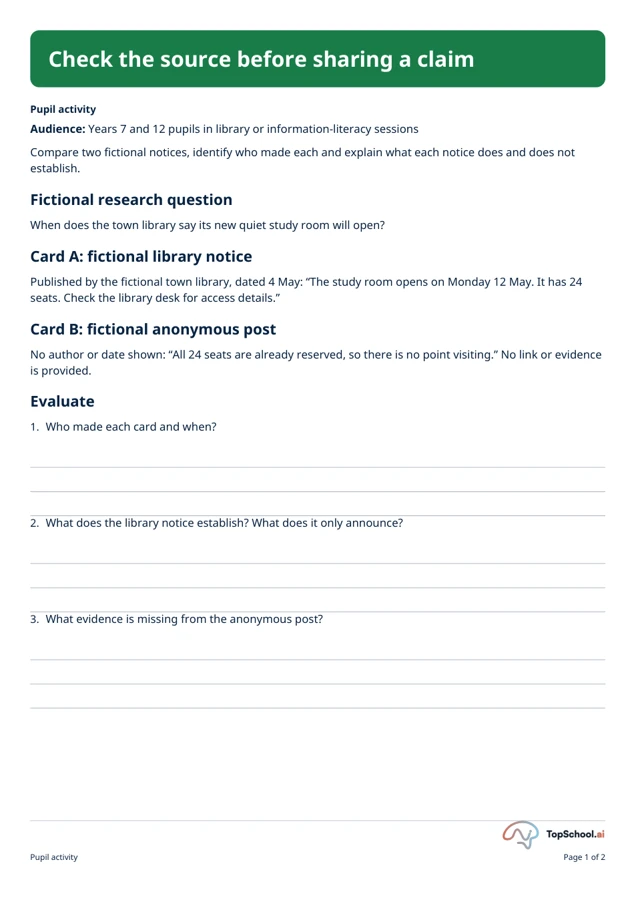
I teach research through source comparison and evidence checks, asking pupils who produced information, how it answers their question and what limitations they need to record.
I lead library and information-literacy work and teach research skills in Year 7 and academic writing and research skills in Year 12. I teach source evaluation because a confident answer is not necessarily a correct one. Pupils need ways to check where information came from and what evidence supports it.
Research is more than finding a result quickly. I want pupils to compare sources, consider who produced them and ask whether the information is relevant to the question. Digital tools can return fluent answers, but pupils still need to examine the evidence and decide what they can responsibly use.
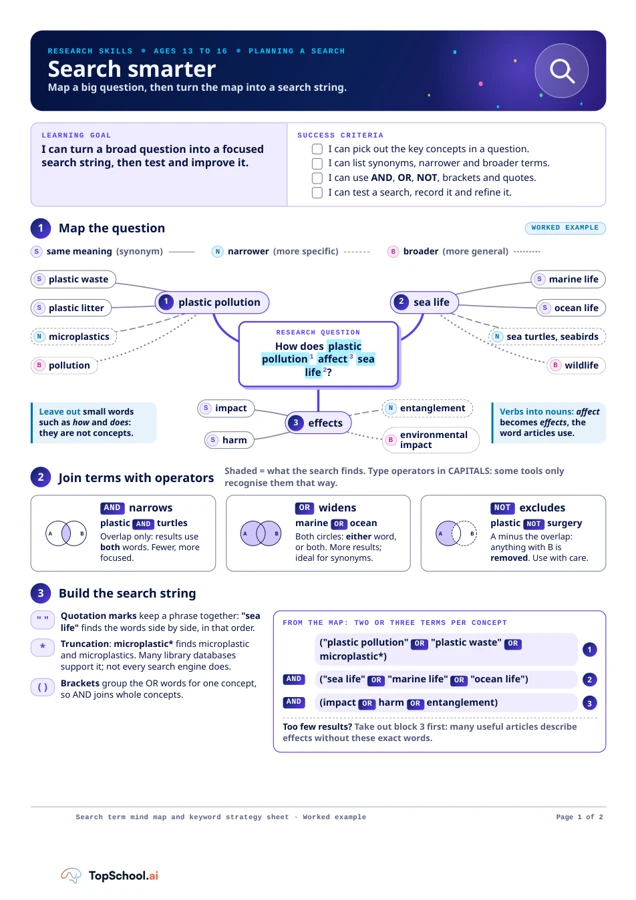
I look for resources that give pupils a clear process for searching, checking and recording information. A checklist can help, but it should prompt judgement rather than turn evaluation into a tick-box exercise. I value activities that let pupils practise explaining why a source is useful and where its limitations might be.
How I approach a lesson
01
Check who produced information and what supports it.
02
Compare sources in relation to the question.
03
Ask pupils to explain a source’s usefulness and limits.
Templates I'd use with my class
Explore these templates and decide what fits your own setting.
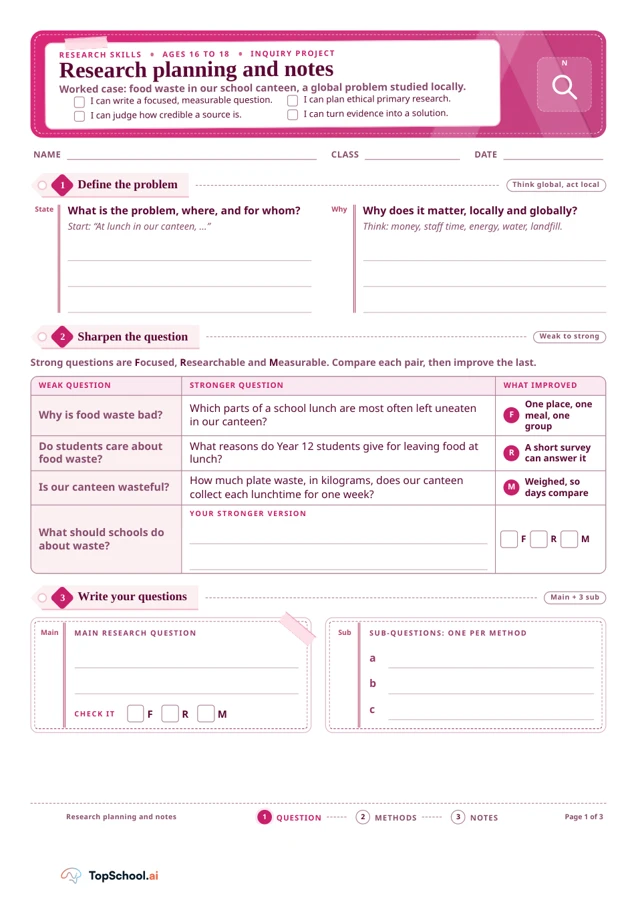
Write a focused, researchable and measurable question; plan primary methods with consent and anonymity in mind; judge sources; take notes in pupils’ own words; and propose an evidence-linked action.