Wellbeing and personal development
My feelings check-in
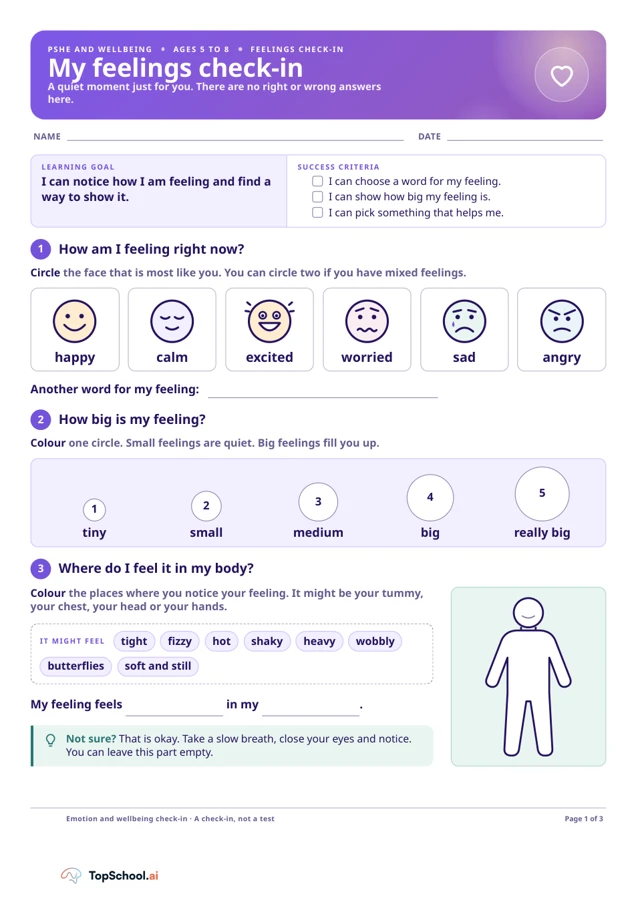
Name or show a feeling, choose a way it might help to respond and identify a trusted person to talk to.

SENCo and inclusion lead
I prefer a concise plan that names a small number of strategies, gives staff something practical to try and leaves room to review how it went.
Explore the collectionI coordinate special educational needs support and work with children, families and teachers to plan what may help. A support plan should be understandable to the people who will use it. I want the wording to describe the pupil clearly without relying on education jargon that makes the next step harder to see.
Planning works best when the child and family are part of the conversation. Their experience helps us understand what is useful and what needs to change. I prefer a concise plan that names a small number of strategies, gives staff something practical to try and leaves room to review how it went.
I also support intervention and review meetings. A resource can help organise observations and questions, but it cannot decide what a pupil needs. I look for tools that make it easier to prepare, explain and revisit support while keeping the plan specific to the person and grounded in what teachers have observed.
Write plans with the child and family.
Use plain language and a small number of practical strategies.
Review what happened before deciding on the next step.
Explore these templates and decide what fits your own setting.
Wellbeing and personal development
Name or show a feeling, choose a way it might help to respond and identify a trusted person to talk to.
Wellbeing and personal development
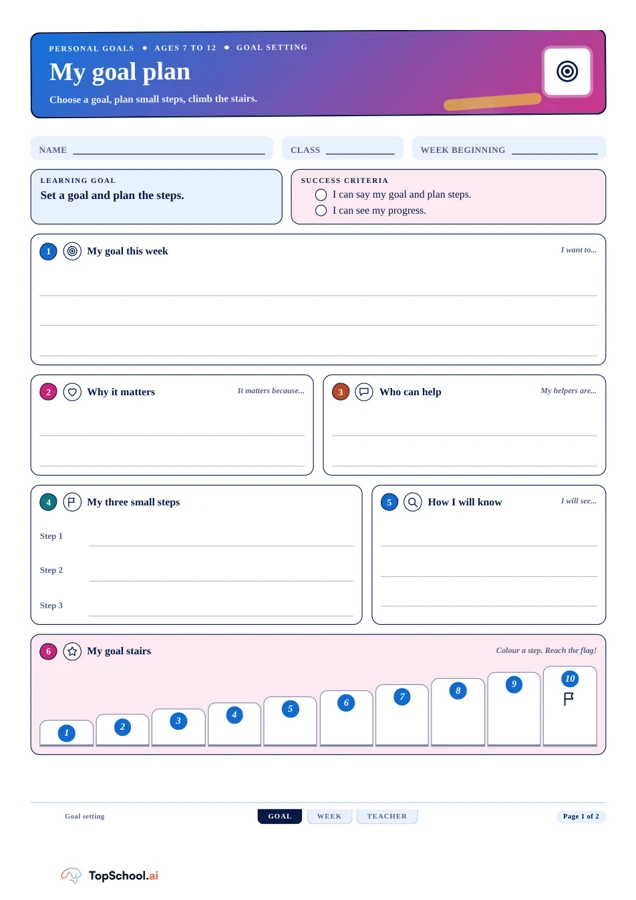
Set a meaningful goal, plan manageable steps and reflect on what helped during the week.
Teaching and classroom support
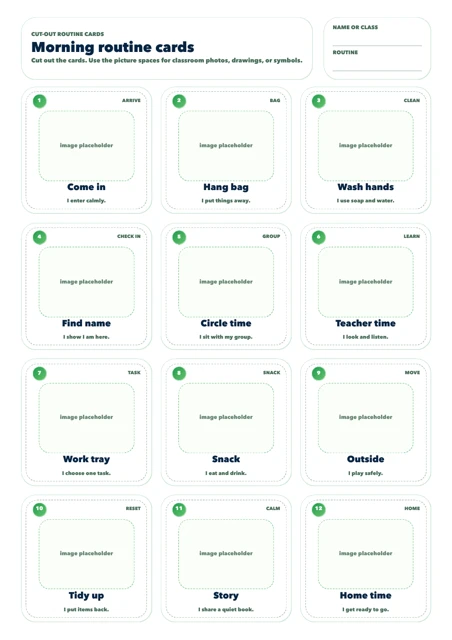
Arrange routine steps in a chosen order and use the Now, Next and Finished areas to make the current and upcoming step visible.