Science
Frog or toad? Comparing amphibians
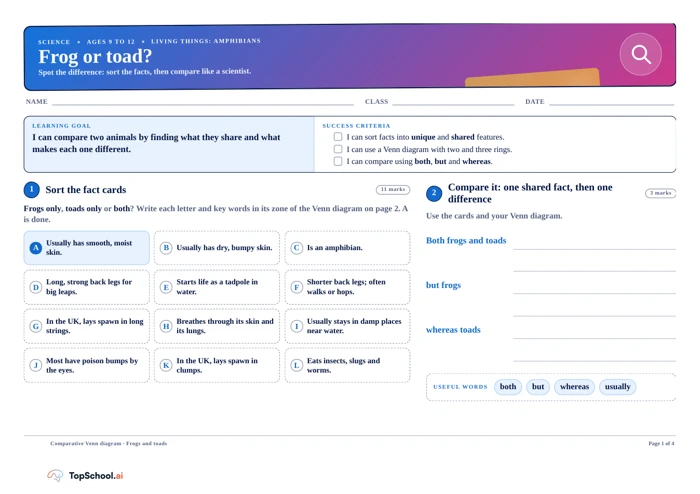
Classify features as shared or distinctive among frogs, toads and newts, then explain which difference is most important and why.

Year 4 teacher and arts lead
I make choir invitations open and rehearsals purposeful, helping children listen, keep a shared pulse and contribute together while giving Art the time it needs for practical choices.
Explore the collectionI teach Year 4 and lead Music, Art and Religious Education. The multiplication tables check gives the year a reason to use rhythmic counting and low-stakes recall, but I also want pupils to see that Music and Art are subjects in their own right, not rewards after other work.
In Music, a choir gives pupils a way to join in without needing to arrive with experience. I want the invitation to be open and the rehearsal to help children listen, keep a shared pulse and contribute together. In Art, pupils need time to make and consider choices rather than rush to a finished display.
I look for resources that make practical participation easy to organise and learning visible. A counting pattern, listening prompt or open-ended making task can give pupils a clear start while leaving space for different contributions. I value a timetable that treats the arts as part of the learning, not a treat at the end.
Use rhythmic recall to support mathematics practice.
Make choir participation welcoming to newcomers.
Protect time for Music and Art as subjects.
Explore these templates and decide what fits your own setting.
Science
Classify features as shared or distinctive among frogs, toads and newts, then explain which difference is most important and why.
Worksheet
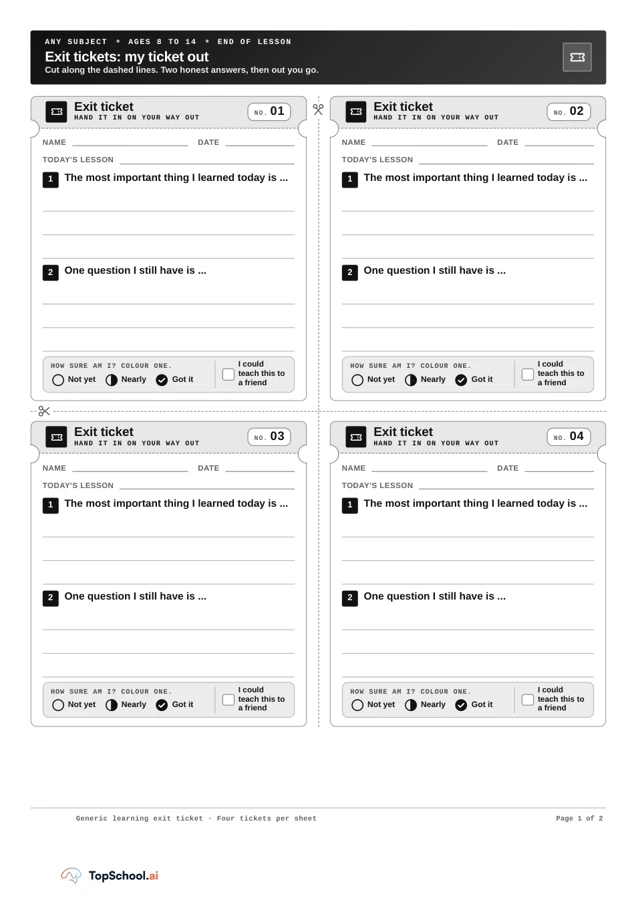
Summarise learning, identify an open question and reflect on confidence at the end of a lesson.