Teaching and classroom support
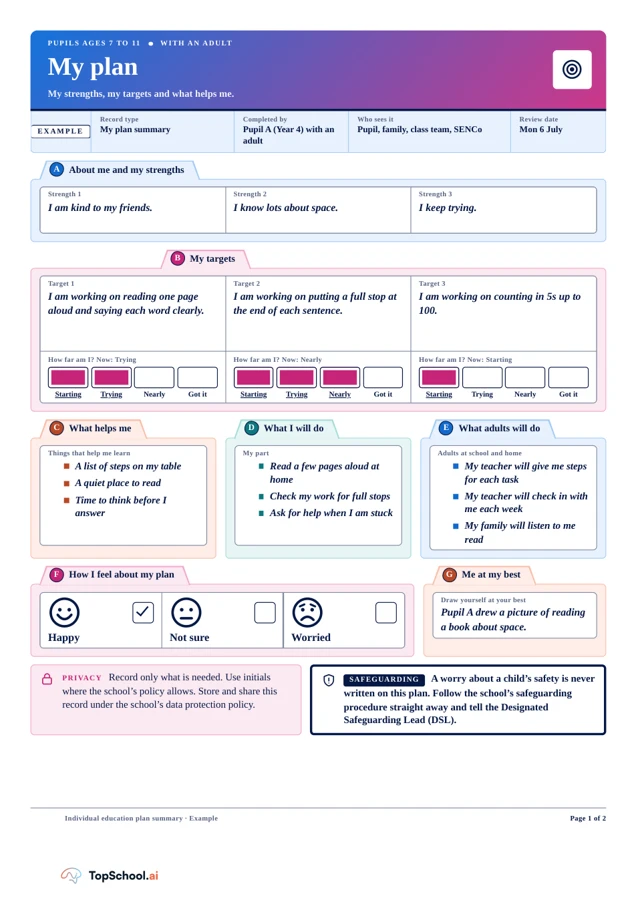
My plan: strengths, targets and support
Help a pupil identify strengths, understand a small number of targets and know what support adults will provide.

Head of learning support
I keep learning-support plans concise and practical, with strategies a covering teacher can find and use and language that families recognise as describing their child.
Explore the collectionI lead learning support across the school and help teachers make plans that are useful in practice. I want a plan to describe what helps a pupil rather than reduce them to a diagnosis. The language should be recognisable to the family and clear to any teacher who needs to act on it.
A good plan gives adults specific steps. Visual supports, structured instructions or another agreed strategy should be easy to find and apply. I keep the document concise so that a teacher covering the class can understand what to do without needing a long explanation first.
I look for resources that help teams record the strategy, who will use it and when it should be reviewed. A template can organise this information, but it cannot decide the pupil’s needs. I value collaboration with families and teachers, with attention to consistency across lessons and changes in support when circumstances change.
Describe the pupil’s support needs without relying on a label.
Name strategies that a teacher can use straight away.
Keep plans accessible and review them with the team and family.
Explore these templates and decide what fits your own setting.
Teaching and classroom support
Help a pupil identify strengths, understand a small number of targets and know what support adults will provide.
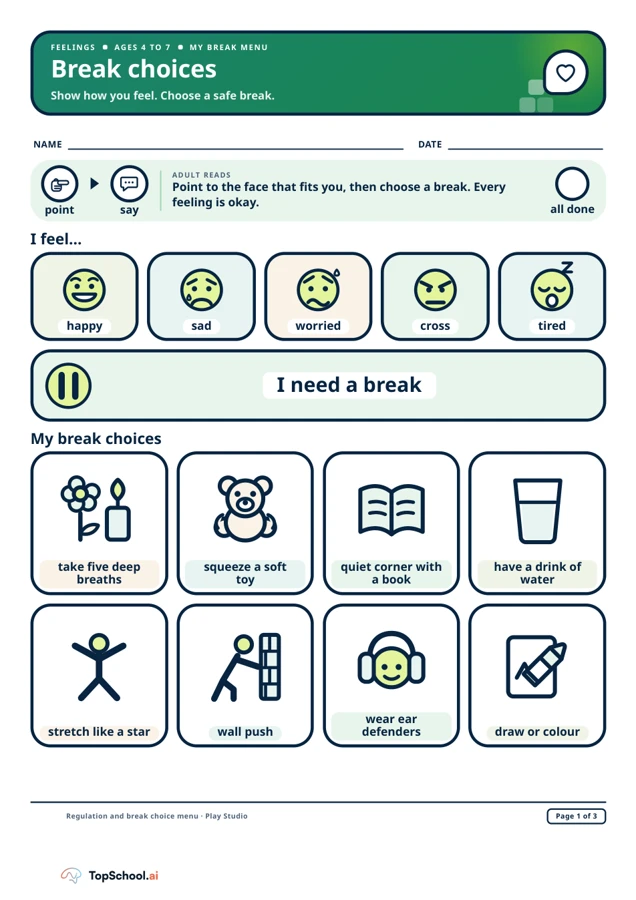
Wellbeing and personal development
Communicate a feeling or need for a break and choose an available option from a visual menu, using a gesture, symbol or speech.