
Teaching and classroom support
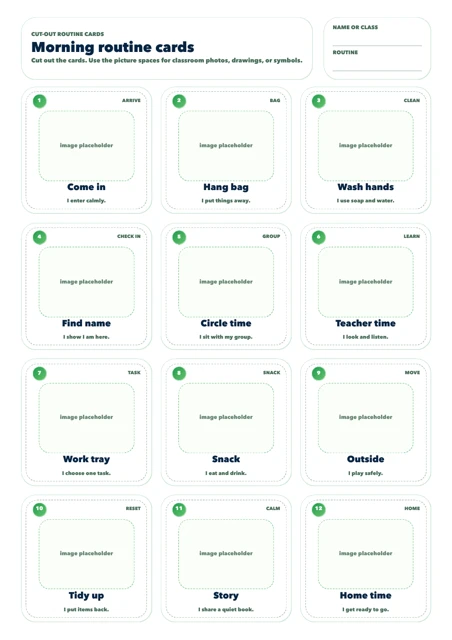
Morning routine cards
Arrange routine steps in a chosen order and use the Now, Next and Finished areas to make the current and upcoming step visible.
Early years room leader
I write clear, natural progress checks grounded in children’s observations and examples, and work with families on specific next steps that help children communicate their needs.
Explore the collectionI lead an early years room and write progress checks for children at an important stage of development. I want a first draft to sound clear and natural, while staying close to the observations and examples that belong in the child’s record. A template can help organise information, but it should not make every child’s story sound the same.
When behaviour becomes difficult, I try to consider what the child may be communicating and what words or support could help them express a need. That is a question to explore with care, not a conclusion to apply automatically. Adults can acknowledge what happened while helping the child find a more useful way to communicate.
I look for resources that help teachers describe a specific observation and plan a next step with families. Plain language makes it easier to discuss what a child is doing and what support might help. I value writing that is honest and recognisable to the people who know the child, rather than language that hides uncertainty behind a standard phrase.
Describe progress with specific observations and plain language.
Consider communication needs when responding to behaviour.
Use templates as structure while keeping each account individual.
Explore these templates and decide what fits your own setting.
Teaching and classroom support
Arrange routine steps in a chosen order and use the Now, Next and Finished areas to make the current and upcoming step visible.