Languages and literacy
Les consignes de classe: match and act
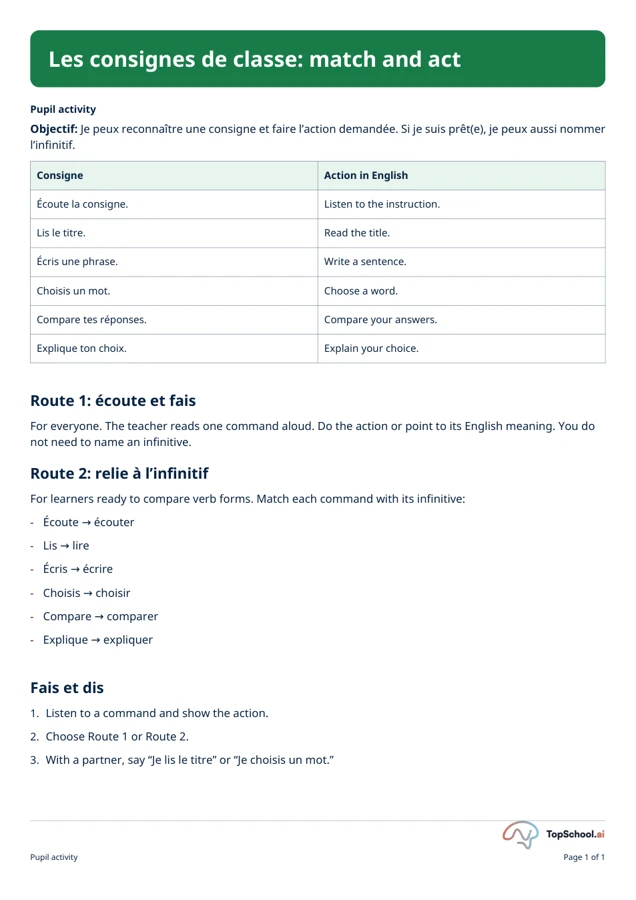
Recognise six French classroom commands and respond with the matching action; learners ready for grammar can also connect each command to its infinitive.

French teacher
I begin with spoken language and bring French into the lesson early, so pupils can hear and try familiar phrases before worrying about how every word is written.
Explore the collectionI teach French across Years 1 to 6. I begin with spoken language and bring French into the lesson early, so pupils can hear and try familiar phrases before worrying about how every word is written.
Listening and speaking help pupils build a sense of rhythm, pronunciation and meaning. Written forms matter too, but I want them to arrive at a point when pupils have something to connect them with. A short exchange, song or classroom routine can give a phrase a purpose before we look closely at its spelling.
I look for resources that work across different primary ages and make the language easy to practise. Clear models can support a first attempt, while repetition gives pupils a chance to recognise and use a phrase again. I value activities that keep French audible and meaningful, with reading and writing added as the pupils are ready.
Use spoken French early in the lesson.
Connect writing with language pupils have already heard.
Choose practice that suits different primary ages.
Explore these templates and decide what fits your own setting.
Languages and literacy
Recognise six French classroom commands and respond with the matching action; learners ready for grammar can also connect each command to its infinitive.
Languages and literacy
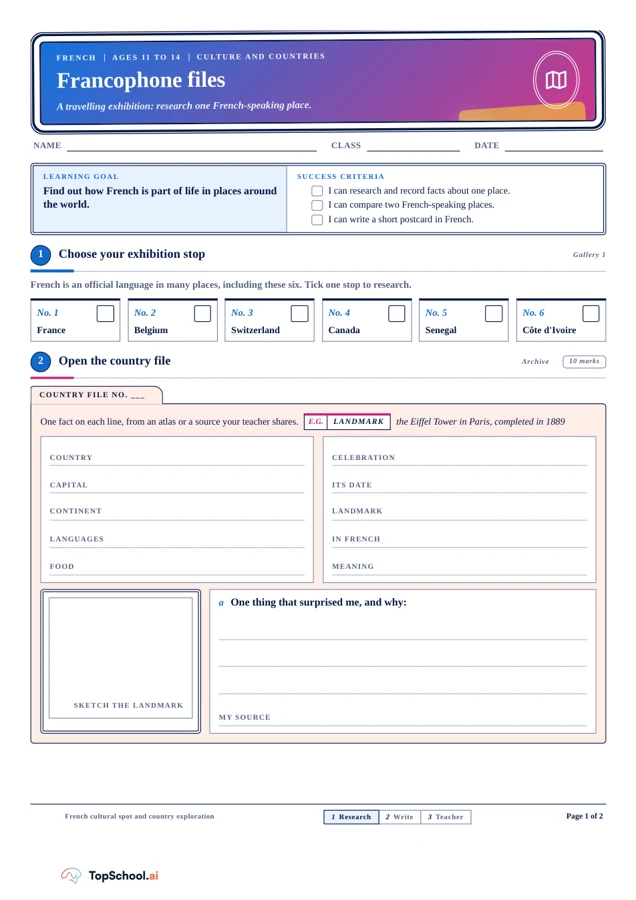
Research two French-speaking places, compare sourced facts and use familiar French phrases in a postcard.
Languages and literacy
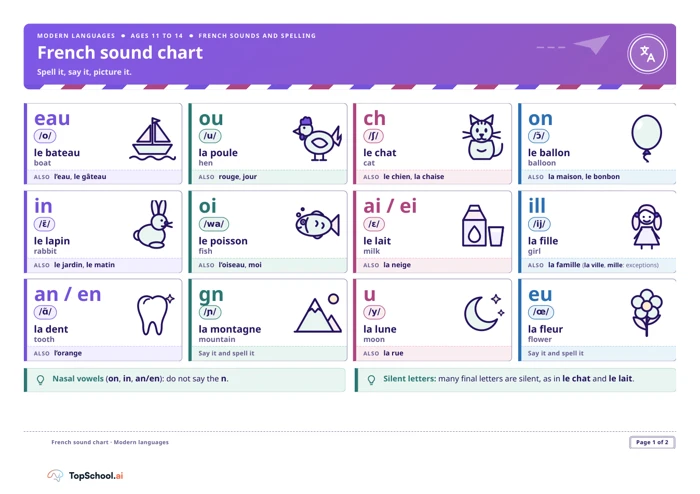
Connect a French sound with its spelling and example word, listening and speaking before using the chart independently.