Languages and literacy
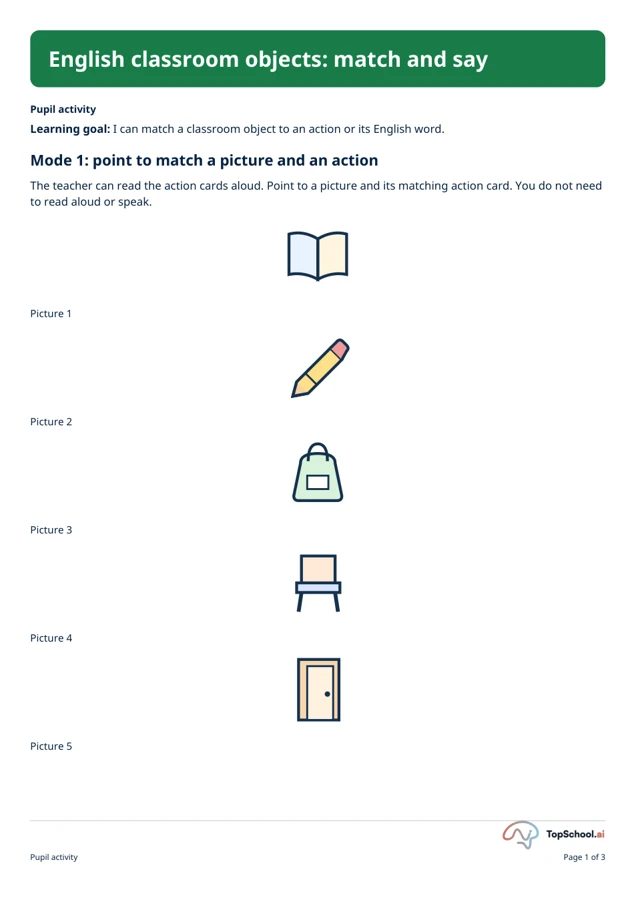
English classroom objects: match and say
Match five classroom objects to actions or written object words by pointing, drawing a line or using a short English sentence.

EAL and bilingual support assistant
I pre-teach key vocabulary with visuals or another language where possible, giving pupils time to use the words in context and participate in the shared lesson.
Explore the collectionI support English as an Additional Language and bilingual learning across the primary years. When a pupil is new to English, I want language needs to be understood clearly and not mistaken for difficulty with the subject itself.
Pre-teaching vocabulary can give pupils a first way into a lesson. I look for the key words and phrases they will meet, explain them with a visual or another language where possible and give them time to use the words in context. That helps pupils participate in the same learning rather than wait until they understand every new term.
I value resources that can be prepared quickly but still checked for accuracy. A bilingual word bank, picture prompt or short explanation can support a pupil, while the class teacher remains responsible for the lesson and checks what the pupil understands. I want language support to help children contribute in whatever language they are ready to use.
Preview key vocabulary before the lesson.
Use visuals and bilingual resources where available.
Separate language learning needs from assumptions about subject understanding.
Explore these templates and decide what fits your own setting.
Languages and literacy
Match five classroom objects to actions or written object words by pointing, drawing a line or using a short English sentence.
Languages and literacy
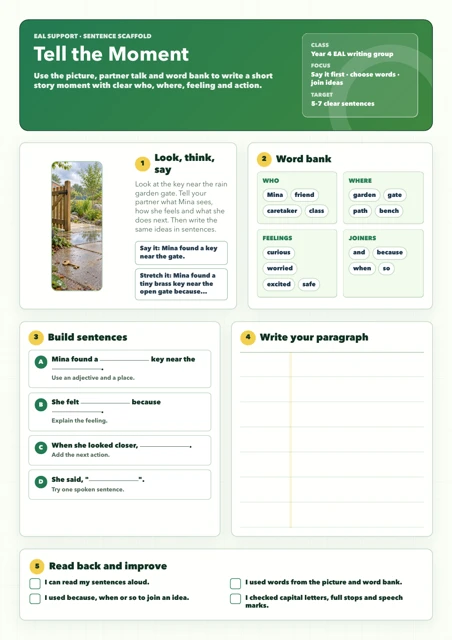
Build five to seven clear sentences about who is present, where the scene happens, how a character feels and what happens next.
Languages and literacy
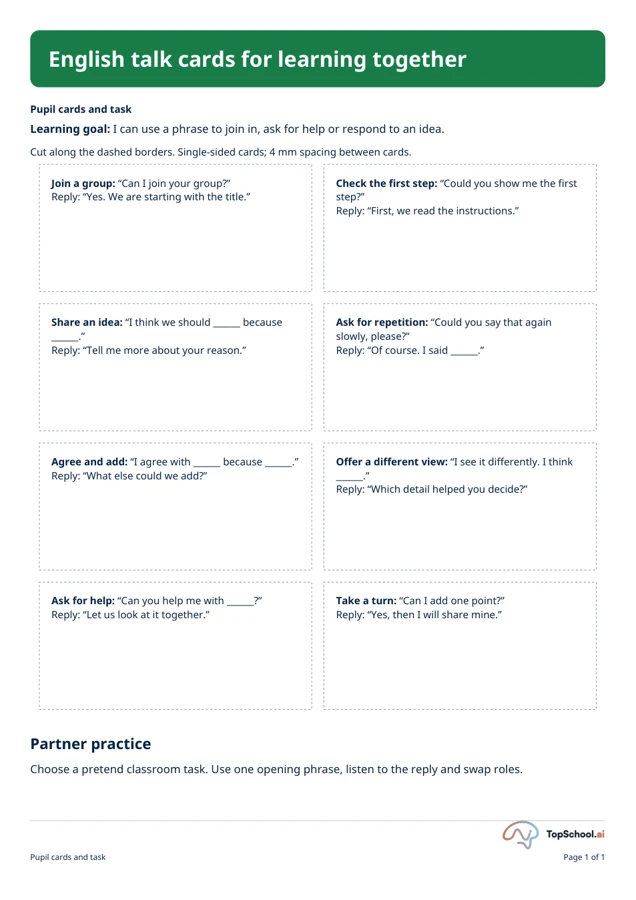
Use a clear English phrase to enter a conversation, ask for clarification and respond to a partner’s idea.
Languages and literacy
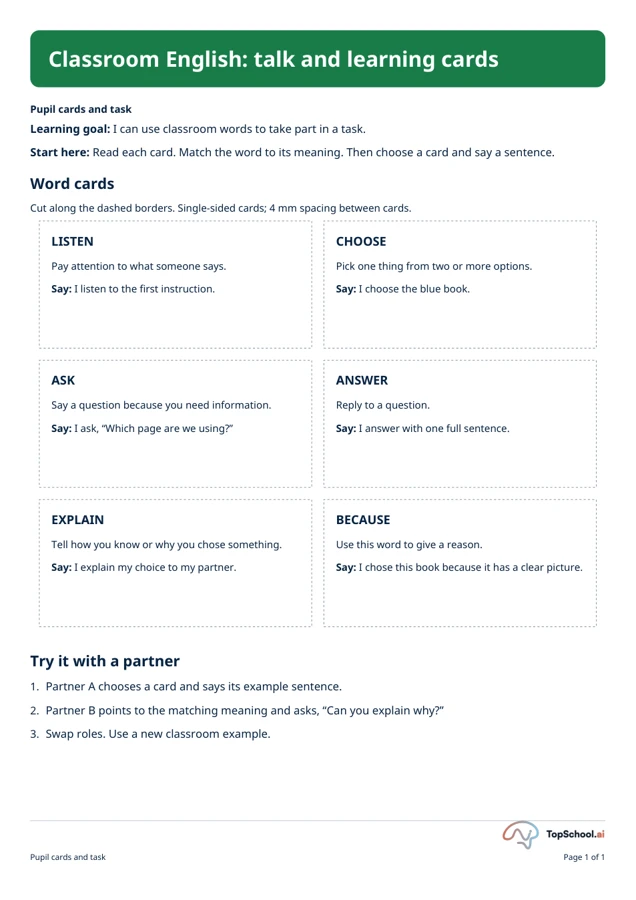
Recognise six classroom participation words and use one in a short spoken sentence.
Languages and literacy
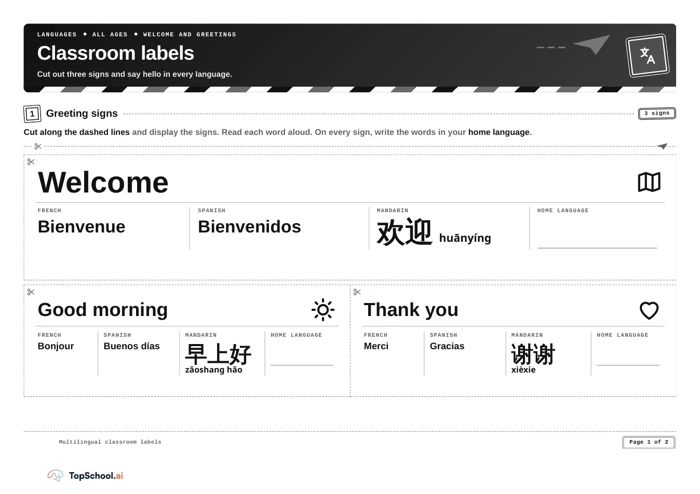
Use familiar classroom words and pictures to invite contributions in pupils’ own languages without expecting one shared home language.