History and social studies
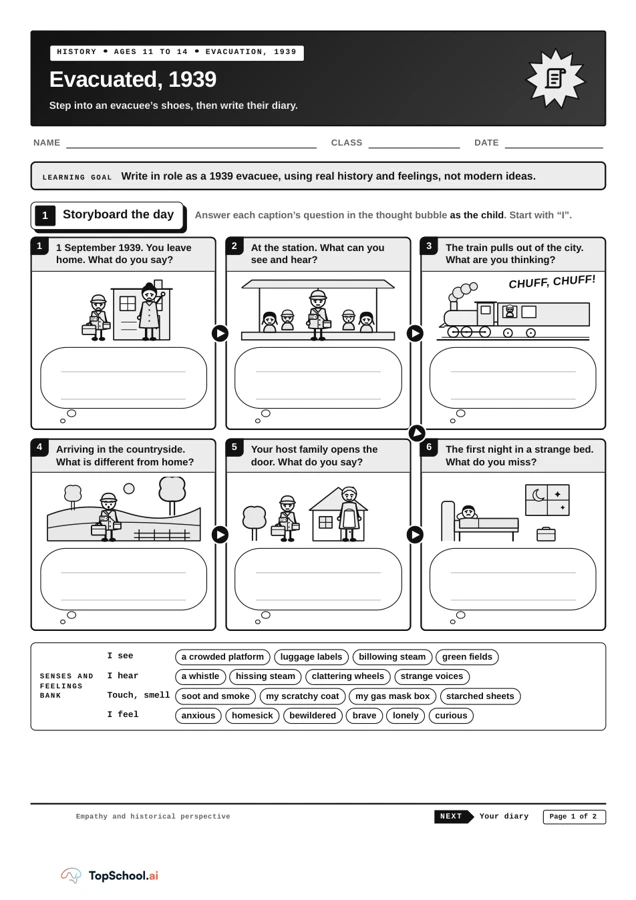
Evacuated, 1939: historical perspective writing frame
Write an imagined first-person diary using accurate historical context, sequence, senses and feelings.

Head of Humanities
I introduce History through sources that disagree and teach Global Perspectives through questions, evidence and competing views, asking pupils to support a judgement and identify what remains unknown.
Explore the collectionI teach History and Global Perspectives across secondary and lead Humanities. In History, I want pupils to meet sources that disagree before I give them a finished account. Their first task is to notice what each source says, what it leaves out and what questions we need to ask before deciding which explanation is stronger.
Global Perspectives has a different purpose from a tour of world problems. I teach it as a set of skills: asking questions, working with evidence, comparing views and forming a reasoned response. That distinction helps pupils understand what they are practising rather than treating each topic as a list of facts to cover.
I look for resources that make investigation possible and keep the evidence in view. A prompt can help pupils compare accounts, while a clear follow-up question asks how their thinking has changed. I value a lesson where pupils have to support a judgement and consider what they still need to find out.
Introduce disagreement between sources before a settled narrative.
Teach Global Perspectives through inquiry skills.
Ask pupils to support a judgement and identify what remains unknown.
Explore these templates and decide what fits your own setting.
History and social studies
Write an imagined first-person diary using accurate historical context, sequence, senses and feelings.
History and social studies
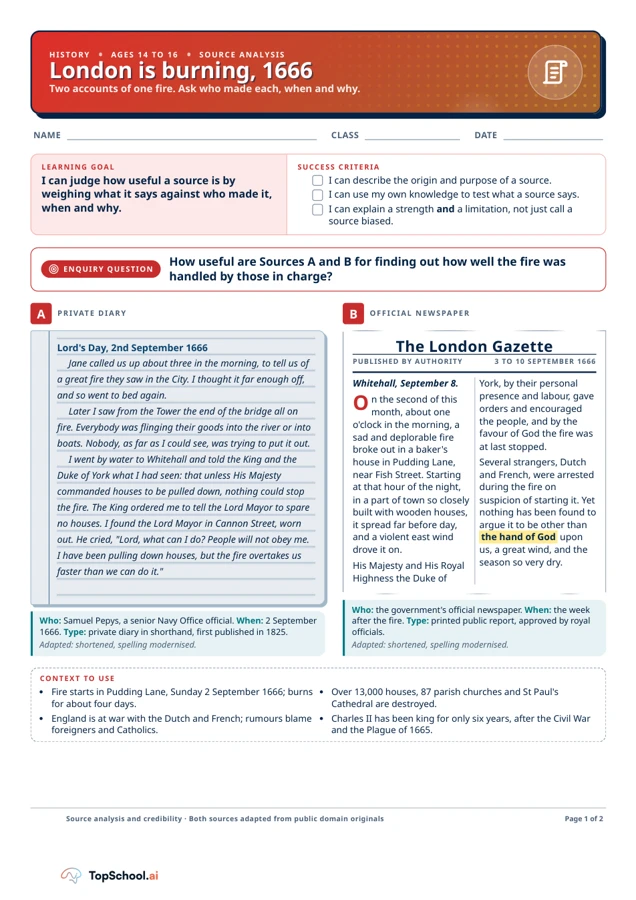
Use source origin, purpose, content and historical context to make a supported judgement about how useful two accounts are for an enquiry.
History and social studies
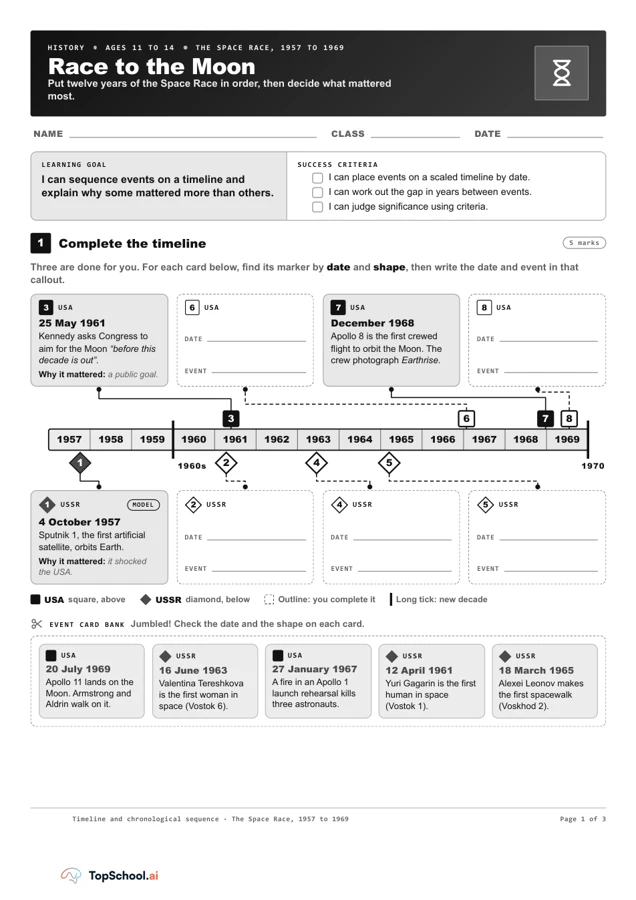
Sequence selected events from 1957 to 1969, calculate intervals and use stated criteria to support a judgement about historical significance.