Music and performing arts
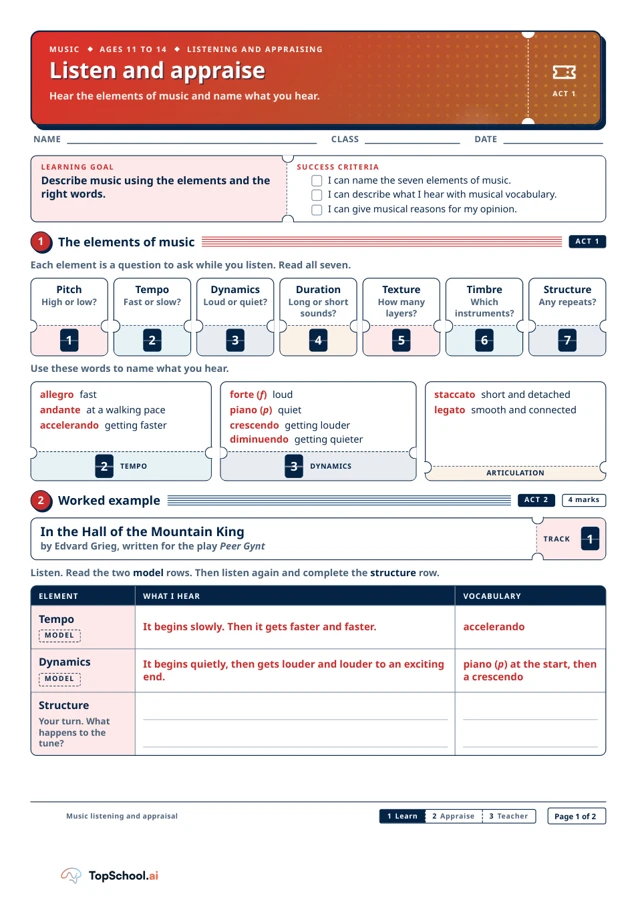
Music listening and appraisal
Describe and compare selected musical elements using appropriate vocabulary, and support an opinion with a specific observation from a piece.
Music teacher
I get pupils playing early in a mixed-experience ensemble, using shared rhythm and sound to make participation meaningful before introducing notation to record what they are doing.
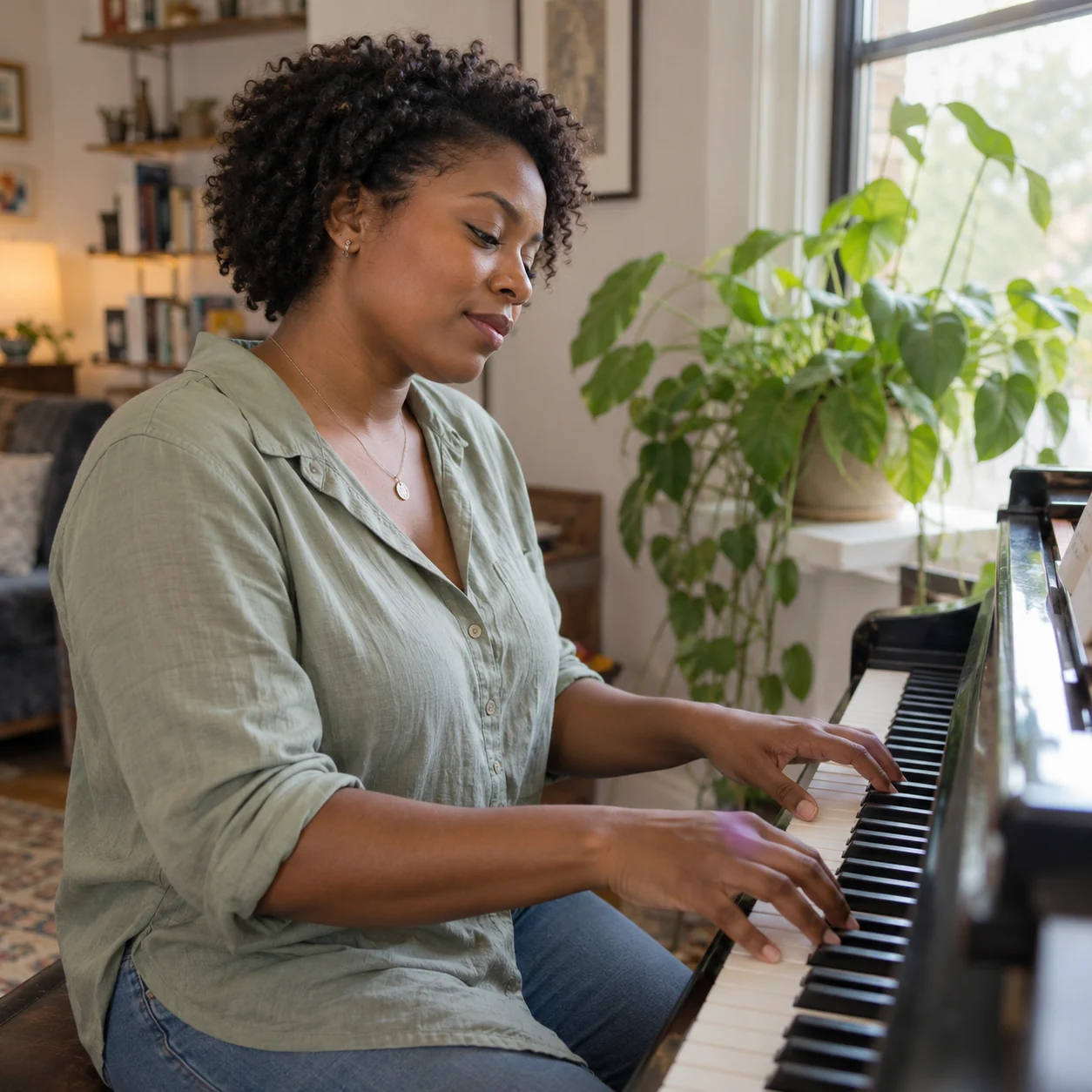
Explore the collectionI teach Music across lower and upper secondary. My classes include pupils who have studied an instrument and others who are meeting one for the first time. I see that range as something an ensemble can use: pupils can listen, contribute and learn from one another while they make music together.
I like to get pupils playing early. A shared rhythm or musical idea gives them an immediate way to participate, while notation can be introduced once there is something meaningful to record. Starting with sound can help pupils connect the symbols with what they are hearing and doing.
I look for resources that help a group make music without requiring the same level of prior training from everyone. A clear part, pattern or listening prompt can make a first contribution manageable. I value activities where pupils have a reason to return and develop the ensemble, while technical learning grows alongside the experience of playing.
Begin with sound and participation.
Use ensemble work to bring varied experience together.
Introduce notation in connection with music pupils have played.
Explore these templates and decide what fits your own setting.
Music and performing arts
Describe and compare selected musical elements using appropriate vocabulary, and support an opinion with a specific observation from a piece.
Music and performing arts
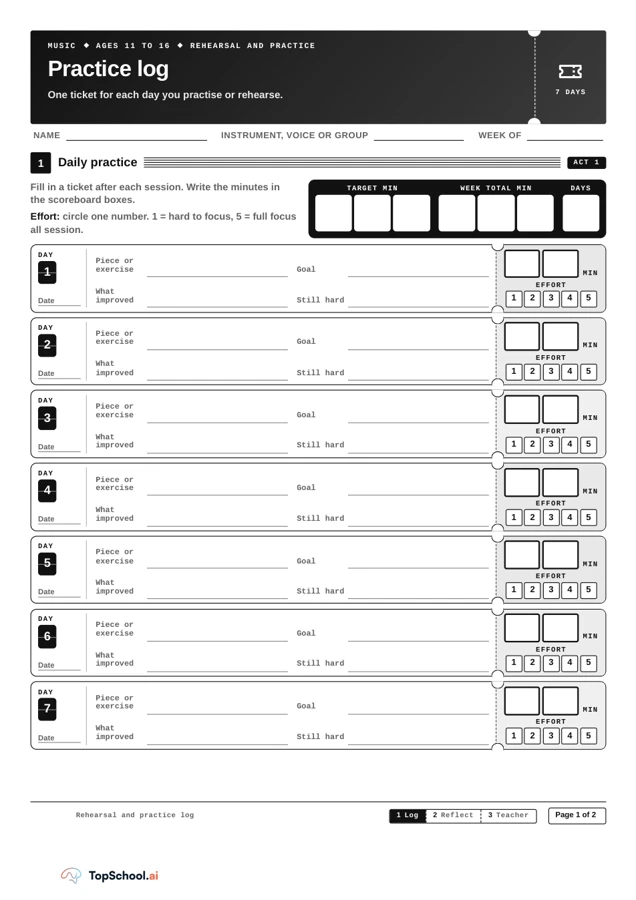
Record practice, choose a strategy for a musical challenge and set a specific target for the next lesson or rehearsal.