Maths
Number-line practice
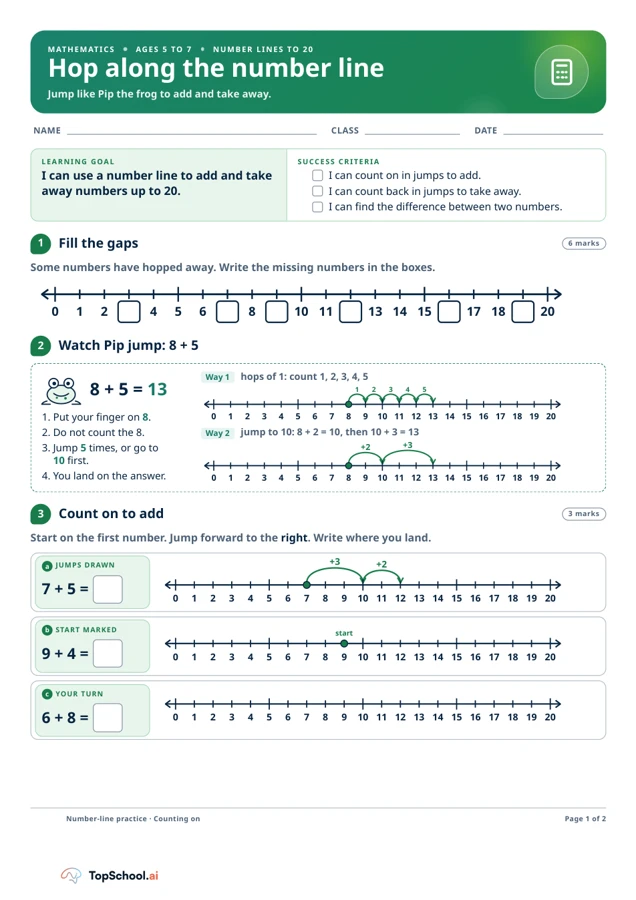
Represent addition and subtraction within 20 using forward and backward number-line jumps, and use those jumps to find a difference.

Year 1 homeroom teacher
A pupil may need to listen, use a gesture, try a word or practise it with a partner before sharing it with the class.
Explore the collectionI teach Year 1, where school routines may still be new. I build the day around familiar greetings, a clear order and consistent signals, because predictability can help pupils feel ready to try something unfamiliar. I want children to know what is happening next without making the classroom feel inflexible.
Many pupils are also learning in a language that is new to them. I look for ways to make participation possible before expecting extended writing. A pupil may need to listen, use a gesture, try a word or practise it with a partner before sharing it with the class. Those are meaningful steps in developing confidence and communication.
I teach reading in small groups and do not rush the process. A resource should make the task clear and give pupils time to practise, with support that can change as they become more familiar with the work. I value patient teaching that keeps expectations high while recognising that children arrive with different experiences.
Use predictable routines and signals.
Make space for language participation before extended writing.
Teach reading in small groups at a considered pace.
Explore these templates and decide what fits your own setting.
Maths
Represent addition and subtraction within 20 using forward and backward number-line jumps, and use those jumps to find a difference.
Teaching and classroom support
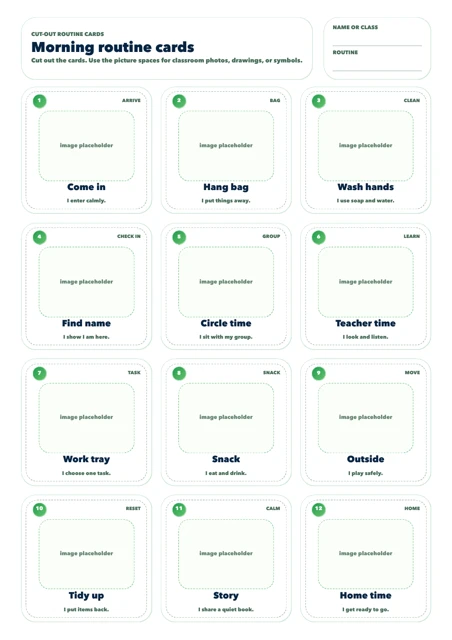
Arrange routine steps in a chosen order and use the Now, Next and Finished areas to make the current and upcoming step visible.
Languages and literacy
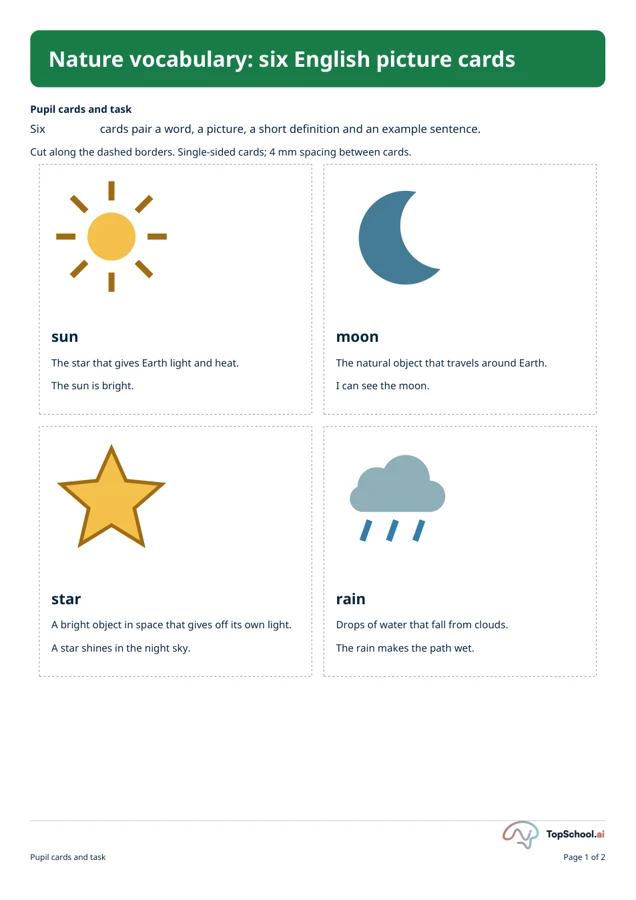
Recognise and explain selected nature words by connecting each word with its picture, definition and example sentence.