A useful teaching brief without pupil data
Give AI useful teaching context without pupil records. Use a five-part brief, a fictional fractions example and checks for the resulting material.
On this page4 sections
You need three questions for tomorrow’s fractions starter. A useful AI request can describe the learning goal, what learners already know and the materials available. Those details can be general or fictional.
Use a tool your school has approved for this task, and keep identifying pupil information out of the brief. If you are unsure what can be shared, follow your school’s arrangements and consult our guidance on school decisions about student information.
Give the teaching task five clear fields
Microsoft Learn’s education prompt blueprint encourages stating purpose, audience, constraints, format and criteria. Use these five fields to describe a teaching task and what would make the result usable:
Learning goal: What should pupils understand or be able to explain?
General learner context: What relevant starting knowledge can you describe without identifying anyone?
Requested result: What material do you need, how much, and how should it be arranged?
Practical constraints: What time, materials, language and classroom conditions must it respect?
Review criteria: What will you check for accuracy, clarity and suitability?
TopSchool’s guide to teaching context also asks teachers to state the objective and important constraints. For example, “learners recognise halves and quarters” describes relevant starting knowledge without supplying an individual pupil’s record.
A fictional fractions example
The goal is explaining equivalence. Prior knowledge, materials and separate answer guidance make the request specific. Ten minutes states the intended activity length. An explanation question asks learners to show why the fractions represent the same amount. Look for that thinking when you review the eventual questions.
Copy and adapt the brief
Replace the brackets with details for your preparation task. Use general learner context and check that the request fits your school’s approved use.
Blank teaching brief
Copies the five fields below to your clipboard. Paste into your approved tool, then replace the brackets.
Learning goal: [What pupils should understand or do]
General learner context: [Relevant prior knowledge, described generally]
Requested result: [Type, amount and arrangement of material]
Practical constraints: [Time, materials and language]
Review criteria: [Accuracy and suitability checks]
Check the material against your brief
The Department for Education’s guidance on interacting with generative AI, developed for England, includes checking AI outputs. Before using any result, check:
- Learning goal: Do the questions ask pupils to explain equivalence?
- Accuracy: Are the answers correct, and do visual comparisons use equal-sized wholes?
- Practical fit: Are the wording, materials and amount of work suitable for the starter?
A prepared worksheet to review
The excerpt below provides a concrete review example.
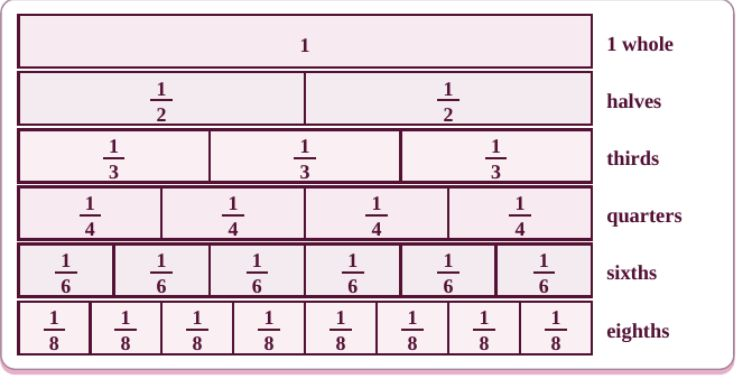
Fraction wall
Two worksheet prompts
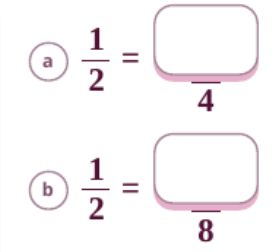
View the fraction wall at full size
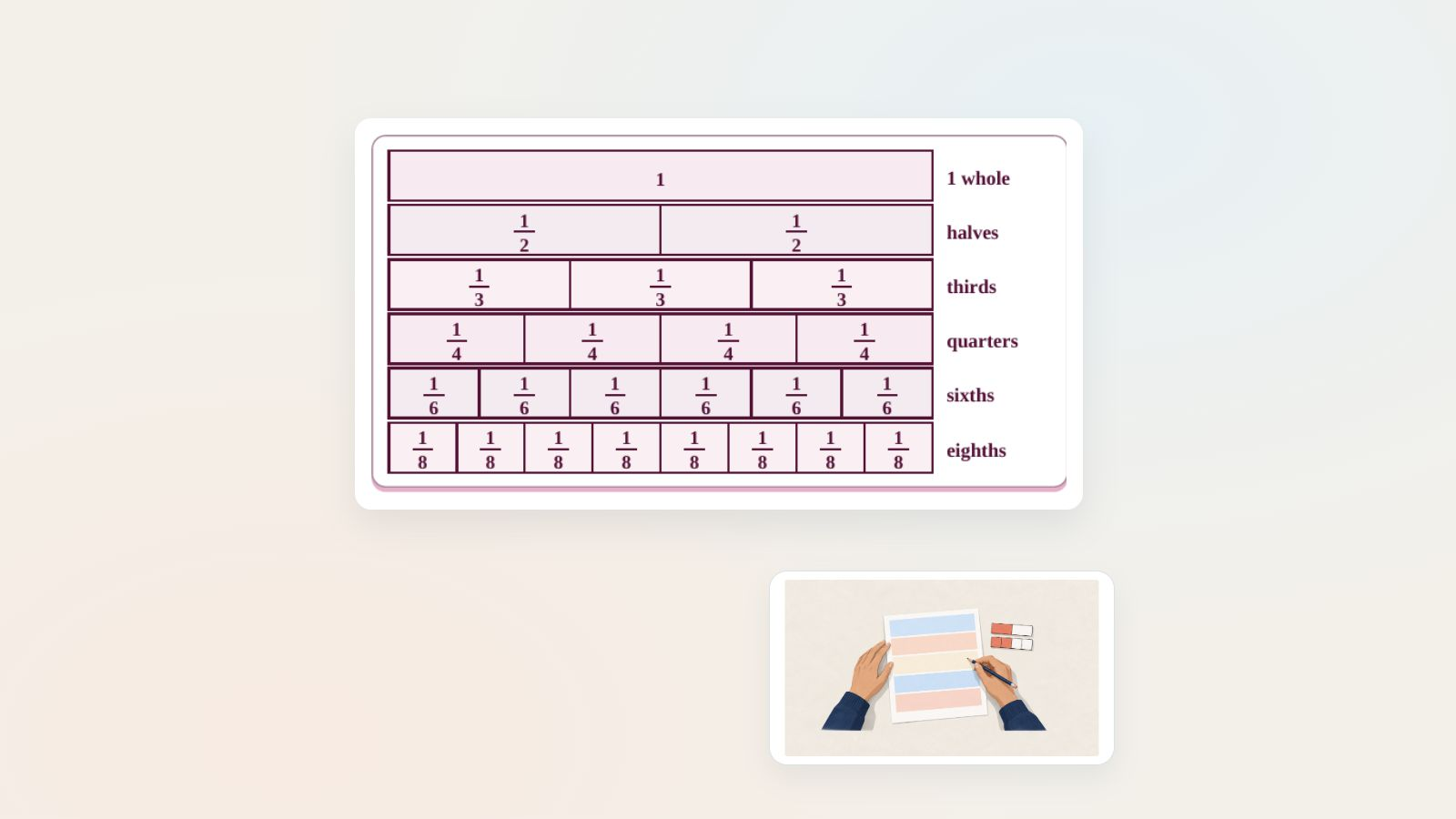
The two prompts are 1/2 = [ ]/4 and 1/2 = [ ]/8. The missing numerators are 2 and 4. The fraction wall lets pupils compare those amounts using equal-length rows.
To adapt this excerpt to the fictional brief, add a question: “Explain why one half and two quarters cover the same length.” Keep the task set small enough for the ten-minute starter and prepare separate answer guidance. Correct missing numbers alone do not show whether a pupil can explain equivalence.
If a result misses these requirements, revise it and check it again before using it with pupils.